
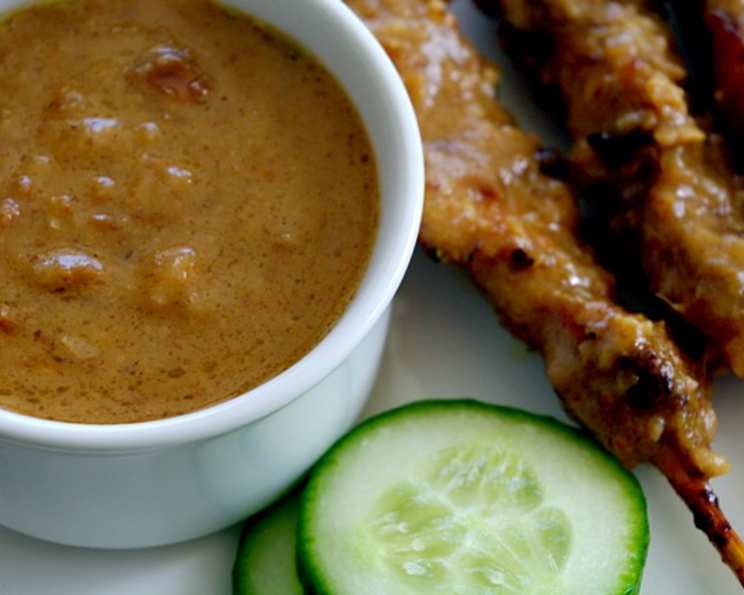
The Ultimate Satay Sauce: A Culinary Journey
My earliest memories of satay sauce are intrinsically tied to my mother’s kitchen. The aroma of toasted peanuts, mingling with the pungent fragrance of shrimp paste, would fill the air, signaling that a feast was in the making. I remember watching her meticulously grind the peanuts, her face alight with concentration, the rhythmic thud of the mortar and pestle a comforting soundtrack to my childhood. It wasn’t just a sauce; it was an expression of love, a taste of home, and a vibrant culinary heritage passed down through generations.
Recipe Overview
- Prep Time: 20 minutes
- Cook Time: 20 minutes
- Total Time: 40 minutes
- Yields: 10 cups
- Serves: 10
- Dietary Type: Can be Gluten-Free, Dairy-Free (see variations)
Ingredients
- 1 kg unsalted peanuts
- 2 inches shrimp paste
- 30 dried chilies
- 1 cup coconut milk
- 5 cups water
- 1 teaspoon salt
- 8 ounces tamarind pulp
- 4 ounces palm sugar
- 4 tablespoons granulated sugar
Equipment Needed
- Large skillet or wok
- Blender or food processor
- Small saucepan
- Measuring cups and spoons
- Strainer
- Grill or toaster oven
Instructions
-
Toast the peanuts: Spread the unsalted peanuts evenly in a large skillet or wok. Toast them over medium heat, stirring frequently to prevent burning. Continue toasting until they are golden brown and fragrant, being extremely careful not to burn them. This should take about 10-15 minutes. Remove from heat and let cool slightly.
-
Grind the peanuts: Once the peanuts are cool enough to handle, transfer them to a blender or food processor. Blend until you achieve a mixture of small chunks of peanuts and some fine peanut powder. The consistency should be slightly coarse.
-
Prepare the shrimp paste: Grill or toast the shrimp paste (belacan) over an open flame or in a toaster oven until fragrant and slightly charred. This will enhance its flavor and aroma. Be careful not to burn it.
-
Rehydrate and blend the chilies: Steam the dried chilies until softened. Then, blend the toasted shrimp paste with the steamed dried chilies in a blender or food processor until you get a smooth paste. Add a little water if necessary to help with the blending.
-
Prepare the coconut milk mixture: Mix the coconut milk with 4 cups of water in a bowl. Set aside.
-
Extract tamarind juice: Soak the tamarind pulp in 1 cup of water. Allow it to sit for about 10-15 minutes, then use your hands to squish the pulp and release the tamarind flavor into the water. Strain the mixture through a fine-mesh sieve to remove any seeds and fibers. Set aside the tamarind juice.
-
Combine and cook: Scrape the palm sugar into a saucepan. Add the granulated sugar, blended shrimp paste and chili paste, tamarind juice, and half of the ground peanuts.
-
Simmer: Cook the mixture over medium heat, stirring constantly for about 4 minutes, until the sugar is melted and the mixture is well combined.
-
Add coconut milk: Stir in the coconut milk mixture and bring the sauce to a boil. Once boiling, reduce the heat to low and simmer, stirring frequently, for another 3 minutes.
-
Adjust Consistency: If the satay sauce is too thick, add a little water to achieve the desired consistency.
-
Final Seasoning: Add the salt and the remaining ground peanuts. Stir well to combine. Taste and adjust seasonings as needed. You may want to add more sugar for sweetness or chili paste for heat, depending on your preference.
Expert Tips & Tricks
- Toasting Peanuts Perfectly: The key to a great satay sauce is perfectly toasted peanuts. Don’t rush the process and watch them carefully to prevent burning, which can ruin the flavor.
- Shrimp Paste Intensity: Shrimp paste (belacan) can be quite pungent. Start with a smaller amount and add more to taste, depending on your preference.
- Chili Heat Control: Adjust the number of chilies to control the heat level of the sauce. Remove the seeds and membranes from the chilies for a milder flavor.
- Achieving the Right Consistency: The sauce should be thick enough to coat the satay but thin enough to drizzle. Add water gradually to adjust the consistency.
- Make-Ahead Magic: Satay sauce can be made ahead of time and stored in the refrigerator for several days. The flavors will meld together and deepen over time.
- Peanut Butter Substitute: If you are in a pinch you can substitute part of the toasted peanuts with natural peanut butter, preferably without added sugars. Use no more than 20% peanut butter for the peanuts’ weight.
Serving & Storage Suggestions
Serve the satay sauce warm or at room temperature with grilled meats (chicken, beef, pork), tofu, vegetables, or rice cakes. Garnish with chopped peanuts, cilantro, or a squeeze of lime juice for added flavor and visual appeal.
Store leftover satay sauce in an airtight container in the refrigerator for up to 5 days. It can also be frozen for up to 2 months. To reheat, thaw in the refrigerator overnight and gently warm on the stovetop or in the microwave, stirring occasionally. Add a little water if needed to thin the sauce.
Nutritional Information
| Nutrient | Amount per Serving | % Daily Value |
|---|---|---|
| Calories | 794.7 kcal | N/A |
| Calories from Fat | 554 g | 70% |
| Total Fat | 61.6 g | 94% |
| Saturated Fat | 13.8 g | 69% |
| Cholesterol | 0 mg | 0% |
| Sodium | 268.5 mg | 11% |
| Total Carbohydrate | 56.5 g | 18% |
| Dietary Fiber | 7.8 g | 31% |
| Sugars | 31.9 g | 127% |
| Protein | 17.1 g | 34% |
Variations & Substitutions
- Gluten-Free Satay Sauce: Ensure that the shrimp paste you are using is gluten-free. Some brands may contain gluten as a filler.
- Vegan Satay Sauce: To make this recipe vegan, substitute the shrimp paste with a vegan shrimp paste alternative or omit it altogether. You may need to add a touch more salt to compensate for the flavor.
- Creamier Satay Sauce: For a richer, creamier sauce, add a bit more coconut milk.
- Spicier Satay Sauce: Add more dried chilies or a pinch of cayenne pepper to increase the heat.
- Peanut Allergy: For a nut-free alternative, you can use sunflower seeds as the base of the sauce. Toast them like you would the peanuts and follow the same procedure.
- Sweetener: Honey or maple syrup can be used to substitute palm sugar.
FAQs (Frequently Asked Questions)
Q: Can I make this satay sauce ahead of time?
A: Yes, satay sauce can be made ahead of time and stored in the refrigerator for up to 5 days or frozen for up to 2 months.
Q: How do I adjust the consistency of the sauce?
A: If the sauce is too thick, add a little water to thin it out. If it’s too thin, simmer it for a few more minutes to reduce the liquid.
Q: Can I use peanut butter instead of peanuts?
A: While not ideal, you can use natural peanut butter in a pinch, but the flavor and texture will be different. Use no more than 20% peanut butter for the peanuts’ weight.
Q: What is shrimp paste, and can I omit it?
A: Shrimp paste (belacan) is a fermented shrimp product that adds a unique umami flavor to the sauce. If you can’t find it or prefer not to use it, you can omit it, but the flavor will be slightly different.
Q: How do I store leftover satay sauce?
A: Store leftover satay sauce in an airtight container in the refrigerator for up to 5 days or freeze it for up to 2 months. Reheat gently on the stovetop or in the microwave.
Final Thoughts
Now it’s your turn to embark on this culinary adventure and create your own batch of this delightful satay sauce. Feel free to experiment with the ingredients and adjust the flavors to your liking. Don’t hesitate to share your feedback and experiences – I’m eager to hear about your satay sauce triumphs! Serve your freshly made satay with some grilled chicken skewers and a refreshing cucumber salad for a complete and satisfying meal. Enjoy!