
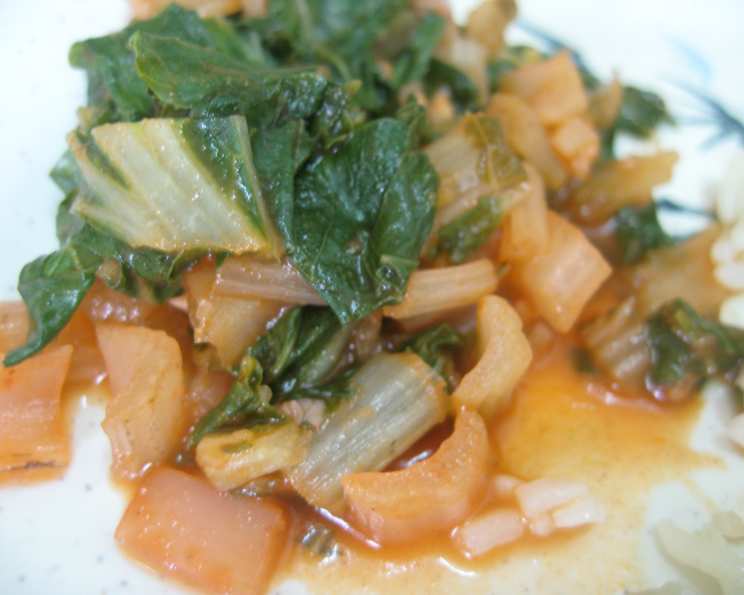
Saucy Asian Bok Choy: A Flavorful & Healthy Delight
The first time I tasted bok choy prepared this way was at a tiny, unassuming restaurant tucked away in a bustling Chinatown. The aroma alone, a tantalizing blend of ginger and garlic, drew me in from the street. Each bite of the tender greens, coated in a savory, slightly sweet sauce, was an explosion of flavor that left me craving more. I was determined to recreate that experience in my own kitchen, and after some experimenting, I believe I’ve captured the magic!
Recipe Overview
- Prep Time: 15 minutes
- Cook Time: 8-10 minutes
- Total Time: 20-25 minutes
- Servings: 2
- Dietary Type: Vegan
Ingredients
- 1/2 teaspoon ground ginger
- 1/2 – 1 teaspoon fresh ginger, grated (a full teaspoon will make it pretty hot)
- 3/4 teaspoon tamari
- 1 tablespoon no-added-salt tomato paste
- 1/2 teaspoon vegetable oil
- 1 large garlic clove, chopped
- 1/3 cup vegetable broth
- 4 cups bok choy, chopped (including the white parts, chop them finely)
Equipment Needed
- Small pot
- Knife
- Cutting board
Instructions
- To prepare the delicious sauce, combine the ground ginger, fresh ginger, tamari, tomato paste, and vegetable broth in a small pot.
- Bring the mixture to a simmer over medium heat, stirring occasionally.
- While the sauce heats, prepare the bok choy. Be sure to chop both the leafy green parts and the crisp white stalks. The white parts should be chopped finely as they take a little longer to cook.
- Heat the vegetable oil in a large pan or wok over medium heat.
- Add the chopped garlic to the pan and sauté for about 30 seconds, until fragrant, being careful not to burn it.
- Add the chopped white parts of the bok choy to the pan and cook, covered, over medium-low heat for approximately 5 minutes, or until they begin to soften. This step ensures the thicker stalks cook through properly.
- Add the chopped green parts of the bok choy to the pan with the softened white parts. Cook for an additional 3-5 minutes, stirring occasionally, until the greens wilt and become tender.
- Pour the simmering sauce over the bok choy in the pan. Stir to ensure the bok choy is evenly coated in the sauce.
- Remove the pan from the heat, cover, and allow the bok choy to steam and soften further in the sauce for another 3-5 minutes. This allows the flavors to meld beautifully.
- Dish up the saucy bok choy into serving bowls. Spoon extra sauce over each serving for maximum flavor.
Expert Tips & Tricks
- Ginger Intensity: Adjust the amount of fresh ginger to your liking. If you’re sensitive to spice, start with 1/2 teaspoon and taste as you go. Remember, you can always add more, but you can’t take it away!
- Bok Choy Prep: Thoroughly wash the bok choy before chopping to remove any dirt or grit. Separating the leaves from the stalks can make chopping easier.
- Sauce Consistency: If the sauce becomes too thick, add a splash more vegetable broth to thin it out. If it’s too thin, simmer for a minute or two longer to reduce it.
- Garlic Burn Alert: Burnt garlic is bitter and unpleasant. Keep a close eye on it while sautéing and reduce the heat if necessary.
- Don’t Overcook: Overcooked bok choy becomes mushy and loses its vibrant green color. Aim for tender but slightly crisp greens.
- Umami Boost: A tiny splash of soy sauce (in addition to the tamari) can enhance the umami flavor.
- Spicy Kick: Add a pinch of red pepper flakes to the sauce for a touch of heat.
Serving & Storage Suggestions
Serve the saucy Asian bok choy immediately while it’s hot and the greens are still vibrant. It makes a wonderful side dish for grilled chicken, fish, tofu, or tempeh. It can also be served over rice or noodles for a simple and satisfying vegetarian meal.
Leftovers can be stored in an airtight container in the refrigerator for up to 3 days. Reheat gently in a pan over medium-low heat or in the microwave. Note that the bok choy may become slightly softer upon reheating.
This dish is best enjoyed fresh, but it can be prepared up to a day in advance. Store the sauce and chopped bok choy separately and combine them just before cooking.
Nutritional Information
| Nutrient | Amount per Serving | % Daily Value |
|---|---|---|
| Calories | 80 kcal | 4% |
| Total Fat | 2g | 3% |
| Saturated Fat | 0g | 0% |
| Cholesterol | 0mg | 0% |
| Sodium | 1097mg | 46% |
| Carbohydrates | 8g | 3% |
| Fiber | 3g | 12% |
| Sugars | 4g | 8% |
| Protein | 5g | 10% |
Note: Nutritional information is an estimate and may vary based on specific ingredients and portion sizes.
Variations & Substitutions
- Other Greens: While bok choy is my favorite, you can substitute other leafy greens such as spinach, kale, or Swiss chard. Adjust cooking times accordingly.
- Vegetable Medley: Add other vegetables to the mix, such as sliced mushrooms, bell peppers, or snow peas.
- Gluten-Free: Ensure your tamari is gluten-free if you have dietary restrictions.
- Sweetener: A touch of maple syrup or honey can be added to the sauce for a sweeter flavor. Start with a teaspoon and adjust to taste.
- Protein Boost: Add cubed tofu or tempeh to the pan along with the white parts of the bok choy for a more substantial meal.
- Sesame Oil: A drizzle of sesame oil at the end adds a nutty aroma and flavor.
FAQs (Frequently Asked Questions)
Q: Can I use soy sauce instead of tamari?
A: Yes, you can substitute soy sauce for tamari. However, tamari has a richer, slightly less salty flavor and is often gluten-free, making it a preferred choice for many.
Q: Can I make this dish ahead of time?
A: Yes, you can chop the bok choy and prepare the sauce ahead of time. Store them separately in the refrigerator and combine them just before cooking. The cooked dish is best served fresh but can be reheated.
Q: What’s the best way to clean bok choy?
A: Rinse the bok choy thoroughly under cold water to remove any dirt or grit. Separating the leaves and washing them individually can be helpful.
Q: Can I add protein to this dish?
A: Absolutely! Tofu, tempeh, chicken, or shrimp would all be delicious additions. Add them to the pan along with the white parts of the bok choy to ensure they cook through.
Q: The sauce is too salty. What can I do?
A: Add a squeeze of lemon juice or a splash of rice vinegar to balance the saltiness. You can also add a touch of sugar or honey to counter the salt.
Final Thoughts
This Saucy Asian Bok Choy recipe is a testament to the fact that healthy and delicious can absolutely coexist! Don’t be afraid to experiment with different variations and find what suits your taste. I encourage you to try this recipe and experience the delightful flavors for yourself. If you create this dish, I’d love to hear how it turns out! Share your feedback and any creative twists you’ve added. Pair it with a crisp white wine or a light Asian beer for a complete and satisfying meal. Enjoy!