
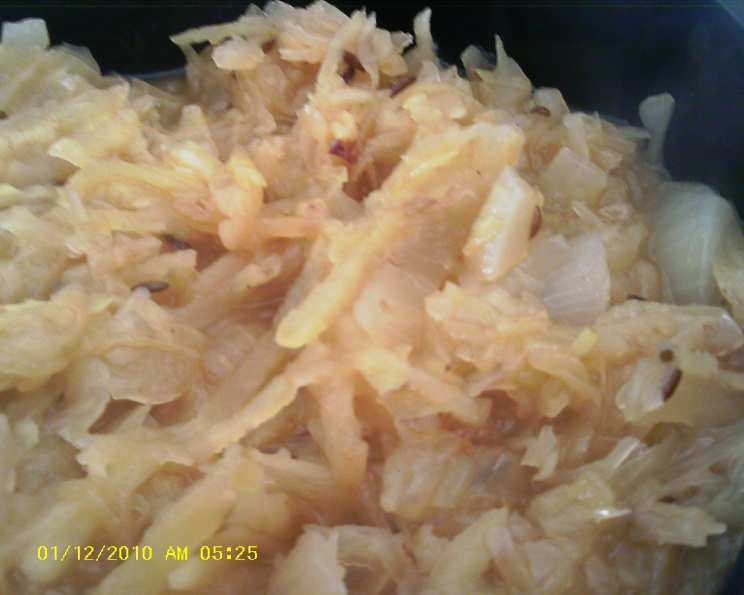
Sauerkraut: A Culinary Journey to Comfort
The smell of sauerkraut simmering on the stove instantly transports me back to my grandmother’s kitchen. I remember standing on a stool, watching her stir the pot with a well-worn wooden spoon, the tangy aroma filling the air. The soft, sour cabbage, a staple passed down through generations, wasn’t just food; it was a warm embrace, a symbol of family gatherings and comforting traditions. It’s a flavor that lingers in my memory, a reminder of simple, hearty meals shared with loved ones.
Recipe Overview
- Prep Time: 15 minutes
- Cook Time: 30 minutes
- Total Time: 45 minutes
- Servings: 6
- Dietary Type: Gluten-Free, Vegetarian
Ingredients
- ½ cup onion, chopped
- ¼ cup oil
- 1 tablespoon flour
- 1 quart sauerkraut
- 2 tablespoons sugar
- ½ teaspoon caraway seed
- 1 potato, grated
- 1 cup water
Equipment Needed
- Large skillet or pot
- Grater
- Wooden spoon or spatula
Instructions
- Begin by heating the oil in a large skillet or pot over medium heat. Once the oil is hot, add the chopped onion and sauté until softened and translucent, about 5-7 minutes. Stir occasionally to prevent burning.
- Sprinkle the flour over the sautéed onions and stir continuously for about 1 minute. This will create a roux that will help to thicken the sauerkraut later. Be sure to stir constantly to avoid the flour burning.
- Add the sauerkraut (including its liquid), sugar, caraway seeds, grated potato, and water to the skillet. Stir well to combine all the ingredients, ensuring the sugar is dissolved.
- Bring the mixture to a simmer, then reduce the heat to low. Cook for 30 minutes, stirring occasionally to prevent sticking and burning. It is crucial to watch it carefully during this stage, especially towards the end of the cooking time, as the liquid will reduce and the sauerkraut may start to stick to the bottom of the pot.
Expert Tips & Tricks
- For a richer flavor, substitute bacon grease for the oil. The smoky notes of bacon perfectly complement the tanginess of the sauerkraut. Render the bacon in the pan first, remove the crispy bacon bits, and then sauté the onions in the remaining grease. Sprinkle the cooked bacon on top of the finished dish for added flavor and texture.
- Don’t skip the sugar! It balances the sourness of the sauerkraut and adds a subtle sweetness that enhances the overall flavor profile.
- Grate the potato just before adding it to the pot to prevent it from browning. The potato acts as a natural thickener, adding body to the dish.
- If you prefer a smoother texture, you can use an immersion blender to partially blend the sauerkraut after it has cooked. Be careful not to over-blend, as you still want some texture.
- Adjust the amount of water as needed to achieve your desired consistency. If the sauerkraut is too dry, add more water, a quarter cup at a time. If it’s too watery, cook for a few minutes longer without the lid to allow the excess liquid to evaporate.
- For a deeper, more complex flavor, consider adding a splash of apple cider vinegar or a bay leaf during cooking. Remember to remove the bay leaf before serving.
- If you find the sauerkraut too sour, you can rinse it briefly before adding it to the pot. However, keep in mind that rinsing will also remove some of the beneficial probiotics.
Serving & Storage Suggestions
Serve this delightful sauerkraut warm as a side dish to complement roasted meats, sausages, or dumplings. It’s a classic accompaniment to pork dishes, such as pork chops or roasted pork loin. You can also serve it as a topping for hot dogs or Reuben sandwiches. Garnish with a sprinkle of fresh parsley or dill for added freshness.
Leftovers can be stored in an airtight container in the refrigerator for up to 3-4 days. To reheat, gently warm it in a skillet over medium-low heat, stirring occasionally, until heated through. You can also reheat it in the microwave in 30-second intervals, stirring in between, until warmed. Sauerkraut can also be frozen for longer storage. Store it in a freezer-safe container for up to 2-3 months. Thaw it in the refrigerator overnight before reheating. The texture may be slightly softer after freezing, but the flavor will remain intact.
Nutritional Information
| Nutrient | Amount per Serving | % Daily Value |
|---|---|---|
| Calories | 152.5 kcal | N/A |
| Total Fat | 9.3 g | 14% |
| Saturated Fat | 1.2 g | 6% |
| Cholesterol | 0 mg | 0% |
| Sodium | 629.7 mg | 26% |
| Total Carbohydrate | 16.8 g | 5% |
| Dietary Fiber | 3.9 g | 15% |
| Sugars | 6.7 g | N/A |
| Protein | 1.9 g | 3% |
Note: Nutritional information is an estimate and may vary based on specific ingredients and portion sizes.
Variations & Substitutions
- For a spicier kick, add a pinch of red pepper flakes to the pot during cooking.
- Add sliced apples for a sweet and tangy twist.
- Use different types of onions, such as red onions or shallots, for a variation in flavor.
- Include other root vegetables, such as carrots or parsnips, for added nutrients and texture.
- Try using different types of sauerkraut, such as one flavored with juniper berries or dill.
- For a vegetarian version, ensure the oil used is plant-based. To make it vegan, confirm that the sugar is processed without bone char.
FAQs (Frequently Asked Questions)
Q: Why is it important to cook sauerkraut on low heat?
A: Cooking sauerkraut on low heat allows the flavors to meld together slowly and prevents it from burning, resulting in a more tender and flavorful dish.
Q: Can I use store-bought grated potatoes instead of grating them myself?
A: While you can use store-bought grated potatoes, freshly grated potatoes tend to incorporate better into the dish and provide a slightly better texture.
Q: How can I tell if the sauerkraut is done cooking?
A: The sauerkraut is done when it is tender, and the liquid has reduced to a desired consistency. Taste and adjust seasonings as needed.
Q: Is it necessary to use caraway seeds?
A: Caraway seeds add a distinctive flavor that is traditionally associated with sauerkraut, but you can omit them if you prefer a different flavor profile.
Q: Can I make this recipe in a slow cooker?
A: Yes, you can adapt this recipe for a slow cooker. Sauté the onions as directed, then transfer all ingredients to the slow cooker. Cook on low for 6-8 hours or on high for 3-4 hours.
Final Thoughts
I encourage you to try this simple yet deeply satisfying sauerkraut recipe. It’s a versatile dish that can be adapted to your preferences and enjoyed as a comforting side or a flavorful topping. Don’t hesitate to experiment with different variations and share your feedback. Pair it with a hearty sausage and a cold beer for a truly authentic experience. Happy cooking!