
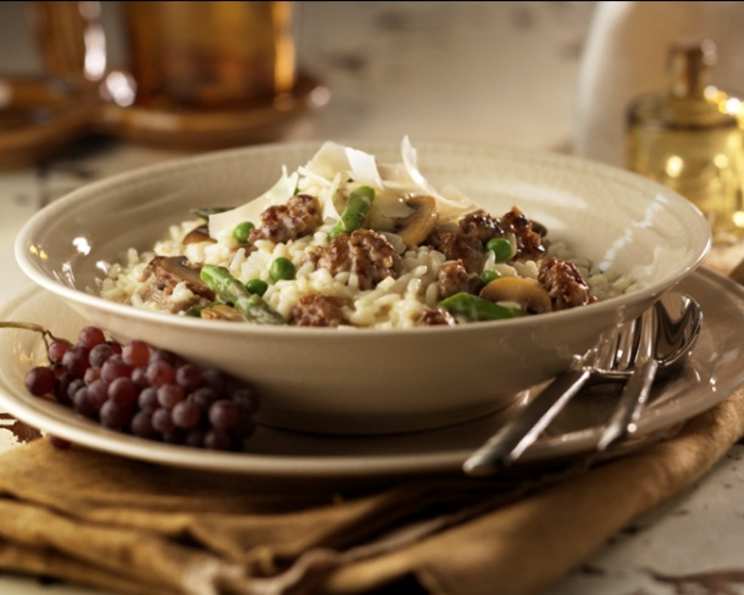
Sausage and Vegetable Risotto: A Taste of Italy in Your Kitchen
Risotto. Just the word conjures images of cozy Italian kitchens, the gentle simmer of stock, and the anticipation of a creamy, comforting bowl. I remember the first time I tasted truly exceptional risotto – it was in a tiny trattoria tucked away on a side street in Florence. The chef, a kind Nonna with flour dusting her apron, served a simple yet perfect risotto ai funghi. The earthy aroma, the al dente bite of the rice, the luxurious creaminess… it was a revelation. Ever since, I’ve been on a quest to recreate that magic in my own kitchen. This Sausage and Vegetable Risotto is my ode to that unforgettable meal, a delightful combination of savory sausage, fresh vegetables, and the classic risotto technique.
Recipe Overview
- Prep Time: 15 minutes
- Cook Time: 45 minutes
- Total Time: 60 minutes
- Servings: 6-8
- Yield: Approximately 8 cups
- Dietary Type: Not Gluten-Free, Not Dairy-Free (Can be modified – see variations)
Ingredients
- 5 1/4 cups chicken stock (42 oz.)
- 3 sprigs fresh herbs (Basil, oregano, or thyme)
- 4 tablespoons olive oil
- 1 medium yellow onion, finely chopped
- 1 (19 ounce) package Johnsonville® Mild Italian Sausages (casings removed)
- 2 cups white button mushrooms, wiped clean and sliced about 1/4 inch thick
- 2 cups arborio rice or 2 cups medium grain risotto rice
- 1/2 cup dry white wine
- 1/2 lb asparagus, stemmed and cut into 1 inch pieces
- 1/2 cup peas (fresh shelled or frozen)
- Salt & freshly ground black pepper
- 1/3 cup shredded parmesan cheese
- Parmesan cheese, for garnish (shaved or shredded)
Equipment Needed
- Large saucepan
- Medium saucepan
- Wooden spoon
- Ladle
Instructions
-
Begin by preparing the chicken stock. Pour the stock into a medium saucepan. If using fresh herbs, add them to the stock to infuse the broth with their aroma. Bring the stock to a gentle simmer over medium heat. Cover the saucepan and keep the stock warm until ready to use. This ensures the stock is hot throughout the risotto-making process, which is crucial for even cooking.
-
In a large saucepan, heat the olive oil over medium heat. Add the finely chopped yellow onion and sauté until tender and translucent, about 5 minutes. This step is important to build a flavour base for the entire dish.
-
Add the Johnsonville® Mild Italian Sausages to the saucepan. Using a wooden spoon, break up the sausage as it cooks into bite-sized pieces. Continue cooking until the sausage is browned, approximately 5 minutes. Be sure to fully cook the sausage to ensure food safety.
-
Add the sliced white button mushrooms to the saucepan and cook, stirring, until they are just wilted, about 2 minutes. This brief cooking time allows the mushrooms to release their earthy flavour without becoming soggy.
-
Mix in the arborio rice or medium grain risotto rice and cook, stirring constantly, until the kernels are hot and coated with the oil; about another 2 minutes. This process, called toasting the rice, helps create a nutty flavor and ensures that the rice releases starch properly, contributing to the risotto’s creamy texture.
-
Pour in the dry white wine and stir continuously until the liquid is completely absorbed by the rice. The wine adds acidity and depth of flavor to the risotto. Make sure to scrape the bottom of the pan to deglaze and release any browned bits for extra flavor.
-
Now comes the key to perfect risotto: gradual addition of the hot stock. Using a ladle, add the hot stock about ½ cup at a time, stirring constantly and making sure the stock has been absorbed before adding more to the rice. Continue adding ½ cup of stock and stirring rice constantly and gently. This constant stirring releases the starch from the rice, creating the signature creamy texture of risotto.
-
When the rice is about half cooked (after about 10-12 minutes), or when only 1½ cups of the stock remains, add the asparagus pieces into the rice and continue stirring. This ensures that the asparagus cooks evenly with the rice.
-
When you have about 1 cup of liquid left, stir the peas into the rice and season with salt and pepper to taste. Continue stirring. The peas will cook quickly in the remaining heat and stock.
-
Continue stirring the risotto until the rice grains are creamy on the outside and firm yet tender to the bite, (about 20-25 minutes total of cooking with broth). This is known as al dente. Taste the risotto frequently during this process to ensure it reaches the desired consistency and flavor.
-
When the risotto is just right, remove it from the heat and stir in the shredded parmesan cheese. This final addition of cheese adds richness and umami to the dish.
-
Spoon the Sausage and Vegetable Risotto into large soup bowls. Top with shaved parmesan cheese and serve immediately. Risotto is best enjoyed fresh, when the texture is at its peak.
Rice varies, so you may not need all the stock, or you may need more. If more liquid is required you can add simmering water in place of extra broth. You should taste for doneness along the way.
Expert Tips & Tricks
- Use hot stock: Keeping the stock at a simmer ensures it doesn’t cool the rice down each time you add it, maintaining a consistent cooking temperature.
- Don’t rinse the rice: The starch on the rice is what makes risotto creamy, so rinsing it beforehand would defeat the purpose.
- Stir, stir, stir: Constant stirring is essential for releasing the starch and creating the creamy texture. Don’t walk away from the pot!
- Taste as you go: Adjust seasoning and liquid as needed.
- Butter Finish: For extra richness, stir in a tablespoon of butter along with the Parmesan cheese at the end.
Serving & Storage Suggestions
Serve the risotto immediately after cooking, garnished with extra Parmesan cheese and a sprinkle of fresh herbs for a pop of color. Risotto is best enjoyed fresh, as it tends to lose its creamy texture as it sits.
Leftovers can be stored in an airtight container in the refrigerator for up to 2 days. To reheat, add a splash of stock or water and gently warm over low heat, stirring frequently, until heated through. Avoid reheating in the microwave, as this can dry out the risotto.
Risotto is generally not suitable for freezing, as the texture changes significantly upon thawing.
Nutritional Information
| Nutrient | Amount per Serving | % Daily Value |
|---|---|---|
| Calories | 465.8 kcal | N/A |
| Calories from Fat | 122 g | 26% |
| Total Fat | 13.7 g | 21% |
| Saturated Fat | 3 g | 15% |
| Cholesterol | 11.2 mg | 3% |
| Sodium | 394.6 mg | 16% |
| Total Carbohydrate | 67 g | 22% |
| Dietary Fiber | 3.9 g | 15% |
| Sugars | 6.1 g | N/A |
| Protein | 14.3 g | 28% |
Note: Nutritional information is an estimate and may vary based on specific ingredients and preparation methods.
Variations & Substitutions
- Vegetarian Risotto: Omit the sausage and use vegetable broth instead of chicken stock. Add extra vegetables like zucchini, bell peppers, or spinach.
- Spicy Risotto: Use hot Italian sausage and add a pinch of red pepper flakes to the dish.
- Seafood Risotto: Substitute the sausage with shrimp, scallops, or mussels. Use fish stock instead of chicken stock.
- Gluten-Free: Ensure that the sausage and chicken stock are gluten-free.
- Dairy-Free/Vegan: Omit the parmesan cheese and use a nutritional yeast or a plant-based parmesan alternative for a similar flavor.
- Seasonal Variations: Swap out the asparagus and peas for other seasonal vegetables. Butternut squash in the fall, or corn and tomatoes in the summer would be delicious.
FAQs (Frequently Asked Questions)
Q: Can I use a different type of rice?
A: While arborio rice is the classic choice for risotto, you can use other medium-grain rice varieties like carnaroli. Long-grain rice is not recommended, as it doesn’t release enough starch.
Q: Can I make risotto ahead of time?
A: Risotto is best enjoyed fresh, but you can prepare the components (chop vegetables, brown sausage, heat stock) in advance to save time. You can also cook the risotto to the halfway point, then stop and finish cooking it just before serving.
Q: My risotto is too thick. What should I do?
A: Add a little more hot stock or water and stir until it reaches the desired consistency.
Q: My risotto is too watery. What should I do?
A: Continue cooking over low heat, stirring constantly, until the excess liquid is absorbed.
Q: Can I use different herbs in the risotto?
A: Absolutely! Feel free to experiment with different herbs like rosemary, sage, or chives. Add them towards the end of cooking to preserve their flavor.
Final Thoughts
This Sausage and Vegetable Risotto is more than just a meal; it’s an experience. The process of slowly adding the stock, stirring patiently, and watching the rice transform into a creamy, flavorful masterpiece is incredibly rewarding. So, gather your ingredients, put on some Italian music, and immerse yourself in the art of risotto making. Don’t be afraid to experiment with different flavors and vegetables to create your own signature version. And most importantly, enjoy the process! I encourage you to share your creations and any feedback you may have. Buon appetito!