
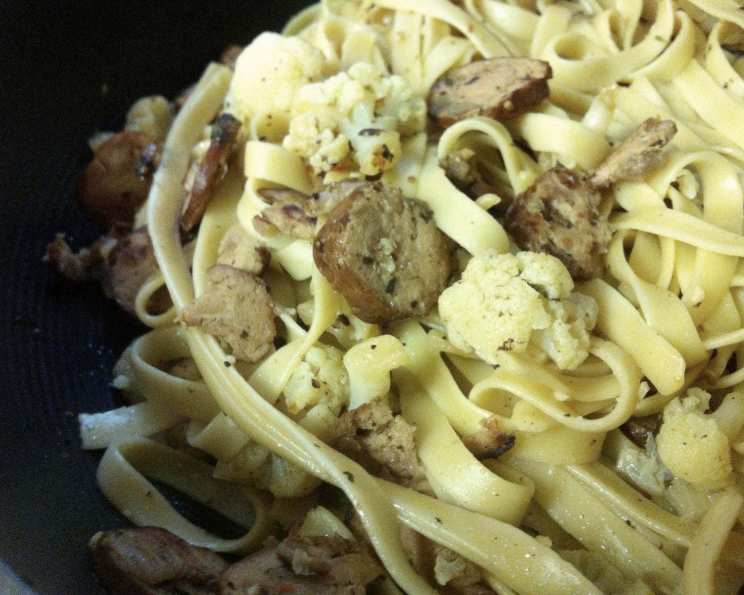
Sausage-Cauliflower Spaghetti: A Rustic Italian Comfort
There’s something undeniably comforting about a big bowl of pasta. My grandmother, Nonna Emilia, used to make a dish similar to this every Sunday, though hers involved slow-braised pork and a mountain of Pecorino. The aroma would fill the entire house, a heady mix of garlic, meat, and simmering tomato sauce. While my take on it is lighter and quicker, using turkey sausage and cauliflower for a modern twist, it still holds that same feeling of warmth and family, a taste of Sundays past brought into the present.
Recipe Overview
- Prep Time: 15 minutes
- Cook Time: 20 minutes
- Total Time: 35 minutes
- Servings: 4
- Yield: 4 servings
- Dietary Type: Not Gluten-Free
Ingredients
- 12 ounces spaghetti noodles
- Kosher salt
- 3 tablespoons extra virgin olive oil, plus a little more for drizzling
- 12 ounces sweet Italian turkey sausage, casings removed
- 6 garlic cloves, sliced
- 1 small head cauliflower, broken into small florets
- 1 bunch scallion, chopped
- 1 cup parmesan cheese or 1 cup pecorino romano cheese, grated
Equipment Needed
- Large pot
- Large skillet
- Wooden spoon
- Colander
- Shallow bowls for serving
Instructions
- Bring a large pot of salted water to a boil. The water should be generously salted – this is key to flavoring the pasta properly.
- Add the spaghetti and cook as the label directs. Remember to stir occasionally to prevent sticking.
- Before draining, reserve 2 cups of cooking water. This starchy water is liquid gold for creating a luscious sauce, so don’t skip this step! Once reserved, drain the pasta in a colander.
- While the pasta is cooking, heat the olive oil in a large skillet over medium-high heat. Ensure the skillet is large enough to accommodate all the ingredients later on.
- Crumble the sausage into the skillet and cook, breaking it up with a wooden spoon, until lightly browned and no longer pink, about 4 to 5 minutes. The browning process is important for developing flavor, so don’t rush it.
- Clear a space in the pan, add the garlic, and cook until just golden, about 2 to 3 minutes. Watch the garlic carefully, as it can burn quickly and become bitter.
- Add the cauliflower and cook until the edges are browned, about 2 minutes. This initial browning adds a nutty depth to the cauliflower.
- Add 1 cup of the reserved cooking water, cover, and reduce the heat to medium. The steam will help the cauliflower cook evenly.
- Cook until the cauliflower is tender, about 8 more minutes. You should be able to easily pierce the florets with a fork when they’re ready.
- Uncover and boil over high heat until the liquid is almost evaporated, about 2 more minutes. This step concentrates the flavors of the sauce.
- Add the spaghetti to the skillet along with the scallions.
- Drizzle with olive oil and season with salt. Be mindful of the salt already in the pasta water and sausage.
- Toss for a minute or two to wilt the scallions and coat the pasta with the sauce, adding up to 1 cup cooking water, if needed, to loosen. The starchy water will emulsify with the olive oil and create a creamy consistency.
- Remove from the heat, sprinkle with the cheese, and toss. Ensure the cheese is evenly distributed.
- Divide among shallow bowls and drizzle with more olive oil, if desired. A final drizzle of high-quality olive oil adds a touch of richness and aroma.
Expert Tips & Tricks
- For a richer flavor, use Italian sausage with fennel seeds.
- If you like a bit of heat, add a pinch of red pepper flakes along with the garlic.
- Roasting the cauliflower beforehand in the oven at 400°F (200°C) for 20 minutes can add even more depth of flavor. Toss the florets with olive oil, salt, and pepper before roasting.
- Don’t overcook the pasta! It should be al dente, with a slight bite to it.
- If the sauce becomes too thick, add a little more cooking water to loosen it up.
- To prevent the garlic from burning, add a tablespoon of butter to the skillet along with the olive oil. The butter will help to temper the heat.
Serving & Storage Suggestions
Serve the Sausage-Cauliflower Spaghetti immediately, garnished with extra cheese and a drizzle of olive oil. A sprinkle of fresh parsley or basil adds a vibrant touch.
Leftovers can be stored in an airtight container in the refrigerator for up to 3 days. To reheat, gently warm in a skillet over medium heat, adding a splash of water or broth if needed to prevent drying out. You can also reheat it in the microwave, but be careful not to overcook the pasta.
While technically you could freeze this dish, the texture of the pasta and cauliflower may change upon thawing. It’s best enjoyed fresh or within a few days of cooking.
Nutritional Information
| Nutrient | Amount per Serving | % Daily Value |
|---|---|---|
| Calories | 550 kcal | 28% |
| Total Fat | 25g | 38% |
| Saturated Fat | 8g | 40% |
| Cholesterol | 70mg | 23% |
| Sodium | 1200mg | 50% |
| Total Carbohydrate | 65g | 22% |
| Dietary Fiber | 5g | 20% |
| Sugars | 8g | N/A |
| Protein | 30g | 60% |
Note: Nutritional information is an estimate and may vary based on specific ingredients and portion sizes.
Variations & Substitutions
- Gluten-Free: Use gluten-free spaghetti noodles.
- Vegetarian: Substitute the turkey sausage with plant-based sausage crumbles.
- Spicy: Add a pinch of red pepper flakes or a drizzle of chili oil.
- Different Vegetables: Broccoli, Brussels sprouts, or kale can be substituted for the cauliflower.
- Cheese: Try using ricotta salata or grated Asiago cheese instead of Parmesan or Pecorino Romano.
- Herbs: Add fresh thyme, rosemary, or oregano for an extra layer of flavor.
FAQs (Frequently Asked Questions)
Q: Can I use pre-cooked sausage to save time?
A: Yes, you can use pre-cooked sausage. Simply slice or crumble it and add it to the skillet after the garlic is cooked. Reduce the overall cooking time slightly.
Q: Can I make this dish ahead of time?
A: While best served fresh, you can prepare the sauce ahead of time and store it in the refrigerator for up to 2 days. Cook the pasta just before serving and combine with the reheated sauce.
Q: What is the best way to reheat leftover spaghetti?
A: Add a splash of water or broth to the spaghetti before reheating to prevent it from drying out. Reheat in a skillet over medium heat or in the microwave.
Q: Can I use frozen cauliflower?
A: Yes, you can use frozen cauliflower, but be sure to thaw it and drain any excess water before adding it to the skillet.
Q: What kind of cheese works best in this recipe?
A: Parmesan or Pecorino Romano are classic choices, but you can also use Asiago, ricotta salata, or even a sprinkle of mozzarella. Choose a cheese that you enjoy and that complements the other flavors in the dish.
Final Thoughts
This Sausage-Cauliflower Spaghetti is more than just a quick and easy weeknight meal; it’s a comforting and flavorful dish that’s perfect for sharing with family and friends. The combination of savory sausage, tender cauliflower, and perfectly cooked pasta is sure to satisfy even the pickiest eaters. I encourage you to give this recipe a try and make it your own by experimenting with different variations and substitutions. Don’t hesitate to share your creations and feedback – I’d love to hear how it turns out! Consider pairing this dish with a crisp, dry white wine like Pinot Grigio or Sauvignon Blanc for a truly delightful culinary experience. Buon appetito!