
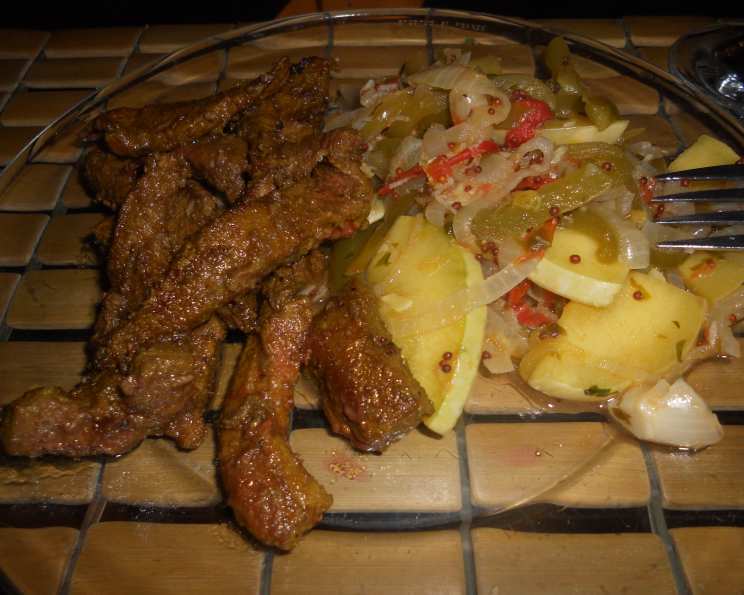
Sautéed Beef Liver With Onions & Peppers: A Culinary Ode to Simplicity
The aroma still pulls me back – a memory etched in childhood. It was my grandmother’s kitchen, a place of warmth and unspoken love, where the savory scent of sautéed liver, onions, and peppers would fill the air. I remember wrinkling my nose at the thought of it, a child’s aversion to the unknown. Yet, she’d always manage to coax me into trying a bite, and I was always surprised by the rich, earthy flavor, a taste that has become a comforting reminder of her unwavering care. This dish, for me, is more than just a meal; it’s a connection to my past, a culinary inheritance I cherish.
Recipe Overview
- Prep Time: 15 minutes
- Cook Time: 20 minutes
- Total Time: 35 minutes
- Servings: 2-3
- Dietary Type: High Protein
Ingredients
- ¼ cup canola oil
- 2 onions, sliced
- 1 red pepper, sliced
- 1 lb beef liver or 1 lb calf liver
- ½ cup whole wheat flour
- 1 teaspoon dried oregano
- ½ teaspoon garlic powder
- ½ teaspoon onion powder
Equipment Needed
- Heavy frying pan or skillet
- Cutting board
- Sharp knife
- Mixing bowl
Instructions
-
Begin by preparing the beef liver. The key to tender liver is meticulous preparation. Carefully remove all visible membranes from the liver. This step is crucial, as the membranes can become tough and chewy during cooking.
-
Once the membranes are removed, slice the liver into thin strips, approximately ¼ inch thick. Thin slices ensure even cooking and prevent the liver from becoming rubbery. Set the sliced liver aside.
-
Now, prepare the vegetables. In a heavy frying pan or skillet, heat one tablespoon of the canola oil over medium heat.
-
Add the sliced onions and red pepper to the pan. Sauté them for about 5 minutes, or until they are softened and slightly caramelized. This process brings out their natural sweetness and adds depth of flavor to the dish.
-
Remove the sautéed onions and red pepper from the pan and keep them warm. You can place them in a separate bowl and cover it to retain heat.
-
In a mixing bowl, combine the whole wheat flour, dried oregano, garlic powder, and onion powder. This mixture will be used to dredge the liver, adding flavor and creating a slightly crispy exterior.
-
Dredge the liver slices in the flour mixture, ensuring they are evenly coated. This coating will help to seal in the moisture and prevent the liver from drying out during cooking.
-
Heat the remaining canola oil in the same frying pan over medium-high heat. The pan should be hot enough to sear the liver quickly.
-
Sauté the liver slices quickly for about 3 minutes, or until they are brown on the outside but still pink inside. The key is to not overcook the liver. Overcooked liver becomes tough and unpalatable. Maintain a watchful eye and use your senses.
-
DO NOT OVERCOOK. This is the golden rule of liver preparation. A slightly pink interior is a sign of perfectly cooked, tender liver.
-
Add the cooked vegetables back to the pan with the liver.
-
Stir to combine the liver and vegetables, ensuring they are evenly distributed and heated through.
-
Serve immediately. The dish is best enjoyed fresh off the stove, when the liver is at its most tender and flavorful.
Expert Tips & Tricks
- Soaking the Liver: For an even milder flavor, soak the beef liver in milk for 30 minutes before slicing. This helps to draw out any lingering bitterness. Discard the milk after soaking.
- Don’t Crowd the Pan: When sautéing the liver, avoid overcrowding the pan. Work in batches if necessary, to ensure each piece browns evenly and doesn’t steam.
- Acidic Finish: A squeeze of lemon juice or a splash of balsamic vinegar at the end can brighten the flavors and add a welcome tang.
- Deglaze the Pan: After removing the liver and vegetables, deglaze the pan with a little broth or wine to create a flavorful sauce. Scrape up any browned bits from the bottom of the pan for maximum flavor.
Serving & Storage Suggestions
Serve the sautéed beef liver with onions and peppers immediately for the best flavor and texture. It pairs wonderfully with mashed potatoes, rice, or crusty bread to soak up the savory juices. A simple green salad also provides a refreshing contrast.
Leftovers can be stored in an airtight container in the refrigerator for up to 3 days. Reheat gently in a skillet over medium heat, or in the microwave, until heated through. Be careful not to overcook the liver during reheating, as it can become tough.
While freezing is possible, the texture of the liver may change slightly upon thawing. If freezing, wrap the leftovers tightly in plastic wrap and store in an airtight container for up to 2 months. Thaw completely in the refrigerator before reheating.
Nutritional Information
| Nutrient | Amount per Serving | % Daily Value |
|---|---|---|
| Calories | 716.4 kcal | N/A |
| Calories from Fat | 327 g | 46% |
| Total Fat | 36.4 g | 55% |
| Saturated Fat | 4.9 g | 24% |
| Cholesterol | 623.7 mg | 207% |
| Sodium | 163.1 mg | 6% |
| Total Carbohydrate | 46.6 g | 15% |
| Dietary Fiber | 6.7 g | 26% |
| Sugars | 7.7 g | 30% |
| Protein | 52.1 g | 104% |
Variations & Substitutions
- Calf Liver: Substitute beef liver with calf liver for a more delicate flavor and texture. Calf liver is generally more tender and less gamey than beef liver.
- Different Vegetables: Feel free to experiment with other vegetables, such as bell peppers of different colors (yellow, orange, green), mushrooms, or zucchini.
- Gluten-Free: Use a gluten-free flour blend instead of whole wheat flour to make this dish gluten-free.
- Spice It Up: Add a pinch of red pepper flakes or a dash of hot sauce for a little heat.
- Wine Sauce: Deglaze the pan with red wine after cooking the liver and vegetables for a richer, more complex flavor.
FAQs (Frequently Asked Questions)
Q: How do I prevent beef liver from becoming tough?
A: The key is to remove all visible membranes before cooking and to avoid overcooking the liver. Sauté it quickly until it’s brown on the outside but still slightly pink inside.
Q: Can I use frozen liver for this recipe?
A: Yes, but make sure to thaw it completely in the refrigerator before cooking. Pat it dry with paper towels to remove any excess moisture.
Q: What is the best way to remove the membrane from beef liver?
A: Use a sharp knife to gently lift and peel away the membrane. It can be slippery, so use a paper towel to grip it for better control.
Q: Can I prepare this dish ahead of time?
A: While it’s best served immediately, you can sauté the onions and peppers ahead of time and store them in the refrigerator. Add them to the pan with the cooked liver when you’re ready to serve.
Q: Is beef liver healthy?
A: Yes, beef liver is a nutrient-rich food, packed with protein, vitamins (especially B12 and A), and minerals like iron and zinc. However, it is also high in cholesterol, so consume it in moderation.
Final Thoughts
Sautéed beef liver with onions and peppers is a humble dish, but one that holds a special place in my heart. Its simple ingredients and straightforward preparation belie its depth of flavor and nutritional value. Don’t be intimidated if you’ve never cooked liver before – this recipe is foolproof. Embrace the earthy aroma, the tender texture, and the comforting memories it evokes. Give it a try, and perhaps you’ll discover a new favorite dish, one that connects you to the past while nourishing you in the present. Serve it with a glass of dry red wine and good company, and let the simple pleasure of this dish speak for itself. I encourage you to share your own variations and experiences with this recipe – I’d love to hear what you think!