
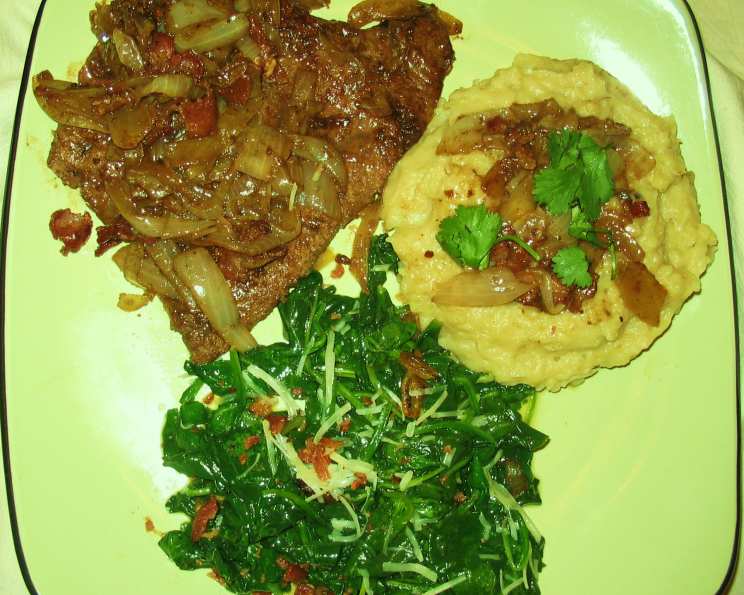
Sautéed Calves Liver with Balsamic Glaze
The first time I tried calves liver, I was hesitant. My grandmother, a woman who could coax flavor out of anything, insisted. “Just one bite,” she’d said, her eyes twinkling. She’d prepared it simply, just like this recipe, the rich aroma filling her cozy kitchen. That first taste, a revelation! The slight sweetness of the caramelized onions, the tangy balsamic, and the melt-in-your-mouth tenderness of the liver itself. It wasn’t at all what I expected. It was comfort, warmth, and a memory I treasure, all on one plate.
Recipe Overview
- Prep Time: 10 minutes
- Cook Time: 20 minutes
- Total Time: 30 minutes
- Servings: 4
- Dietary Type: Omnivore
Ingredients
- 6 slices calf liver
- 1 large onion, sliced
- 6 slices bacon
- Flour (for dusting)
- Salt, to taste
- Pepper, to taste
- 3 tablespoons balsamic vinegar
Equipment Needed
- Large frying pan
- Paper towels
- Knife
- Cutting board
Instructions
-
Begin by preparing the bacon. Place the bacon slices in a large frying pan over medium heat. Fry the bacon until it is crisp, turning occasionally to ensure even cooking. This usually takes about 5-7 minutes.
-
Once the bacon is crisp, remove it from the pan using tongs and transfer it to a plate lined with paper towels. This will help to absorb any excess grease. Set the bacon aside for later. Leave the rendered bacon fat in the pan.
-
Add the sliced onion to the pan with the bacon fat. Sauté the onion over medium heat, stirring frequently, until it becomes soft and nicely browned. This should take approximately 8-10 minutes. The onions should be sweet and caramelized.
-
Remove the sautéed onions from the pan and set them aside in a separate bowl. Try to leave as much of the bacon fat in the pan as possible.
-
While the onions are sautéing, prepare the calf liver. Lightly dust each slice of calf liver with flour. Season generously with salt and pepper to taste. This step is crucial for creating a nice crust on the liver and enhancing its flavor.
-
Return the pan to medium heat. Ensure there’s enough bacon fat remaining; if not, add a tablespoon of olive oil or butter. Place the floured liver slices in the hot pan, being careful not to overcrowd it. You may need to cook the liver in batches to ensure proper browning.
-
Sauté the liver for approximately 3 minutes per side. It is crucial not to overcook the liver, as it can become tough and dry. The liver is done when it is lightly browned on the outside but still slightly pink inside.
-
Remove the cooked liver slices from the pan and set them aside on a plate.
-
Now it’s time to deglaze the pan and create the balsamic glaze. Pour the balsamic vinegar into the hot pan. Use a spatula to scrape up any browned bits from the bottom of the pan – these bits are packed with flavor and will enhance the sauce.
-
Allow the balsamic vinegar to simmer for about 1-2 minutes, or until it slightly reduces and thickens into a glaze. Be careful not to burn it.
-
Return the sautéed onions and the cooked bacon (crumbled) to the pan with the balsamic glaze. Gently toss all the ingredients together to blend the flavors.
-
Finally, add the sautéed liver slices back into the pan. Coat the liver with the balsamic glaze, onions, and bacon, ensuring each piece is well covered. Heat through for another minute, allowing the flavors to meld together.
Expert Tips & Tricks
- Soak the Liver: For a milder flavor, soak the calf liver in milk for about 30 minutes before cooking. This helps to draw out some of the bitterness. Pat it dry thoroughly before flouring.
- Don’t Overcook: Overcooked liver is tough and unpleasant. Aim for medium-rare to medium for the best texture. Use a meat thermometer; the internal temperature should reach 160°F (71°C).
- Balsamic Reduction: For a more intense balsamic flavor, reduce the balsamic vinegar in a separate saucepan until it reaches a syrupy consistency before adding it to the pan.
- Crispy Bacon Secret: Ensure the bacon is truly crisp by baking it in the oven at 400°F (200°C) for about 15-20 minutes. This yields perfectly crisp bacon every time.
Serving & Storage Suggestions
Serve the sautéed calf liver immediately while it is still hot and tender. Garnish with fresh parsley or a sprinkle of bacon crumbles for added visual appeal. This dish pairs beautifully with mashed potatoes, creamy polenta, or sautéed spinach.
Leftovers can be stored in an airtight container in the refrigerator for up to 3 days. To reheat, gently warm the liver in a skillet over low heat, adding a splash of water or broth to prevent it from drying out. Avoid microwaving, as it can make the liver tough. Freezing is not recommended, as it can significantly alter the texture.
Nutritional Information
| Nutrient | Amount per Serving | % Daily Value |
|---|---|---|
| Calories | 280 kcal | 14% |
| Total Fat | 15g | 23% |
| Saturated Fat | 6g | 30% |
| Cholesterol | 250mg | 83% |
| Sodium | 400mg | 17% |
| Total Carbohydrate | 10g | 3% |
| Dietary Fiber | 1g | 4% |
| Sugars | 5g | N/A |
| Protein | 25g | 50% |
Note: Nutritional information is an estimate and may vary based on specific ingredients and cooking methods.
Variations & Substitutions
- Wine Reduction: Substitute red wine for the balsamic vinegar for a richer, more complex flavor. Use about 1/2 cup of red wine and reduce it in the pan before adding the onions and bacon.
- Different Liver: While this recipe is specifically for calf liver, you can also use chicken or pork liver. Adjust the cooking time accordingly, as different types of liver may require slightly longer or shorter cooking times.
- Herb Infusion: Add fresh herbs like thyme, rosemary, or sage to the pan while sautéing the onions for an extra layer of flavor.
- Vegetarian Option: Use thick slices of portobello mushrooms for a similar texture and umami flavour if liver is not to your taste
FAQs (Frequently Asked Questions)
Q: Why is it important not to overcook the liver?
A: Overcooking liver makes it tough and rubbery. The ideal texture is slightly pink inside, which ensures it remains tender and flavorful.
Q: Can I use a different type of vinegar instead of balsamic?
A: Yes, you can substitute red wine vinegar or apple cider vinegar, but the flavor profile will be different. Balsamic vinegar provides a sweet and tangy glaze that complements the liver well.
Q: How do I prevent the liver from splattering while cooking?
A: Ensure the liver is patted dry with paper towels before flouring it. Also, don’t overcrowd the pan, as this can lower the temperature and cause splattering.
Q: Is it necessary to soak the liver in milk?
A: Soaking the liver in milk is optional, but it can help to mellow the flavor and make it more tender. If you prefer a stronger liver flavor, you can skip this step.
Q: Can I add other vegetables to this dish?
A: Absolutely! Mushrooms, bell peppers, and garlic would all be delicious additions. Sauté them along with the onions for a more complex flavor.
Final Thoughts
Sautéed calf liver with balsamic glaze is a dish that often surprises those who think they don’t like liver. The sweetness of the onions, the saltiness of the bacon, and the tang of the balsamic create a symphony of flavors that complement the rich, earthy taste of the liver perfectly. Don’t be afraid to try it – you might just discover a new favorite! Share your experiences and any creative twists you add to the recipe. Enjoy!