
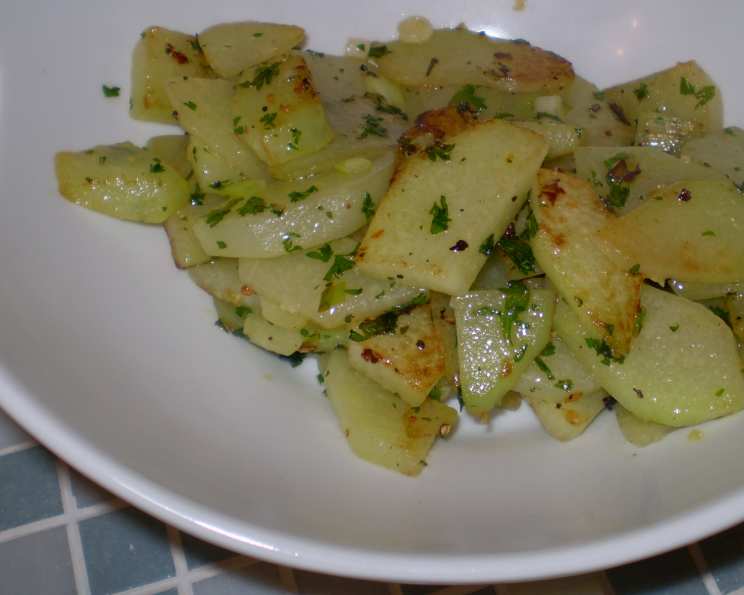
Sautéed Chayote With Garlic and Herbs: A Simple Taste of Home
I remember the first time I encountered chayote. It was at my grandmother’s house, nestled among the other vegetables she’d grown in her backyard garden. She called it “vegetable pear,” and although I was a picky eater, the way she sautéed it with garlic and herbs made it irresistible. That simple dish, full of fresh, vibrant flavors, always reminded me of her love and the warmth of her kitchen, and remains a cherished part of my culinary journey.
Recipe Overview
- Prep Time: 10 minutes
- Cook Time: 5 minutes
- Total Time: 15 minutes
- Servings: 6
- Dietary Type: Vegetarian, Gluten-Free
Ingredients
- 2 tablespoons butter
- 2 large chayotes, peeled, halved lengthwise, pitted, thinly sliced
- 2 tablespoons chopped fresh parsley, divided
- 3 garlic cloves, chopped
- 2 green onions, thinly sliced
Equipment Needed
- Heavy large skillet
Instructions
-
Begin by preparing your ingredients. Peel the chayotes, halve them, remove the pit, and thinly slice each half. This is easiest done with a mandoline, but a sharp knife and steady hand work just as well. Finely chop the garlic and parsley, and thinly slice the green onions. Having everything ready to go before you start cooking is key for quick and efficient sautéing.
-
Place a heavy large skillet over medium-high heat. Add the butter and allow it to melt completely. Be careful not to let the butter burn; the goal is to get it hot enough to quickly cook the chayote without scorching.
-
Once the butter is melted and shimmering, add the sliced chayote, 1 tablespoon of the chopped fresh parsley, and the chopped garlic.
-
Sauté the mixture until the chayote is crisp-tender, approximately 3 minutes. Stir frequently to ensure even cooking and prevent the garlic from burning. You want the chayote to retain a slight bite; it should not be overly soft or mushy.
-
Stir in the thinly sliced green onions and cook for another minute, just until they are slightly wilted. This adds a mild onion flavor that complements the other ingredients beautifully.
-
Transfer the sautéed chayote mixture to a serving bowl. Sprinkle with the remaining 1 tablespoon of chopped fresh parsley for a final burst of freshness and color.
Expert Tips & Tricks
-
Slicing Uniformity: Slicing the chayote uniformly is crucial for even cooking. Aim for slices that are roughly the same thickness to ensure that they all reach the desired crisp-tender texture simultaneously.
-
Garlic Control: Garlic burns easily, so watch it closely. If you notice it starting to brown too quickly, reduce the heat slightly. Burnt garlic can impart a bitter taste to the dish.
-
Herb Freshness: Using fresh parsley is essential for the best flavor. If you don’t have fresh parsley, you can use dried, but reduce the amount to about 1 teaspoon as dried herbs are more concentrated.
-
Adding a touch of heat: If you like a bit of spice, consider adding a pinch of red pepper flakes to the skillet along with the garlic.
Serving & Storage Suggestions
This sautéed chayote dish is best served immediately, while it’s still warm and the chayote is crisp-tender. It makes an excellent side dish for a variety of meals, including grilled chicken, fish, or vegetarian tacos. Leftovers can be stored in an airtight container in the refrigerator for up to 3 days. To reheat, gently sauté in a skillet with a little olive oil or butter until heated through. Reheating may cause the chayote to lose some of its crispness, but the flavor will still be delicious. Freezing is not recommended, as it will significantly alter the texture of the chayote.
Nutritional Information
| Nutrient | Amount per Serving | % Daily Value |
|---|---|---|
| Calories | 49.7 kcal | N/A |
| Calories from Fat | 35 kcal | 71% |
| Total Fat | 4 g | 6% |
| Saturated Fat | 2.5 g | 12% |
| Cholesterol | 10.2 mg | 3% |
| Sodium | 30.4 mg | 1% |
| Total Carbohydrate | 3.6 g | 1% |
| Dietary Fiber | 1.4 g | 5% |
| Sugars | 1.4 g | N/A |
| Protein | 0.8 g | 1% |
Note: % Daily Value not available
Variations & Substitutions
-
Olive Oil: For a dairy-free option, substitute the butter with olive oil. Use a good quality extra virgin olive oil for the best flavor.
-
Different Herbs: Feel free to experiment with different herbs. Thyme, oregano, or chives would all be delicious additions or substitutions for the parsley.
-
Onion Variety: While green onions add a subtle flavor, you could also use finely diced yellow or white onion for a stronger onion taste. Sauté the diced onion along with the garlic.
-
Citrus Zest: A little lemon or lime zest can brighten the flavors of this dish. Add the zest during the last minute of cooking.
FAQs (Frequently Asked Questions)
Q: Can I use frozen chayote for this recipe?
A: While fresh chayote is recommended for the best texture, you can use frozen if necessary. Thaw it completely and pat it dry before sautéing. Be aware that the texture may be slightly softer.
Q: Is it necessary to peel the chayote?
A: Yes, peeling the chayote is recommended, as the skin can be tough.
Q: Can I make this dish ahead of time?
A: It’s best to serve this dish immediately for the best texture. If you need to prepare ahead, cook the chayote but don’t add the green onions and parsley until just before serving.
Q: What can I substitute for chayote if I can’t find it?
A: If you can’t find chayote, you can substitute with zucchini or summer squash. The cooking time may need to be adjusted slightly.
Q: How do I know when the chayote is done?
A: The chayote is done when it is crisp-tender, meaning it’s slightly softened but still has a bit of a bite to it. It should not be mushy.
Final Thoughts
This simple sautéed chayote dish is a testament to the fact that delicious food doesn’t have to be complicated. With just a handful of fresh ingredients and a few minutes of your time, you can create a flavorful and satisfying side dish that’s perfect for any occasion. I encourage you to try this recipe and experience the joy of cooking with simple, wholesome ingredients. Feel free to experiment with different herbs and seasonings to create your own unique variation. And most importantly, enjoy the process and the delicious results! Bon appétit!