
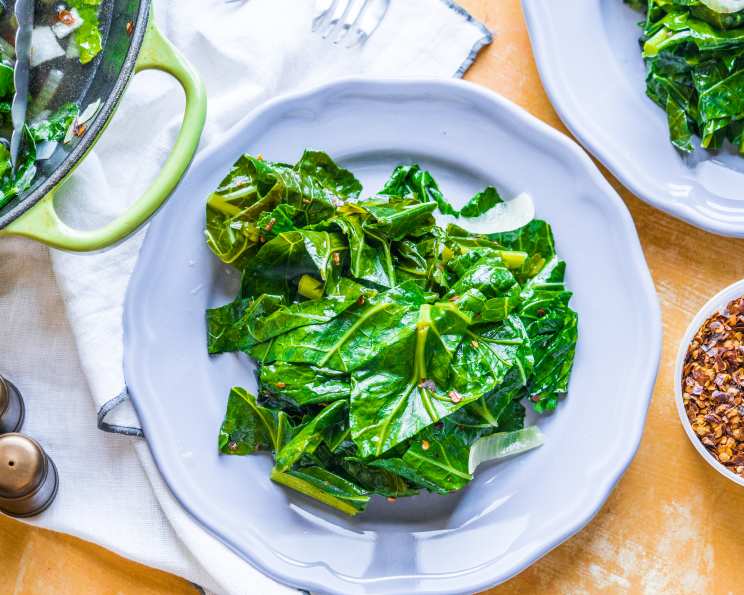
Sautéed Collard Greens: A Southern Classic, Simplified
My grandmother’s kitchen was a kingdom ruled by cast iron and the scent of simmering greens. As a child, I remember the deep, earthy aroma of collard greens filling every corner of her small house, especially on Sundays. While she always made hers the traditional way, slow-cooked with ham hocks, I’ve come to appreciate a quicker, lighter take that still honors the heart of this Southern staple. This sautéed version delivers all the comforting flavors of collard greens, without the need for hours of simmering and heavy fats.
Recipe Overview
- Prep Time: 15 minutes
- Cook Time: 5-7 minutes (plus additional time for desired tenderness)
- Total Time: 20-22 minutes (plus additional time for desired tenderness)
- Servings: 2
- Dietary Type: Gluten-Free
Ingredients
- 24 ounces fresh collard greens, coarsely chopped (feel free to substitute turnip greens)
- 2 tablespoons butter
- 1/2 cup onion, finely diced
- Crushed red pepper flakes, season to your taste
- 1/2 cup chicken stock, homemade is best
- Kosher salt, to taste
- Black pepper, freshly cracked, to taste
Equipment Needed
- Large saucepan
- Large skillet
Instructions
-
Begin by thoroughly washing the collard greens. This is the most important step to remove any dirt and grit. Fill a large bowl or sink with cold water and submerge the greens. Swish them around to loosen any debris. Lift the greens out of the water, leaving the dirt behind. Repeat this process several times until the water remains clear.
-
In a large saucepan, place the washed collard greens in hot water for 3 minutes. This brief blanching helps to slightly soften the greens and brighten their color. After 3 minutes, remove the greens and drain them well.
-
Place a large skillet over medium heat. Melt the butter in the skillet.
-
Once the butter is melted, add the finely diced onion and crushed red pepper flakes to the pan. Sauté the onion until it becomes tender and translucent, about 3-5 minutes. The crushed red pepper will infuse the butter and onions with a gentle heat.
-
Add the blanched and drained collard greens and chicken stock to the pan.
-
Cook on high heat, stirring occasionally, for 5 to 7 minutes. This initial cooking time will wilt the greens and allow them to absorb the flavors of the onions, red pepper flakes, and chicken stock.
-
Test a piece of the greens. If you prefer your greens more tender, continue cooking them longer, adding more stock or water to the pan as needed to prevent them from burning. The cooking time will vary depending on the age and toughness of the greens, so cook them to your desired level of tenderness. This may take anywhere from 10 to 20 minutes longer, possibly even longer.
-
Finally, season the greens with kosher salt and freshly cracked black pepper to taste. Be sure to taste the greens as you season to ensure you achieve the perfect balance of flavors.
Expert Tips & Tricks
- Choosing Your Greens: Look for collard greens with firm, dark green leaves. Avoid greens that are wilted, yellowing, or have blemishes. Smaller leaves tend to be more tender.
- Prepping the Greens: Properly washing collard greens is crucial. Don’t skip the thorough rinsing process.
- Chicken Stock Upgrade: Using homemade chicken stock significantly enhances the flavor. If you don’t have homemade stock, opt for a high-quality store-bought brand.
- Spice It Up: Adjust the amount of crushed red pepper flakes to your preferred level of heat. A pinch adds a subtle warmth, while a generous amount will create a spicier dish.
- Tenderizing Tip: For extra-tender greens, try adding a tablespoon of apple cider vinegar or lemon juice towards the end of the cooking time. The acidity helps break down the fibers in the greens.
- Bacon Fat Boost: While this recipe avoids bacon fat for a lighter take, a tablespoon of bacon fat added with the butter will add a traditional Southern flavor dimension.
- Make-Ahead Magic: The greens can be washed and chopped a day ahead and stored in the refrigerator in a sealed bag. This saves time when you’re ready to cook.
- Preventing Bitterness: Overcooking can sometimes lead to bitter greens. Avoid prolonged high-heat cooking and taste frequently to check for bitterness. If bitterness develops, a squeeze of lemon juice can help counteract it.
Serving & Storage Suggestions
Serve these sautéed collard greens as a flavorful side dish alongside grilled chicken, roasted pork, or pan-fried fish. They pair beautifully with cornbread, mashed potatoes, and other Southern comfort food classics.
Leftover collard greens can be stored in an airtight container in the refrigerator for up to 3-4 days. To reheat, simply warm them in a skillet over medium heat or microwave until heated through. You may need to add a splash of water or stock to prevent them from drying out during reheating. Freezing is not recommended, as the greens can become mushy upon thawing.
Nutritional Information
| Nutrient | Amount per Serving | % Daily Value* |
|---|---|---|
| Calories | 228.6 kcal | N/A |
| Calories from Fat | 121 g | 53% |
| Total Fat | 13.5 g | 20% |
| Saturated Fat | 7.7 g | 38% |
| Cholesterol | 32.3 mg | 10% |
| Sodium | 243.7 mg | 10% |
| Total Carbohydrate | 22.7 g | 7% |
| Dietary Fiber | 10.3 g | 41% |
| Sugars | 4 g | 16% |
| Protein | 9.3 g | 18% |
*Percent Daily Values are based on a 2,000 calorie diet.
Variations & Substitutions
- Turnip Greens: As the recipe notes, turnip greens can be used as a substitute for collard greens. They have a slightly milder flavor and may cook a bit faster.
- Mustard Greens: For a peppery kick, try using mustard greens either alone or in combination with collard greens.
- Smoked Turkey: Add chopped smoked turkey to the skillet along with the onions for a smoky, savory flavor.
- Vegetarian Option: Use vegetable broth instead of chicken stock for a vegetarian version.
- Spicy Variation: Incorporate a finely chopped jalapeño pepper along with the onions for a more intense heat.
- Garlic Infusion: Add 1-2 cloves of minced garlic to the skillet with the onions for an aromatic boost.
- Vinegar Tang: A splash of apple cider vinegar or balsamic vinegar at the end adds a delightful tangy note.
FAQs (Frequently Asked Questions)
Q: Do I really need to wash the collard greens so thoroughly?
A: Absolutely! Collard greens are notorious for trapping dirt and grit. Multiple rinses are essential to ensure a pleasant eating experience.
Q: Can I use frozen collard greens for this recipe?
A: While fresh collard greens are preferred, frozen greens can be used in a pinch. Be sure to thaw them completely and squeeze out any excess moisture before adding them to the skillet.
Q: How do I know when the collard greens are done?
A: The greens are done when they are tender to your liking. Taste a piece of the greens to check for tenderness. If they are still tough, continue cooking them longer, adding more stock or water as needed.
Q: Can I make this recipe ahead of time?
A: Yes, you can wash and chop the collard greens a day ahead and store them in the refrigerator. Cooked greens can also be reheated, but they are best served fresh.
Q: What if my greens taste bitter?
A: A squeeze of lemon juice or a splash of vinegar can help counteract any bitterness in the greens. Also, avoid overcooking, as this can sometimes contribute to bitterness.
Final Thoughts
This sautéed collard greens recipe is a delicious and accessible way to enjoy a Southern classic. It’s a lighter, quicker alternative to traditional preparations, perfect for weeknight meals or when you’re short on time. Don’t be afraid to experiment with the variations and substitutions to create your own signature version. I hope you’ll gather around the table and savor the comforting flavors of this beloved dish. Whether you’re a seasoned cook or a kitchen novice, give this recipe a try and share your feedback. Pair it with some crispy fried chicken and creamy mac and cheese for a truly unforgettable meal!