
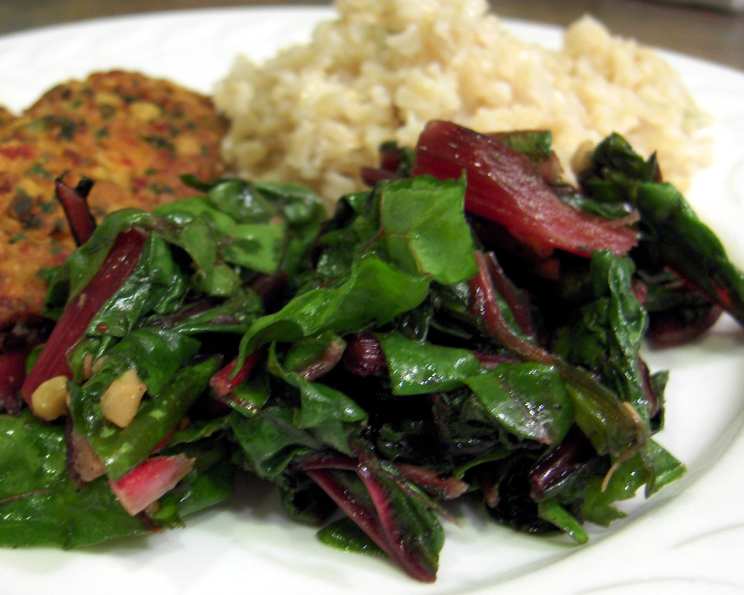
Sautéed Swiss Chard: A Simple, Savory Delight
I remember my grandmother’s garden, a vibrant tapestry of greens, reds, and purples. While she grew the usual tomatoes and cucumbers, it was the Swiss chard that always fascinated me. Its colorful stalks, like painted celery, stood tall and proud. I wasn’t always eager to eat it as a child, but now, decades later, the earthy flavor of sautéed Swiss chard brings back those summer memories, a taste of home and simpler times.
Recipe Overview
- Prep Time: 4 minutes
- Cook Time: 10 minutes
- Total Time: 14 minutes
- Servings: 4
- Dietary Type: Vegan, Gluten-Free, Dairy-Free, Low-Carb
Ingredients
- 1 lb red Swiss chard, washed, bottom stem removed, coarsely chopped
- 1 1/2 teaspoons lite olive oil
- 2 garlic cloves, minced
- Pepper to taste
Equipment Needed
- Wok or large skillet
- Cutting board
- Knife
Instructions
- Begin by preparing the Swiss chard. Thoroughly wash the leaves and remove the tough bottom stem. Coarsely chop the chard into pieces approximately 2 inches square. Don’t worry about being too precise; a rustic chop is perfectly fine. Washing the chard well is very important as dirt may have accumulated in the leaves.
- Place a wok or large skillet over medium-high heat. Add 1 1/2 teaspoons of lite olive oil to the pan. Allow the oil to heat up for a few seconds.
- Once the oil is hot, add the minced garlic. Sauté the garlic for about 1 minute, stirring constantly, until it becomes fragrant and just begins to turn golden. Be careful not to burn the garlic, as this will impart a bitter taste.
- Increase the heat to high. Add the chopped Swiss chard to the pan. There’s no need to dry the chard completely after washing; the water clinging to the leaves will provide enough liquid for cooking.
- Sauté the Swiss chard for about 2-3 minutes, tossing constantly, until it just begins to wilt and soften. Avoid overcooking, as this will make the chard mushy. The goal is to retain some of the chard’s vibrant color and slightly crisp texture.
- Season with pepper to taste. Salt is optional, as the natural flavor of the chard is quite rich, but add it if you prefer a saltier taste. Toss the chard one last time to ensure the seasoning is evenly distributed.
- Remove from heat and serve immediately.
Expert Tips & Tricks
- Don’t overcrowd the pan: If you have a smaller wok or skillet, sauté the Swiss chard in batches to ensure even cooking. Overcrowding can cause the chard to steam instead of sauté, resulting in a less desirable texture.
- Stem separation: While the bottom stem is generally removed, the colorful ribs of the Swiss chard can be cooked along with the leaves. However, they take slightly longer to cook, so you may want to chop them into smaller pieces and add them to the pan a minute or two before the leaves.
- Garlic Variations: Experiment with different types of garlic, such as roasted garlic for a sweeter flavor or garlic scapes for a milder, more herbaceous taste.
- Spice it up: Add a pinch of red pepper flakes for a touch of heat.
- Lemon Zest: A grating of lemon zest in the last 30 seconds of cooking adds a bright note and complements the earthy flavor of the chard.
Serving & Storage Suggestions
Sautéed Swiss chard is best served immediately while it’s still warm and slightly crisp. It makes a wonderful side dish for grilled chicken, fish, or tofu. It can also be incorporated into other dishes, such as frittatas, omelets, or pasta sauces.
Leftover sautéed Swiss chard can be stored in an airtight container in the refrigerator for up to 3 days. To reheat, simply sauté it in a pan with a little olive oil or microwave it until heated through. It is not recommended to freeze cooked Swiss chard, as it will lose its texture and become watery.
Nutritional Information
| Nutrient | Amount per Serving | % Daily Value |
|---|---|---|
| Calories | 38.7 kcal | N/A |
| Calories from Fat | N/A | N/A |
| Total Fat | 1.9 g | 2% |
| Saturated Fat | 0.3 g | 1% |
| Cholesterol | 0 mg | 0% |
| Sodium | 242 mg | 10% |
| Total Carbohydrate | 4.7 g | 1% |
| Dietary Fiber | 1.9 g | 7% |
| Sugars | 1.3 g | N/A |
| Protein | 2.1 g | 4% |
Note: Daily values are based on a 2,000 calorie diet.
Variations & Substitutions
- Other Greens: If you don’t have Swiss chard on hand, you can substitute other leafy greens, such as spinach, kale, or collard greens. Keep in mind that cooking times may vary depending on the type of green you use. Spinach will wilt much faster than kale, for example.
- Different Oils: While olive oil is a great choice, you can also use other oils, such as avocado oil, coconut oil, or sesame oil. Sesame oil will add a nutty flavor to the dish.
- Add Protein: For a more substantial meal, add some cooked chickpeas, white beans, or crumbled tofu to the sautéed Swiss chard.
- Vinegar Splash: Right before serving, add a splash of balsamic vinegar, apple cider vinegar, or a squeeze of lemon juice to brighten the flavor.
FAQs (Frequently Asked Questions)
Q: What does Swiss chard taste like?
A: Swiss chard has an earthy, slightly bitter flavor that some compare to spinach or beet greens. The stalks have a mild, celery-like taste.
Q: How do I wash Swiss chard properly?
A: Fill a large bowl with cold water and submerge the Swiss chard leaves. Swish them around to remove any dirt or grit. Lift the leaves out of the water and repeat if necessary.
Q: Can I eat the stalks of Swiss chard?
A: Yes, the stalks are perfectly edible! They can be chopped and cooked along with the leaves, but they may take slightly longer to soften.
Q: How do I prevent Swiss chard from becoming bitter?
A: Avoid overcooking the Swiss chard, as this can intensify its natural bitterness. Sautéing it quickly over high heat helps to retain its sweetness.
Q: Can I freeze sautéed Swiss chard?
A: Freezing is not recommended as it drastically changes the texture, making the chard watery and mushy. It’s best enjoyed fresh.
Final Thoughts
Sautéed Swiss chard is a simple yet incredibly flavorful dish that’s both healthy and satisfying. I encourage you to give this recipe a try and discover the unique taste of this often-overlooked vegetable. Feel free to experiment with different variations and seasonings to create your own signature version. Share your feedback and let me know what you think! This versatile dish pairs beautifully with a crisp white wine or a refreshing glass of iced tea. Happy cooking!