
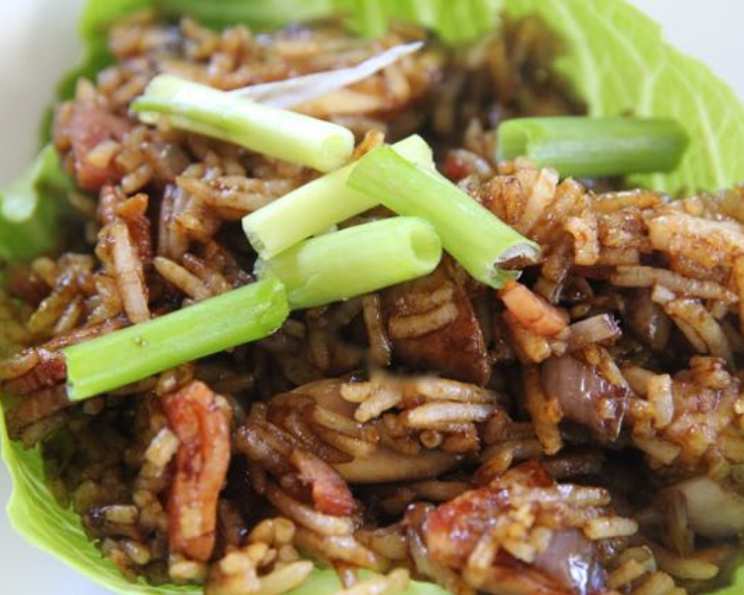
Savory Thai Sticky Rice: A Culinary Journey
The first time I encountered savory sticky rice was at a bustling night market in Chiang Mai. The air was thick with the aroma of spices and grilling meats, and the vendor, a woman with a smile as warm as the tropical air, pressed a small portion of the glistening rice into my hand. The chewy texture, the salty-savory flavor punctuated by the subtle sweetness of the rice itself, and the spicy kick of chili – it was an explosion of textures and tastes that I’ve chased ever since. It was more than just a meal; it was an experience, a connection to the heart of Thai cuisine.
Recipe Overview
- Prep Time: 40 minutes (includes soaking time)
- Cook Time: 35 minutes
- Total Time: 1 hour 15 minutes
- Servings: 4-6
- Yield: Varies depending on steamer size
- Dietary Type: Can be made Gluten-Free (use Gluten-Free soy sauce)
Ingredients
- 2 cups Thai sticky rice (also called Thai “sweet rice”)
- 3 1/2 cups water, for soaking rice
- 3-4 slices bacon (or Thai sausage, if available)
- 1/3 cup shallot, diced (or purple onion)
- 1 cup shiitake mushroom, diced
- 1 teaspoon garlic, minced
- 1 red chili, de-seeded and minced (OR 1/2 tsp. dried crushed chili, omit for mild rice)
- 1 1/2 tablespoons fish sauce
- 1 1/2 teaspoons dark soy sauce (OR 2 Tbsp. regular soy sauce)
- 1 tablespoon soy sauce
- 3 green onions, finely sliced
- 1 bunch banana leaf, thawed if frozen (OR bamboo leaves or cheesecloth)
Equipment Needed
- Large bowl
- Large pot with tight-fitting lid
- Bamboo steamer or colander
- Large frying pan or wok
- Scissors (optional, for cutting bacon)
Instructions
-
Begin by preparing the rice. Place the Thai sticky rice in a large bowl and cover it with 3 1/2 cups of water, ensuring the water level is at least 1 inch above the rice. Soak for a minimum of 40 minutes. Ideally, you can soak the rice for up to 4 hours or longer; the longer soaking time allows the rice to soften properly. Thai sweet rice has a hard outer shell that must be softened before cooking.
-
While the rice is soaking, prepare your steamer. If using a bamboo steamer or colander, line it with 2 layers of banana/bamboo leaf. Alternatively, use cheesecloth or a clean kitchen cloth. To prepare the banana leaf (if frozen), rinse it under hot water to clean and thaw. Ensure the leaf is large enough to extend over the top of the steamer.
-
Set up your steaming station by placing the steamer over a large pot. Ensure you have a tight-fitting lid ready.
-
Now, prepare the bacon. Place the bacon in a large frying pan or wok, along with 1-2 tablespoons of water. Fry over medium-high heat until the bacon is cooked to a chewy consistency, but not crispy. Remove the bacon from the pan, leaving all or half of the rendered fat in the pan.
-
Once slightly cooled, cut the bacon into small pieces. A pair of clean scissors can be used for this task, a technique often employed in Asia for speed and ease. Return the cut bacon to the frying pan.
-
Add the diced shallots (or onion), shiitake mushrooms, minced garlic, and minced red chili (or dried chili) to the frying pan. Return to medium-high heat and stir-fry for 1-2 minutes, or until fragrant. If the pan becomes dry, add a little water (1-2 tablespoons) to prevent sticking.
-
Reduce the heat to low. Drain the sticky rice thoroughly and add it to the frying pan. Add the fish sauce, dark soy sauce (or regular soy sauce), and soy sauce. Stir continuously until the color of the rice has consistently darkened, indicating that it has absorbed the sauce. Remove from heat.
-
Transfer the seasoned rice from the frying pan into your prepared steamer. Ensure there is at least 1 inch of water in the pot beneath the steamer. Cover with the lid and steam over high heat for 30-35 minutes. Monitor the water level in the pot during steaming; you may need to add more water partway through to prevent it from drying out.
-
After 30 minutes, remove the steamer from the heat. Allow the rice to sit (with the lid on) for 5 minutes. The rice should now be soft, sticky, and slightly translucent. If you detect any hard grains, steam for an additional 5 minutes. To test for doneness, dig down into the middle of the rice, as the center tends to cook slower.
-
Taste-test the cooked rice for saltiness. If it lacks flavor, sprinkle over a little more fish sauce. If it’s too salty, add a squeeze of lime juice to balance the flavors. Gently stir the rice with a fork or chopsticks to mix thoroughly.
-
To serve, slide the banana/bamboo leaf directly onto a serving plate. For a more elegant presentation, line a serving bowl or plate with a fresh banana leaf. Mound the rice on top and sprinkle with the remaining green onion. Add optional garnishes as desired to elevate the presentation. Serve hot and enjoy!
Expert Tips & Tricks
- Soaking is Key: Don’t skimp on the soaking time for the rice. This is essential for achieving the signature chewy texture.
- Bacon Variations: Experiment with different types of bacon, such as smoked or peppered, to add unique flavor profiles.
- Spice Level: Adjust the amount of chili to suit your taste. Start with a small amount and add more as needed.
- Steaming Alternative: If you don’t have a steamer, you can use a heat-proof bowl covered tightly with foil inside a larger pot with water.
- Flavor Boost: For an extra layer of flavor, try adding a small amount of coconut milk to the rice during the last 10 minutes of steaming.
Serving & Storage Suggestions
Serve the savory Thai sticky rice hot, ideally immediately after steaming. It pairs wonderfully with grilled meats, stir-fried vegetables, or a spicy Thai curry. To store leftovers, allow the rice to cool completely before transferring it to an airtight container. It can be stored in the refrigerator for up to 3 days. To reheat, microwave with a splash of water to prevent drying out, or re-steam for a few minutes until heated through. The rice is best consumed fresh, as the texture can change upon reheating.
Nutritional Information
| Nutrient | Amount per Serving | % Daily Value |
|---|---|---|
| Calories | 390 kcal | N/A |
| Calories from Fat | 29 g | N/A |
| Total Fat | 3.3 g | 5% |
| Saturated Fat | 1 g | 5% |
| Cholesterol | 4.1 mg | 1% |
| Sodium | 967.6 mg | 40% |
| Total Carbohydrate | 79.5 g | 26% |
| Dietary Fiber | 3 g | 11% |
| Sugars | 0.6 g | N/A |
| Protein | 8.6 g | 17% |
Note: Nutritional information is an estimate and can vary based on specific ingredients and portion sizes.
Variations & Substitutions
- Vegetarian/Vegan: Replace the bacon with diced firm tofu, tempeh, or more mushrooms. Use soy sauce instead of fish sauce and ensure your soy sauces are vegan-friendly.
- Protein Boost: Add cooked chicken, pork, or shrimp to the rice during the stir-frying stage.
- Vegetable Medley: Incorporate other vegetables such as bell peppers, carrots, or snap peas for added nutrients and color.
- Herb Infusion: Add fresh herbs like cilantro or Thai basil to the rice after steaming for a burst of freshness.
- Coconut Sticky Rice: Replace some of the water used for soaking with coconut milk for a sweeter, richer flavor.
FAQs (Frequently Asked Questions)
Q: Can I use regular long-grain rice instead of sticky rice?
A: No, sticky rice (also known as glutinous rice or sweet rice) is essential for achieving the desired chewy texture. Regular rice will not produce the same result.
Q: How do I know when the rice is cooked through?
A: The rice should be soft, sticky, and slightly translucent. If you detect any hard grains, continue steaming for a few more minutes. Test by digging into the center of the rice.
Q: Can I make this dish ahead of time?
A: You can soak the rice ahead of time and store it in the refrigerator. You can also prepare the bacon and vegetables in advance. However, it is best to steam and serve the rice fresh for optimal texture.
Q: What if I don’t have banana leaves or bamboo leaves?
A: Cheesecloth or a clean kitchen cloth can be used as a substitute for lining the steamer. Ensure the cloth is large enough to cover the rice and prevent it from falling through.
Q: Can I freeze leftover sticky rice?
A: Freezing is not recommended as it can alter the texture of the rice, making it less sticky and more prone to drying out.
Final Thoughts
Now that you have the recipe, I encourage you to embark on this culinary adventure and create your own savory Thai sticky rice. The combination of textures and flavors is truly remarkable, and I’m confident that this dish will become a favorite in your kitchen. Don’t be afraid to experiment with variations and substitutions to make it your own. And most importantly, don’t forget to share your creations with friends and family. Feel free to leave a comment below and tell me how it turned out, what you changed, and what you paired it with! Enjoy the journey, and happy cooking!