
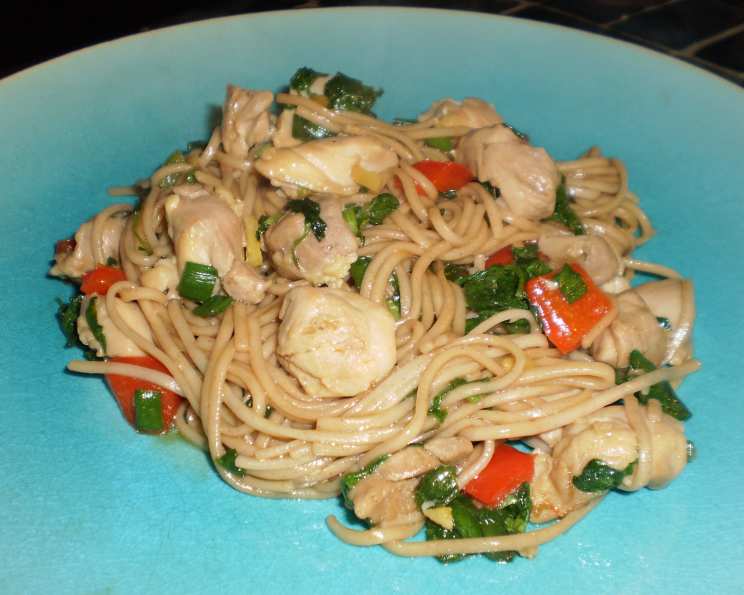
Scallion Chicken and Soba Noodles: A Quick & Healthy Weeknight Delight
I remember the first time I had soba noodles. It was at a tiny, unassuming Japanese eatery tucked away in a bustling city. The dish arrived, a tangle of earthy noodles adorned with vibrant greens and savory chicken. The delicate balance of flavors, the slight chew of the noodles, and the warmth of the broth – it was an instant love affair. Since then, I’ve been on a quest to recreate that magic in my own kitchen, and this Scallion Chicken and Soba Noodle recipe comes incredibly close. It’s light, healthy, incredibly flavorful, and comes together in under half an hour – perfect for those busy weeknights when you crave something satisfying without spending hours in the kitchen.
Recipe Overview
- Prep Time: 10 minutes
- Cook Time: 18 minutes
- Total Time: 28 minutes
- Servings: 4
- Dietary Type: Healthy, Balanced Meal
Ingredients
- 2 teaspoons vegetable oil
- 10 ounces boneless skinless chicken thighs, cut into 1/2 inch pieces
- 1 medium red bell pepper, seeded and diced
- 1 tablespoon fresh gingerroot, peeled and chopped
- 3 garlic cloves, minced
- 4 cups watercress, stemmed
- 1 1⁄2 cups scallions, thinly sliced
- 6 ounces buckwheat soba noodles, cooked and drained
- 3 tablespoons mirin
- 2 tablespoons low sodium soy sauce
Equipment Needed
- Large Skillet
- Cutting board
- Knife
- Measuring spoons and cups
- Colander
Instructions
-
Heat the vegetable oil in a large skillet over medium-high heat. Make sure the pan is hot before adding the chicken for a good sear.
-
Add the chicken to the hot skillet. Cook, stirring frequently, for about 3 minutes, or until the chicken is lightly browned on all sides. The goal here isn’t to fully cook the chicken, but to develop some color and flavor.
-
Add the diced red bell pepper to the skillet with the chicken. Continue to cook, stirring frequently, for another 3 minutes. This will soften the pepper slightly and allow it to release its natural sweetness.
-
Stir in the chopped fresh ginger and minced garlic. Cook, stirring frequently, for just 30 seconds longer. Be careful not to burn the garlic; it should just become fragrant. The aromatic ginger and garlic are key to the overall flavor profile.
-
Add the stemmed watercress and thinly sliced scallions to the skillet. Cook, stirring frequently, until the watercress is wilted and the scallions are tender. This should only take a minute or two. The watercress adds a lovely peppery bite, while the scallions provide a mild onion flavor.
-
Add the cooked and drained buckwheat soba noodles to the skillet. Cook, tossing constantly, for 2 minutes to ensure everything is well combined and the noodles are heated through.
-
Finally, stir in the mirin and low sodium soy sauce. Cook until everything is heated through and the sauce has evenly coated the noodles and chicken. Taste and adjust seasoning if needed. Be mindful of the salt content; you can always add more soy sauce, but you can’t take it away!
-
Serve immediately.
Expert Tips & Tricks
- Don’t overcrowd the pan: Cook the chicken in batches if necessary to ensure it browns properly. Overcrowding the pan will steam the chicken instead of searing it.
- Use fresh ingredients: Fresh ginger and garlic are essential for the best flavor. Avoid using powdered versions if possible.
- Adjust the heat: Keep a close eye on the pan and adjust the heat as needed to prevent burning.
- Prep your ingredients: Have all your vegetables chopped and measured out before you start cooking. This will make the cooking process much smoother and faster.
- Toasting the noodles: For an extra layer of flavor, try lightly toasting the soba noodles in a dry pan before adding them to the skillet. This enhances their nutty taste.
- Spice it Up: Add a pinch of red pepper flakes when you add the garlic and ginger to give the dish a little kick.
- Chicken alternative: This recipe works equally well with shrimp or tofu. Adjust the cooking time accordingly.
Serving & Storage Suggestions
Serve the Scallion Chicken and Soba Noodles immediately while it’s hot and the flavors are at their peak. Garnish with extra scallions for a pop of freshness and visual appeal.
Leftovers can be stored in an airtight container in the refrigerator for up to 3 days. To reheat, microwave gently or warm in a skillet over low heat. Add a splash of water or broth if the noodles seem dry. Reheating is best done in a skillet to help preserve texture of the noodles and chicken.
While technically you could freeze this, it’s not recommended as the noodles can become mushy upon thawing. It’s always best fresh!
Nutritional Information
| Nutrient | Amount per Serving | % Daily Value |
|---|---|---|
| Calories | 306 kcal | N/A |
| Protein | 22 g | N/A |
| Fat | 6 g | N/A |
| Carbohydrate | 42 g | N/A |
| Calcium | 97 mg | N/A |
| Sodium | 614 mg | N/A |
| Cholesterol | 59 mg | N/A |
| Dietary Fiber | 2 g | N/A |
| WW Points | 6 | N/A |
Note: Nutritional information is an estimate and may vary based on specific ingredients and portion sizes.
Variations & Substitutions
- Gluten-Free: Use gluten-free soba noodles or rice noodles to make this dish gluten-free. Be sure to also use tamari instead of soy sauce.
- Vegetarian/Vegan: Substitute the chicken with tofu or tempeh. Ensure you’re using a plant-based soy sauce alternative.
- Vegetables: Feel free to add other vegetables like broccoli florets, snow peas, or shredded carrots.
- Protein: Substitute the chicken thighs with chicken breast, shrimp, or even steak.
- Sauce: For a richer flavor, add a teaspoon of sesame oil to the sauce. You can also add a splash of rice vinegar for a touch of acidity.
- Nuts: Sprinkle some toasted sesame seeds or chopped peanuts for added crunch and flavour.
FAQs (Frequently Asked Questions)
Q: Can I use chicken breast instead of chicken thighs?
A: Yes, you can! Just be careful not to overcook the chicken breast, as it tends to dry out more easily than thighs.
Q: I don’t have watercress. What can I use instead?
A: Baby spinach or arugula are good substitutes for watercress. They have similar textures and slightly peppery flavors.
Q: Can I make this ahead of time?
A: While it’s best served fresh, you can prep the ingredients ahead of time. Chop the vegetables and marinate the chicken in the mirin and soy sauce. Then, when you’re ready to cook, it will come together quickly.
Q: My soba noodles are sticking together. What can I do?
A: Make sure to rinse the noodles thoroughly after cooking to remove excess starch. You can also toss them with a little oil to prevent them from sticking.
Q: Is low sodium soy sauce necessary?
A: Using low sodium soy sauce helps control the saltiness of the dish. Regular soy sauce can be quite salty, so using low sodium gives you more control over the flavor. If you only have regular soy sauce, use less of it.
Final Thoughts
This Scallion Chicken and Soba Noodle recipe is a testament to how simple ingredients, when combined with care, can create a truly satisfying and flavorful meal. I hope you’ll give it a try and discover your own love affair with soba noodles, just like I did. Feel free to experiment with different vegetables and protein sources to make it your own. And, most importantly, don’t be afraid to share your culinary creations with friends and family! Enjoy!