
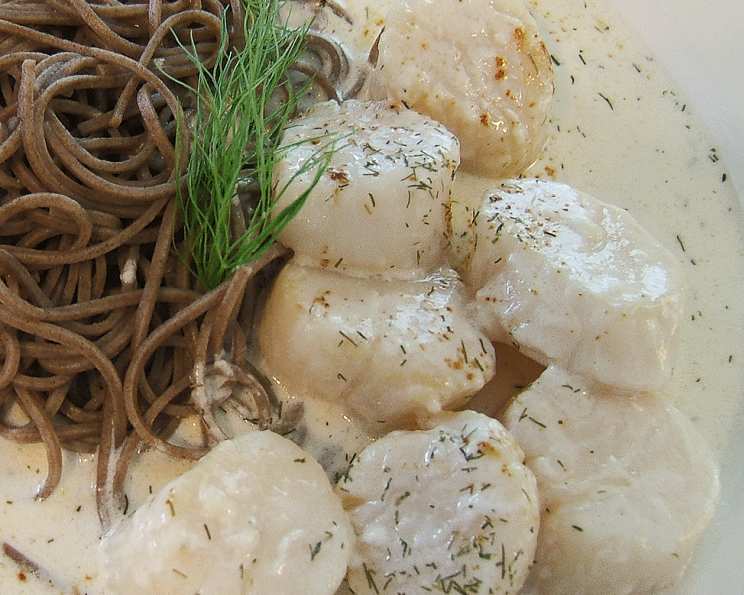
Scallops in Swiss Cheese Sauce: A Decadent Seafood Delight
The first time I tasted scallops in Swiss cheese sauce, it was at a tiny seaside bistro in Brittany. The briny air, the sound of crashing waves, and the rich, creamy sauce clinging to perfectly seared scallops – it was an experience I’ll never forget. The dish was incredibly indulgent, a celebration of simple, high-quality ingredients. I remember thinking, “This is how scallops are meant to be eaten.” This recipe captures that memory, bringing a touch of French seaside charm to your own kitchen.
Recipe Overview
- Prep Time: 10 minutes
- Cook Time: 13 minutes
- Total Time: 23 minutes
- Servings: 4
- Dietary Type: Not Gluten-Free
Ingredients
- 4 ounces Jarlesberg Swiss cheese (about 1 cup grated)
- 1 1/2 tablespoons mayonnaise
- 1/2 teaspoon salt
- 1/8 teaspoon dried dill
- 1 tablespoon onion, grated
- 3/4 cup half-and-half cream (or milk)
- 2 lbs sea scallops
- 3 tablespoons butter
- Optional: Dill or parsley leaf for garnish
- Optional: Cooked angel hair pasta, rice, or soba noodles for serving
Equipment Needed
- Medium bowl
- Saute pan
- Whisk
- Cheese grater
- Dish to hold scallops
Instructions
- In a medium bowl, combine the grated Swiss cheese, mayonnaise, salt, dill, and grated onion.
- Add the half-and-half cream (or milk) to the bowl and stir well until the ingredients are combined. Set aside the cheese mixture.
- In a saute pan, melt the butter over medium heat.
- Gently saute the scallops in the melted butter for 5-6 minutes, depending on the size of the scallops. Be careful not to overcrowd the pan; you may need to work in batches to ensure even cooking and proper searing. You want them to develop a nice golden-brown crust.
- Remove the sauteed scallops from the pan to a separate dish and cover with another dish to keep them warm while you prepare the sauce.
- Reduce the heat to low. Add the reserved cheese mixture to the saute pan with the remaining butter (and scallop drippings – these add flavor!).
- Over low heat, whisk the cheese mixture until it is smooth and very warm. This should take only a few minutes. Be patient and whisk continuously to prevent sticking and burning.
- If the sauce becomes too dry or thick, add more milk a little at a time, whisking constantly until the desired consistency is achieved. Remember, you want a creamy, luscious sauce.
- Return the sauteed scallops to the saute pan, nestling them gently into the Swiss cheese sauce.
- Spoon the sauce generously over the scallops, ensuring they are well coated.
- Continue warming the scallops in the sauce to your liking. Do not boil the sauce at any time, as this can cause it to separate and become grainy.
- Serve immediately over your choice of cooked angel hair pasta, rice, or soba noodles.
- Garnish with a sprig of fresh dill or parsley leaf, if desired, to add a pop of color and freshness to the dish.
Expert Tips & Tricks
- Scallop Selection: Choose dry-packed scallops whenever possible. Wet-packed scallops have been treated with phosphates, which can cause them to retain water and not sear properly. Dry-packed scallops will sear beautifully and have a sweeter, more natural flavor.
- Perfect Sear: To achieve a perfect sear on your scallops, ensure they are completely dry before adding them to the pan. Pat them dry with paper towels to remove any excess moisture. Also, make sure your pan is hot before adding the scallops; a hot pan will create that desirable golden-brown crust.
- Cheese Variety: While Jarlesberg Swiss is recommended, you can experiment with other types of Swiss cheese, such as Gruyere or Emmental, for subtle variations in flavor.
- Sauce Consistency: Keep a close eye on the sauce consistency. If it becomes too thick, add a splash of milk to thin it out. If it’s too thin, continue whisking over low heat until it thickens slightly.
Serving & Storage Suggestions
Serve the Scallops in Swiss Cheese Sauce immediately after preparation for the best flavor and texture. The sauce is richest and creamiest when served fresh.
- Serving: Present the scallops nestled on top of your chosen pasta or rice, with the creamy sauce generously spooned over them. Garnish with fresh herbs for an elegant touch.
- Storage: Leftovers can be stored in an airtight container in the refrigerator for up to 2 days. However, the sauce may thicken upon refrigeration.
- Reheating: To reheat, gently warm the scallops and sauce in a saute pan over low heat, adding a splash of milk or cream to restore the desired consistency. Avoid microwaving, as this can cause the scallops to become rubbery. Freezing is not recommended, as the sauce’s texture will suffer.
Nutritional Information
| Nutrient | Amount per Serving | % Daily Value |
|---|---|---|
| Calories | 465.8 kcal | N/A |
| Calories from Fat | N/A | 49% |
| Total Fat | 25.3 g | 38% |
| Saturated Fat | 14.2 g | 71% |
| Cholesterol | 142.2 mg | 47% |
| Sodium | 830.5 mg | 34% |
| Total Carbohydrate | 10.4 g | 3% |
| Dietary Fiber | 0 g | 0% |
| Sugars | 0.9 g | N/A |
| Protein | 47.3 g | 94% |
Variations & Substitutions
- Gluten-Free: Serve the scallops over rice or gluten-free pasta for a gluten-free option.
- Dairy-Free: Unfortunately, a truly authentic version of this dish cannot easily be made dairy-free, as the cheese is the key ingredient. However, you could experiment with a plant-based cream sauce as a base, but the flavor profile will be significantly different.
- Cheese Alternatives: Try using a different type of cheese, such as Gruyere or Emmental, for a slightly different flavor profile. You could even add a touch of Parmesan cheese for extra richness.
- Spice It Up: Add a pinch of red pepper flakes to the sauce for a subtle kick of heat.
- Vegetable Boost: Saute some sliced mushrooms or asparagus with the scallops for added flavor and nutrients.
FAQs (Frequently Asked Questions)
Q: Can I use frozen scallops for this recipe?
A: Yes, you can use frozen scallops, but be sure to thaw them completely before cooking. Pat them dry with paper towels to remove any excess moisture.
Q: What’s the best way to prevent scallops from becoming rubbery?
A: Avoid overcooking the scallops. They should be seared until they are opaque and slightly firm to the touch.
Q: Can I make the sauce ahead of time?
A: While you can prepare the cheese mixture ahead of time, it is best to make the sauce fresh, just before serving. Reheating can affect the texture of the sauce.
Q: What is the best way to grate the onion?
A: Use a fine grater or microplane to grate the onion. This will ensure that it incorporates evenly into the cheese mixture and adds a subtle flavor without being overpowering.
Q: Can I use a different type of milk?
A: Yes, you can use whole milk, 2% milk, or even half-and-half cream, depending on your preference for richness.
Final Thoughts
I hope this recipe inspires you to create your own unforgettable seafood experience. Don’t be afraid to experiment with different cheeses and herbs to personalize the dish to your liking. This Scallops in Swiss Cheese Sauce is perfect for a special occasion or a cozy night in. Pair it with a crisp white wine, like a Sauvignon Blanc or a Pinot Grigio, and enjoy the taste of coastal indulgence. Bon appétit!