
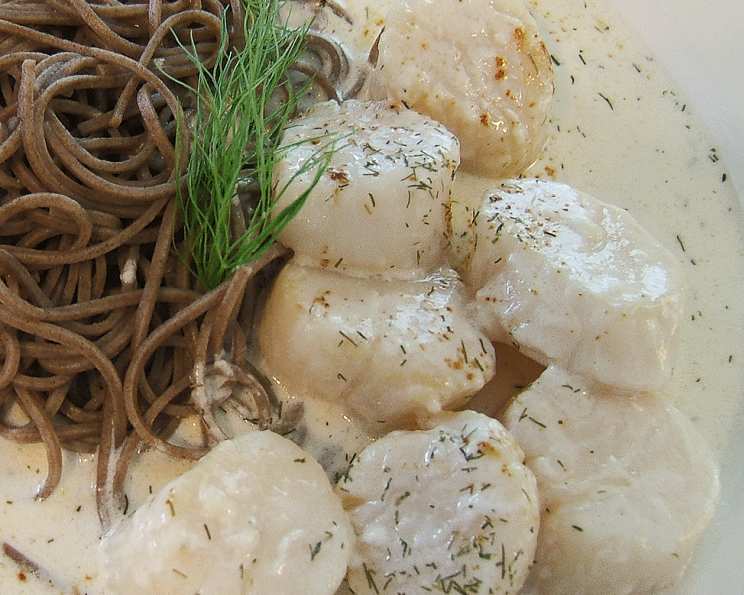
Scallops in Swiss Cheese Sauce: A Culinary Embrace
The memory still warms me: a small, bustling fish market, the briny scent of the sea clinging to everything. Sunlight streamed through the window as my grandfather, a man of few words but masterful in the kitchen, pointed to a glistening pile of sea scallops. “These,” he declared, “deserve a special sauce.” He returned home, humming a tune, and conjured this decadent dish. The richness of the Swiss cheese sauce, perfectly coating the tender scallops, was a revelation, a testament to the simple magic of good ingredients and a loving hand. Every time I prepare this recipe, I’m transported back to that sunlit kitchen, enveloped in the aroma of the sea and the warmth of family.
Recipe Overview
- Prep Time: 8 minutes
- Cook Time: 15 minutes
- Total Time: 23 minutes
- Servings: 4
- Dietary Type: Not Gluten-Free (can be served with rice noodles as an alternative)
Ingredients
- 4 ounces Jarlesberg Swiss cheese (approximately 1 cup grated)
- 1 1/2 tablespoons mayonnaise
- 1/2 teaspoon salt
- 1/8 teaspoon dried dill
- 1 tablespoon onion, grated
- 3/4 cup half-and-half cream (or milk)
- 2 lbs sea scallops
- 3 tablespoons butter
Equipment Needed
- Medium bowl
- Grater
- Sauté pan
- Whisk
- Dish for holding cooked scallops
Instructions
-
In a medium bowl, combine the grated Jarlesberg Swiss cheese, mayonnaise, salt, dried dill, and grated onion.
-
Add the half-and-half cream (or milk) to the cheese mixture and stir well to combine. Set the mixture aside. This allows the flavors to meld while you prepare the scallops.
-
In a sauté pan, melt the butter over medium heat. Once melted, gently sauté the sea scallops in the butter for 5-6 minutes, depending on the size of the scallops. Avoid overcrowding the pan; if necessary, cook the scallops in batches to ensure even browning. The scallops are done when they are opaque and slightly firm to the touch.
-
Remove the sautéed scallops from the pan and transfer them to a separate dish. Cover the dish with another dish or foil to keep the scallops warm while you prepare the sauce.
-
Reduce the heat to low. Add the cheese mixture to the remaining butter in the sauté pan.
-
Over low heat, whisk the cheese mixture continuously until it is smooth and very warm, ensuring the cheese melts evenly and the sauce doesn’t stick to the bottom of the pan. This may take a few minutes, so be patient and keep whisking.
-
If the sauce appears too thick or dry, add more half-and-half cream (or milk) a little at a time, whisking constantly until you achieve the desired consistency. The sauce should be rich and creamy, coating the back of a spoon.
-
Return the sautéed scallops to the sauté pan and spoon the cheese sauce over them, ensuring each scallop is well coated.
-
Continue warming the scallops in the sauce to your liking. Be careful not to boil the sauce at any time, as this can cause the cheese to separate and the sauce to become grainy. Gently stir to incorporate the scallops into the sauce.
-
Serve immediately with angel hair pasta, rice, or soba noodles. A light, delicate starch complements the richness of the sauce and the sweetness of the scallops.
-
Garnish with fresh dill or parsley leaf, if desired, to add a pop of color and freshness to the dish.
Expert Tips & Tricks
- Scallop Selection: Opt for dry-packed sea scallops, as they tend to sear better and have a naturally sweeter flavor compared to wet-packed scallops. Pat the scallops dry with paper towels before sautéing to achieve a beautiful golden-brown crust.
- Cheese Choice: While Jarlesberg Swiss is recommended, Gruyere or Emmental Swiss are excellent alternatives. Adjust the amount of cheese to your personal preference.
- Make-Ahead Prep: You can grate the cheese, grate the onion and measure the spices in advance to speed up the cooking process. Keep the scallops refrigerated until you are ready to cook them.
- Deglazing the Pan (Optional): For an extra layer of flavor, consider deglazing the pan with a splash of dry white wine after removing the scallops. Scrape up any browned bits from the bottom of the pan before adding the cheese mixture.
- Preventing a Grainy Sauce: The key to a smooth cheese sauce is low heat and constant whisking. Avoid boiling the sauce, as this can cause the cheese to separate and become grainy. If the sauce becomes too thick, add a little more half-and-half or milk.
- Alternative to Half-and-Half: For a slightly lighter sauce, you can use whole milk or even a combination of milk and a tablespoon of heavy cream.
Serving & Storage Suggestions
Serve the Scallops in Swiss Cheese Sauce immediately after preparation for the best flavor and texture. The creamy sauce is best enjoyed hot.
Leftovers can be stored in an airtight container in the refrigerator for up to 2 days. Reheat gently over low heat, stirring occasionally, until warmed through. Add a splash of milk or cream if the sauce has thickened too much during refrigeration. Microwaving is not recommended, as it can make the scallops rubbery and the sauce grainy.
Freezing is not recommended, as the texture of the scallops and the sauce may be compromised upon thawing.
Nutritional Information
| Nutrient | Amount per Serving | % Daily Value |
|---|---|---|
| Calories | 465.8 kcal | N/A |
| Calories from Fat | 227 g | 49% |
| Total Fat | 25.3 g | 38% |
| Saturated Fat | 14.2 g | 71% |
| Cholesterol | 142.2 mg | 47% |
| Sodium | 830.5 mg | 34% |
| Total Carbohydrate | 10.4 g | 3% |
| Dietary Fiber | 0 g | 0% |
| Sugars | 0.9 g | N/A |
| Protein | 47.3 g | 94% |
Variations & Substitutions
- Gluten-Free: Serve with rice noodles or quinoa instead of traditional pasta.
- Dairy-Free (Advanced Substitution): This recipe relies heavily on dairy for the sauce. Substituting the Swiss cheese and half-and-half is difficult. However, a cashew-based cream sauce could potentially be experimented with; and a vegan Swiss style cheese analog could also potentially be used. (Note that the character of the recipe will fundamentally change.)
- Spicy Kick: Add a pinch of red pepper flakes to the cheese mixture for a subtle heat.
- Herb Infusion: Experiment with different herbs, such as thyme, tarragon, or chives, to customize the flavor profile of the sauce.
- Lemon Zest: Add a teaspoon of lemon zest to the cheese mixture for a bright, citrusy note.
FAQs (Frequently Asked Questions)
Q: Can I use frozen scallops for this recipe?
A: Yes, you can use frozen scallops, but be sure to thaw them completely before cooking. Pat them dry with paper towels to remove any excess moisture, which will help them sear properly.
Q: Can I use a different type of cheese?
A: Yes, Gruyere, Emmental, or even a sharp cheddar can be used in place of Jarlesberg Swiss. The flavor profile will change slightly, but the dish will still be delicious.
Q: How do I prevent the scallops from becoming rubbery?
A: Avoid overcooking the scallops. They are done when they are opaque and slightly firm to the touch, which usually takes only 5-6 minutes.
Q: Can I make this dish ahead of time?
A: While the sauce and scallops are best served immediately, you can prepare the cheese mixture ahead of time and store it in the refrigerator until you’re ready to cook the scallops.
Q: What wine pairs well with this dish?
A: A crisp, dry white wine such as Sauvignon Blanc or Pinot Grigio pairs beautifully with the richness of the sauce and the delicate flavor of the scallops.
Final Thoughts
This recipe for Scallops in Swiss Cheese Sauce is more than just a dish; it’s a culinary embrace, a testament to the power of simple ingredients and cherished memories. I encourage you to try this recipe and create your own memories in the kitchen. Feel free to experiment with different cheeses, herbs, and serving suggestions to personalize it to your liking. Share your feedback and photos, and let me know what you think! And why not try pairing it with a refreshing glass of chilled white wine for the ultimate dining experience? Bon appétit!