
Brewing Your Own Magic: A Guide to Making a SCOBY (Kombucha Mother)
The first time I tasted kombucha, I wrinkled my nose. The tangy, slightly vinegary flavor was so different from anything I’d ever experienced. But then, something clicked. The subtle sweetness, the gentle fizz, the almost effervescent feeling it gave me – I was hooked! I began experimenting with different flavors, dreaming of the day I could make my own brew. That day came when I decided to cultivate my own SCOBY. It felt like a science experiment, a delicious one, where I could nurture life and transform it into a delightful, healthful beverage.
Recipe Overview
- Prep Time: 15 minutes
- Cook Time: 10 minutes
- Fermentation Time: 2-4 weeks
- Yields: 1 SCOBY
- Dietary Type: Vegan
Ingredients
- ½ cup white vinegar, for cleaning equipment
- 12 cups filtered water
- 1 cup unbleached cane sugar or 1 cup granulated sugar
- 8 tea bags of unflavored black tea
- 2 cups plain kombucha (store-bought)
Equipment Needed
- 4-quart or larger pan (uncoated or stainless steel)
- 1-gallon glass jar
- Clean, tightly-woven cloth (at least 8″x8″)
- Large rubber band
- Adhesive strip thermometer (optional)
Instructions
-
Begin by ensuring all your equipment is scrupulously clean. This is crucial for a successful fermentation. Wipe down the pan and glass jar with plain white vinegar, let it sit for a few minutes, and then rinse thoroughly with hot water. Dry with a clean towel or allow to air dry.
-
Now, it’s time to brew the sweet tea that will nourish your SCOBY. In the saucepan, heat 4 cups of water to a boil on the stovetop. Once boiling, add the tea bags of unflavored black tea and let them steep for 7-10 minutes. This will create a strong tea base.
-
While the tea is still warm, remove the tea bags. Be sure to squeeze out any excess liquid; you want all that tea goodness! Add the sugar – either unbleached cane sugar or granulated sugar will work perfectly – and stir until it is completely dissolved. The sugar provides the necessary food for the kombucha culture to thrive.
-
Pour the remaining 8 cups of filtered water into the gallon jar. This will cool the tea mixture down more quickly. Allow the tea mixture to cool to a warm room temperature, ideally around 75°F (24°C). This is important because adding the kombucha starter to hot tea can damage the beneficial bacteria and yeast. You can use an adhesive thermometer to check the temperature if you want to be precise.
-
Once the liquid is cooled, it’s time to add the 2 cups of ready-made kombucha to the tea mixture. This store-bought kombucha acts as the starter culture, introducing the necessary microorganisms to kickstart the SCOBY growth. Stir gently with a clean metal spoon to ensure the kombucha is well incorporated into the tea.
-
Now, protect your future SCOBY from unwanted visitors. Cover the entire mouth of the jar with the clean, tightly-woven cloth and secure it tightly with a large rubber band. This allows air to circulate while preventing fruit flies and other contaminants from getting in.
-
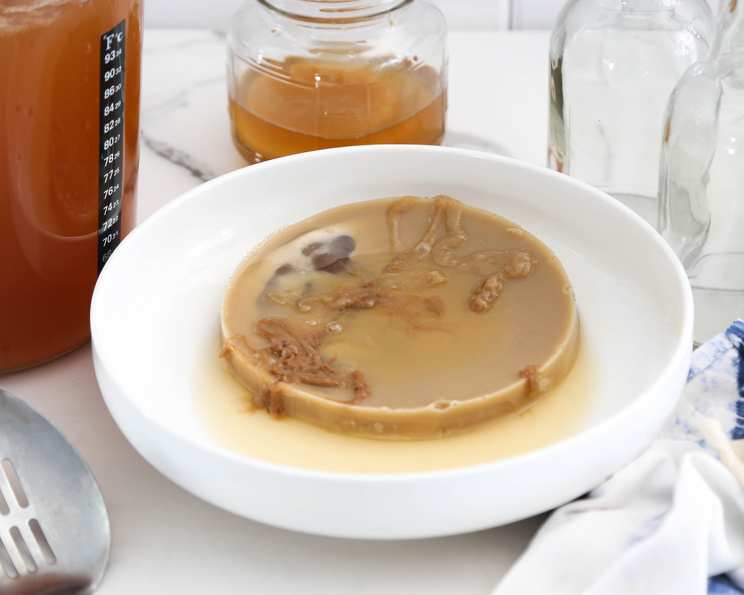
Patience is key! Allow the mixture to stand, undisturbed, in a warm place away from direct sunlight for 2-4 weeks. During this time, you will begin to see the magic happen. First, you might notice small bubbles forming, then a translucent skin appearing on the surface. Gradually, this skin will thicken and transform into white clusters, eventually merging into an opaque, gelatinous film. The mixture should also develop a characteristic sweet and vinegary smell.
-
Your SCOBY is ready when it has grown to about ¼ inch in thickness. This is the sign that it has matured enough to be used for brewing your own kombucha. Congratulations!
-
Important Safety Notes: Before you preserve or ferment anything, including a SCOBY or kombucha, it is important to follow all canning and processing instructions included in the recipe and refer to USDA guidelines about the sterilization of canned products. You can find information on canning at the National Center for Home Food Preservation website: http://nchfp.uga.edu/.
Expert Tips & Tricks
- Glass is Best: Be sure to use a glass container in which to grow the SCOBY. Plastic containers can harbor harmful bacteria that can interfere with the fermentation process.
- Filtered Water is Crucial: Chlorine from tap water can inhibit the bacterial growth needed to grow a SCOBY. Use filtered, non-chlorinated water to give your SCOBY the best chance to thrive.
- Avoid Sugar Substitutes: Don’t use sugar substitutes such as stevia or sucralose because they lack the sucrose that the SCOBY culture needs to grow and flourish.
- Mold Patrol: Be sure to periodically check the SCOBY for any signs of mold. Mold will appear as a fuzzy white, green, or black growth on the surface. If you spot mold, unfortunately, you’ll have to discard the entire brew and start over. Prevent mold growth by maintaining a warm environment that encourages acid production.
- SCOBY Variations: Don’t worry if your SCOBY doesn’t look exactly like the pictures you’ve seen online. Home-grown SCOBYs come in all shapes and sizes. Your SCOBY might be more white, yellowish-tan, or brown. It could be wrinkled, bubbly, or smooth. It might even have brown spots, which are simply yeast deposits. As long as you don’t see any fuzzy green or black mold, you’re good to go.
Serving & Storage Suggestions
While the liquid used to grow the SCOBY will likely be too strong and acidic to drink on its own, you can reserve some of it to use as a starter for your first batch of home-brewed kombucha. Most kombucha recipes call for around 2 cups of starter, so set aside that amount. You can store your kombucha SCOBY in some of the liquid in a jar covered with a cloth, at room temperature. However, you will need to feed it room temperature sweet black tea every 7-10 days to keep it viable and healthy.
Nutritional Information
Please note: Nutritional information is an estimate and can vary based on specific ingredients and preparation methods.
| Nutrient | Amount per Serving | % Daily Value* |
|---|---|---|
| Calories | 799 kcal | N/A |
| Total Fat | 0 g | 0% |
| Saturated Fat | 0 g | 0% |
| Cholesterol | 0 mg | 0% |
| Sodium | 93.3 mg | 3% |
| Total Carbohydrate | 201.1 g | 67% |
| Dietary Fiber | 0 g | 0% |
| Sugars | 200.1 g | N/A |
| Protein | 0 g | 0% |
- Percent Daily Values are based on a 2,000 calorie diet.
Variations & Substitutions
- Green Tea SCOBY: While this recipe calls for black tea, you can also experiment with green tea. The resulting SCOBY may have a slightly different flavor profile.
- Organic Ingredients: For the purest kombucha experience, use organic sugar and tea bags.
- Different Sugars: Experiment with other types of sugar like coconut sugar, though be aware that this might affect the SCOBY’s growth rate and flavor.
FAQs (Frequently Asked Questions)
Q: How long does it take to grow a SCOBY?
A: It typically takes between 2 to 4 weeks for a SCOBY to grow to a usable thickness (about ¼ inch), but this can vary depending on temperature and other environmental factors.
Q: What if my SCOBY sinks to the bottom?
A: A sinking SCOBY is perfectly normal! It doesn’t indicate a problem. New SCOBYs will form at the top of the jar.
Q: Is it safe to drink kombucha made with a homemade SCOBY?
A: Yes, as long as you follow proper hygiene and fermentation practices, kombucha made with a homemade SCOBY is safe to drink. Always check for mold and discard the batch if you see any.
Q: Can I reuse the same cloth cover for future batches?
A: Yes, but make sure to wash the cloth thoroughly with hot water and vinegar between batches to prevent contamination.
Q: My SCOBY has brown stringy bits hanging from it. Is this normal?
A: Yes, those are yeast strands and are a normal part of the SCOBY. They are harmless and don’t affect the quality of your kombucha.
Final Thoughts
Creating your own SCOBY is an adventure, a journey into the fascinating world of fermentation. It’s a testament to the power of nature and the magic that happens when we combine simple ingredients with patience and care. Don’t be afraid to experiment, learn, and tweak the process to your liking. Once you have your own SCOBY, the possibilities for homemade kombucha are endless. So, grab your jar, brew some tea, and embark on this exciting culinary quest! Share your experiences and successes – happy brewing!