
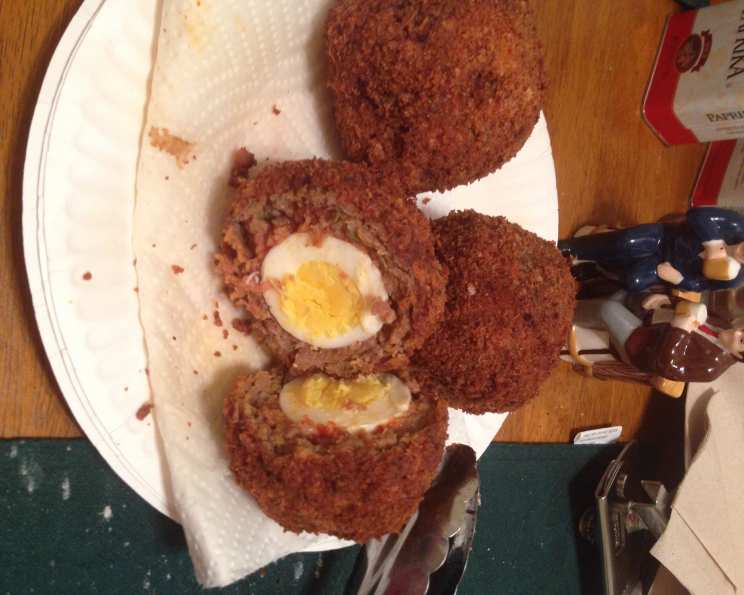
The Quintessential Scotch Egg: A Culinary Journey
The memory is etched in my mind: a bustling farmer’s market in the Cotswolds, the air thick with the scent of fresh produce and woodsmoke. Tucked away in a corner stall was a jovial woman with rosy cheeks, offering samples of her homemade Scotch eggs. One bite – the crisp, golden crust giving way to savory sausage and a perfectly jammy yolk – and I was hooked. It wasn’t just a snack; it was a portable taste of rustic England, a comforting hug in food form. From that day on, I’ve been on a quest to perfect my own version of this culinary classic, and I’m excited to share my take with you.
Recipe Overview
- Prep Time: 20 minutes
- Cook Time: 35 minutes
- Total Time: 55 minutes
- Servings: 4
- Yield: 4 Scotch Eggs
- Dietary Type: Not Gluten-Free
Ingredients
- 4 eggs, hard boiled and peeled
- 1 lb pork sausage, removed from casings
- 1 egg, beaten
- 1 cup seasoned bread crumbs (Italian bread crumbs preferred)
- 1 cup flour
- Vegetable Oil for frying (optional)
- Non-stick cooking spray (like PAM, optional)
Equipment Needed
- Large pot for boiling eggs
- Mixing bowls
- Deep fryer or large, heavy-bottomed pot (for frying)
- Cookie sheet (for baking)
- Wire rack (for baking)
Instructions
-
Begin by ensuring your hard-boiled eggs are properly prepared. Place the eggs in a saucepan, cover with cold water, and bring to a rolling boil. Once boiling, remove from heat, cover, and let stand for 12 minutes. Drain the hot water and immediately rinse the eggs with cold water to stop the cooking process. This will prevent the yolks from turning green and ensure they remain perfectly set. Once the eggs are cool enough to handle, carefully peel them.
-
Next, prepare the sausage layer. Remove the pork sausage from its casings and divide it into four equal portions. Flatten each portion in your hand to create a patty large enough to completely encase one of the hard-boiled eggs.
-
Wrap each egg with a portion of the sausage meat, ensuring that no egg is visible. Be meticulous about this step; a complete seal is crucial to prevent the egg from bursting during cooking. Smooth the sausage around the egg to create a uniform, round shape.
-
Prepare your breading station. In three separate bowls, place the beaten egg, flour, and seasoned bread crumbs.
-
Dip each sausage-wrapped egg into the beaten egg, ensuring it’s fully coated. Then, dredge it in the flour, followed by another dip in the beaten egg. Finally, coat the egg thoroughly with the seasoned bread crumbs, pressing gently to help them adhere. The double egg coating helps create a strong, crisp crust.
-
Now, you have two options for cooking: deep frying or baking.
-
For deep frying: Heat about 3 inches of vegetable oil in a deep fryer or large, heavy-bottomed pot to 350°F (175°C). Carefully lower the breaded eggs into the hot oil, one or two at a time, being careful not to overcrowd the fryer. Fry for 6-7 minutes, or until the sausage meat is thoroughly cooked and the coating is golden brown. Remove the Scotch eggs from the oil and place them on a wire rack to drain excess oil.
-
For baking: Preheat your oven to 425°F (220°C). Place a cooking/cooling rack on a cookie sheet. Position the breaded eggs on the rack, ensuring they are not touching. Lightly spray the breaded eggs with non-stick cooking spray. Bake for approximately 30-40 minutes, depending on the thickness of the sausage layer, until the Scotch eggs are crispy and nicely browned. Turn halfway through for even browning.
-
-
Check for doneness. Regardless of your cooking method, ensure the sausage meat is cooked through. The internal temperature should reach 160°F (71°C). If deep-frying, you can test this by cutting into one of the Scotch eggs. If baking, you may need to use a meat thermometer.
Expert Tips & Tricks
- Chill Out: After wrapping the eggs in sausage meat, chill them in the refrigerator for at least 30 minutes before breading. This helps the sausage firm up and makes them easier to handle.
- Bread Crumb Boost: For an extra flavorful crust, add a pinch of dried herbs (such as thyme or rosemary) to the seasoned bread crumbs.
- Don’t Overcrowd: Whether frying or baking, avoid overcrowding. This ensures even cooking and browning. Overcrowding the fryer can cause the oil temperature to drop, resulting in greasy Scotch eggs.
- Sausage Selection: The type of sausage you use will greatly impact the flavor of your Scotch eggs. Experiment with different varieties, such as Italian, breakfast, or even chorizo, to find your favorite.
- Yolk Perfection: For a perfectly runny yolk, reduce the hard-boiling time by a minute or two. However, be mindful of food safety and ensure the sausage is fully cooked.
Serving & Storage Suggestions
Serve your freshly cooked Scotch eggs warm. They are delicious on their own, or with a dollop of mustard, a side of chutney, or a crisp green salad. Leftover Scotch eggs can be stored in an airtight container in the refrigerator for up to 3 days. To reheat, bake in a preheated oven at 350°F (175°C) for 10-15 minutes, or microwave in 30-second intervals until heated through. While they can be frozen, the texture may change slightly upon thawing.
Nutritional Information
| Nutrient | Amount per Serving | % Daily Value |
|---|---|---|
| Calories | 665.6 kcal | N/A |
| Calories from Fat | 344 g | 52% |
| Total Fat | 38.3 g | 58% |
| Saturated Fat | 12.4 g | 61% |
| Cholesterol | 346.4 mg | 115% |
| Sodium | 1337.7 mg | 55% |
| Total Carbohydrate | 44.9 g | 14% |
| Dietary Fiber | 2.3 g | 9% |
| Sugars | 2.3 g | N/A |
| Protein | 32.5 g | 64% |
Variations & Substitutions
- Spicy Scotch Eggs: Add a pinch of cayenne pepper or chili flakes to the sausage meat for a fiery kick.
- Herby Scotch Eggs: Mix finely chopped fresh herbs, such as parsley, chives, or dill, into the sausage meat.
- Vegetarian Scotch Eggs: Substitute the pork sausage with a vegetarian sausage alternative.
- Gluten-Free Scotch Eggs: Use gluten-free bread crumbs and flour for a gluten-free version. Ensure the sausage is also gluten-free.
FAQs (Frequently Asked Questions)
Q: Can I use different types of sausage?
A: Absolutely! Experiment with different flavors like chorizo, Italian sausage, or even breakfast sausage to customize your Scotch eggs.
Q: How do I prevent the eggs from exploding during cooking?
A: Ensure the sausage completely encases the egg and that there are no gaps or cracks. Chilling the eggs after wrapping also helps.
Q: Can I make Scotch eggs ahead of time?
A: Yes, you can prepare the Scotch eggs up to the breading stage and store them in the refrigerator for up to 24 hours before cooking.
Q: What’s the best way to reheat Scotch eggs?
A: Reheating in the oven at 350°F (175°C) for 10-15 minutes is the best way to maintain their crispness.
Q: Why is my sausage meat shrinking away from the egg?
A: This can happen if the sausage is too lean. Consider adding a little extra fat, such as a drizzle of olive oil, to the sausage meat before wrapping.
Final Thoughts
The Scotch egg is more than just a recipe; it’s a journey. A journey through textures and flavors, from the crisp exterior to the savory sausage and the creamy yolk. I encourage you to embark on this culinary adventure and create your own version of this classic dish. Don’t be afraid to experiment with different ingredients and techniques to find what works best for you. And most importantly, have fun! I’d love to hear about your experiences and any variations you come up with. Perhaps serve your Scotch eggs with a pint of your favorite ale for the perfect English pub experience at home. Happy cooking!