
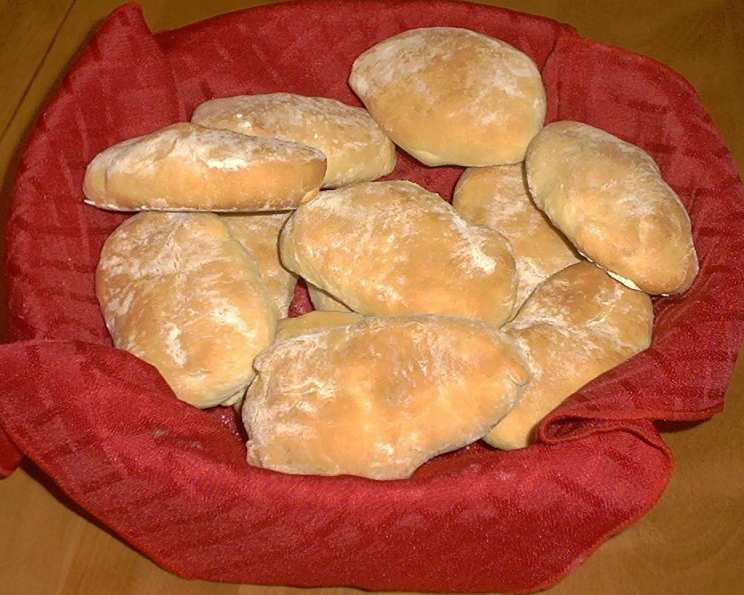
The Humble Scottish Bap: A Baker’s Journey
The scent of baking bread has always been a time machine for me. One whiff, and I’m transported back to a tiny bakery in Edinburgh, a place I stumbled upon during a student backpacking trip. It was tucked away on a cobbled street, its windows fogged with warmth, and the air inside was thick with the comforting aroma of yeast and flour. I remember ordering a bap filled with crispy bacon, the salty meat melding perfectly with the soft, slightly chewy bread. It was simple perfection, a culinary memory etched in my mind, and the reason I’ve spent years trying to recreate that perfect Scottish bap.
Recipe Overview
- Prep Time: 20 minutes (plus 1 hour rise time)
- Cook Time: 25-30 minutes
- Total Time: 1 hour 45-50 minutes
- Servings: 12
- Yield: 12 baps
- Dietary Type: Vegetarian (can be made vegan)
Ingredients
- 1 package (7 g) dry active yeast
- 1 teaspoon icing sugar
- 3 1/2 cups plain flour, plus extra for dusting
- 1 cup warm milk (dairy or plant-based)
- 1 1/2 teaspoons salt
- 3 tablespoons melted butter or 3 tablespoons lard
Equipment Needed
- 2 Baking Sheets
- Small or medium bowl
- Large bowl
- Plastic wrap
- Lightly floured board
Instructions
-
Lightly dust two cooking sheets and set aside. These will be your resting places for the baps before they hit the oven.
-
In a small or medium bowl, combine the yeast, icing sugar, and 2 tablespoons of the flour. The sugar feeds the yeast, helping it to activate, and the flour gives it something to munch on.
-
Gradually blend in the warm milk until smooth. Ensure the milk isn’t too hot; it should be comfortably warm to the touch, around 105-115°F (40-46°C), otherwise, it will kill the yeast.
-
Cover the bowl with plastic wrap and let it stand for 10 minutes, or until foamy. This is the proofing stage – you should see a frothy layer on top, indicating that the yeast is alive and kicking.
-
Sift together the remaining flour and salt in a large bowl. Sifting ensures there are no lumps in the flour and evenly distributes the salt, which is crucial for flavour development.
-
Make a well in the centre of the flour mixture. This creates a space to pour in the wet ingredients.
-
Pour the yeast mixture and the melted butter (or lard) into the well.
-
Mix to a soft dough. Start mixing with a spoon or spatula, then switch to your hands as it comes together. The dough should be soft and slightly sticky, but not so sticky that it’s unmanageable.
-
Turn out onto a lightly floured board and knead for 3-4 minutes. Kneading develops the gluten in the flour, giving the baps their characteristic chewy texture. If the dough is too sticky, add a little more flour, a tablespoon at a time, until it becomes easier to handle.
-
Shape into a ball, place in a large, oiled bowl, and cover with plastic wrap. The oil prevents the dough from sticking to the bowl as it rises.
-
Place in a warm place and let rise for 1 hour, or until doubled in size. This is the first proof, where the yeast does its work, creating air pockets that give the baps their light and airy texture. A warm place helps speed up the process.
-
Preheat oven to 425 degrees F (220 degrees C). Ensure your oven is properly preheated; this is critical for achieving a good rise and even baking.
-
Turn dough out onto a lightly floured board and knead again for 2 minutes. This second knead deflates the dough and redistributes the air pockets, resulting in a more even texture.
-
Divide into 12 pieces. Use a bench scraper or knife to divide the dough as evenly as possible. Aim for consistent sizes so that the baps bake uniformly.
-
Roll each piece into a flat oval, around 1/4 to 1/2 inch thick, and place on the prepared baking sheet. Don’t roll them too thin, as they need some height to achieve the right texture.
-
When all baps are rolled out, cover and let rise for 15 minutes. This is the final proof, where the baps puff up slightly before baking.
-
Make an indent in the center of each oval with your finger. This is a signature feature of Scottish baps, preventing them from puffing up too much in the oven and giving them their characteristic shape.
-
Bake for 25-30 minutes until well browned and cooked through. The baps should be golden brown on top and sound hollow when tapped on the bottom. If they start to brown too quickly, you can tent them with foil to prevent burning.
-
Cool slightly and serve or save for sandwich rolls. Let them cool on a wire rack to prevent them from becoming soggy.
Expert Tips & Tricks
- For a softer bap: Use milk powder in addition to the fresh milk. A tablespoon or two will do the trick.
- Achieving a crispier crust: Brush the baps with a little milk or egg wash before baking.
- Make-ahead tip: You can prepare the dough up to the end of the first rise, then refrigerate it overnight. Bring it back to room temperature before continuing with the recipe.
- Vegan Variation: Substitute the butter with vegan butter or a neutral oil like canola.
- Troubleshooting: If your baps are dense, your yeast may be old or the milk may have been too hot. Ensure your yeast is fresh and your liquids are at the correct temperature.
- Lard vs Butter: Lard will provide a softer, slightly richer texture, while butter will give a more pronounced flavour.
Serving & Storage Suggestions
Serve your freshly baked Scottish baps warm, split open and filled with your favorite ingredients. They are traditionally enjoyed with crispy bacon, sausage, or fried eggs for breakfast. They also make excellent sandwich rolls for lunch or dinner.
Store leftover baps in an airtight container at room temperature for up to 2 days. For longer storage, freeze them in a freezer-safe bag for up to 2 months. To reheat, thaw completely and warm in a low oven (around 300°F/150°C) for a few minutes until heated through. You can also toast them for a crispier texture.
Nutritional Information
| Nutrient | Amount per Serving | % Daily Value |
|---|---|---|
| Calories | 177.9 kcal | – |
| Calories from Fat | 36g | 20% |
| Total Fat | 4 g | 6% |
| Saturated Fat | 2.4 g | 11% |
| Cholesterol | 10.5 mg | 3% |
| Sodium | 322.1 mg | 13% |
| Total Carbohydrate | 30.1 g | 10% |
| Dietary Fiber | 1.1 g | 4% |
| Sugars | 0.8 g | 3% |
| Protein | 4.8 g | 9% |
Variations & Substitutions
- Whole Wheat Baps: Substitute up to half of the plain flour with whole wheat flour for a nuttier flavor and added fiber.
- Cheese Baps: Add grated cheddar cheese to the dough before the first rise for a cheesy twist.
- Herb Baps: Incorporate chopped fresh herbs, such as rosemary or thyme, into the dough for an aromatic flavor.
- Sweet Baps: Reduce the salt and add a tablespoon of sugar to the dough for a slightly sweet version that pairs well with jam or fruit.
- Gluten-Free Baps: Use a gluten-free flour blend and follow the recipe as directed. Note that gluten-free dough may require a binding agent like xanthan gum.
FAQs (Frequently Asked Questions)
Q: Why is my dough not rising?
A: Several factors can affect dough rising. Ensure your yeast is fresh, your milk is warm (not hot), and the environment is warm enough. Cold temperatures can significantly slow down the rising process.
Q: Can I use a stand mixer to make the dough?
A: Yes, you can use a stand mixer with a dough hook attachment. Knead the dough on low speed for about 5-7 minutes, or until it becomes smooth and elastic.
Q: How do I know when the baps are fully baked?
A: The baps should be golden brown on top and sound hollow when tapped on the bottom. You can also insert a toothpick into the center; it should come out clean.
Q: Can I freeze the bap dough before baking?
A: Yes, you can freeze the dough after the first rise. Punch down the dough, shape it into a ball, wrap it tightly in plastic wrap, and freeze for up to 2 months. Thaw in the refrigerator overnight before proceeding with the recipe.
Q: What can I use instead of lard?
A: You can use melted butter, shortening, or a neutral-tasting oil like canola oil as a substitute for lard.
Final Thoughts
So, there you have it – my take on the classic Scottish bap. It’s a simple bread, but with the right technique and a little patience, you can create something truly special. Don’t be afraid to experiment with different fillings and toppings to make it your own. I encourage you to try this recipe and share your feedback. Perhaps pair these baps with a hearty bowl of Scottish Cullen Skink soup for a truly authentic culinary experience! Happy baking!