
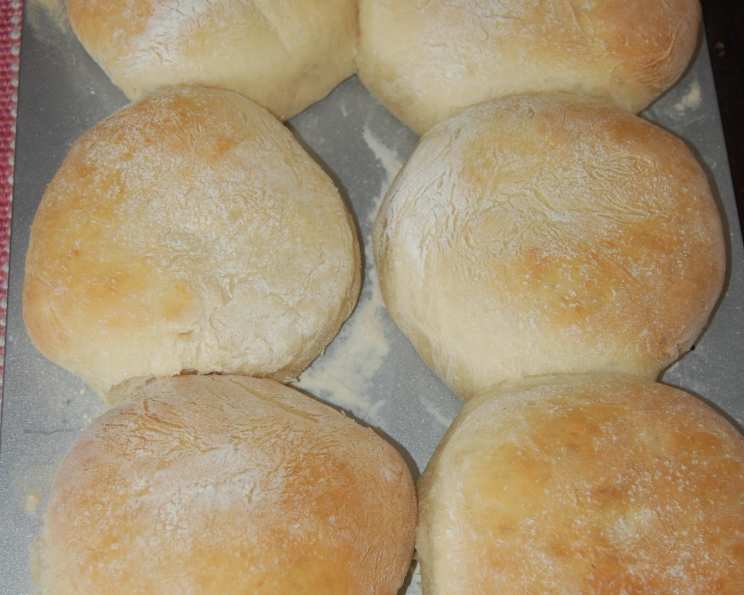
Scottish Baps: Soft Morning Bread Rolls
The aroma of freshly baked bread is, without a doubt, one of the most comforting smells in the world. My grandmother, a sturdy Glaswegian woman with hands as warm as her heart, used to make baps every Saturday morning. The entire house would be filled with the yeasty scent, a promise of the delicious bacon and egg sandwiches to come. Those baps, pillowy soft and generously dusted with flour, were more than just bread; they were a symbol of home, family, and the simple joys of life. I still remember sneaking into the kitchen, still in my pajamas, to steal a warm one straight from the cooling rack. This recipe brings back those memories every time I bake it.
Recipe Overview
- Prep Time: 2 hours
- Cook Time: 10 minutes
- Total Time: 2 hours 10 minutes
- Servings: 8
- Yield: 8 Baps
- Dietary Type: Vegetarian
Ingredients
- ½ ounce fresh yeast
- 1 teaspoon sugar, for creaming the yeast
- ½ pint milk and water, mixed and warmed to blood heat (more if necessary)
- 1 lb strong white bread flour
- 1 teaspoon salt
- 2 ounces butter
- Flour, for dusting
Equipment Needed
- Large mixing bowl
- Baking tray(s)
- Rolling pin
- Wire rack
Instructions
- Begin by preparing the dough. In a large mixing bowl, rub the butter into the flour until the mixture resembles breadcrumbs. This ensures the butter is evenly distributed and helps create a tender crumb.
- Make a well in the center of the flour mixture. This creates a space for the wet ingredients to be incorporated smoothly.
- In a separate small bowl, cream the yeast with the sugar. This activates the yeast, giving it a head start in the rising process. The sugar provides food for the yeast, encouraging it to ferment and produce carbon dioxide, which is essential for leavening the dough.
- Add the warmed milk and water mixture and salt to the creamed yeast. The liquid should be lukewarm, about blood temperature, to further activate the yeast without killing it. Be careful not to use hot liquid, as it will destroy the yeast’s ability to rise.
- Pour the yeast mixture into the well in the flour and begin to mix to a slack dough. This means the dough should be soft and slightly sticky, but still manageable. If the dough is too dry, add extra warm liquid a little at a time until the desired consistency is achieved.
- Allow the dough to rise in a warm place until it has doubled in bulk. This process typically takes about an hour or two, depending on the temperature of your environment. A warm, draft-free area is ideal for proofing. You can place the bowl in a slightly warmed oven (turned off!) or cover it with a damp cloth.
- Once the dough has doubled, knead it lightly to deflate it and redistribute the yeast.
- Divide the dough into eight even pieces. This ensures that each bap is the same size and cooks evenly.
- Knead each piece into a ball about the size of a fist. This helps to develop the gluten and create a smooth, round shape.
- Flatten each ball with your hand, and then lightly roll it to a round with a rolling pin. The baps should be relatively wide and not too thick.
- Place the dough rounds on a well-floured baking tray(s). The flour prevents the baps from sticking to the tray during baking.
- Lightly press your thumb into the middle of each bap. This creates a slight indentation, which is characteristic of traditional Scottish baps.
- Brush the tops of the baps with milk to encourage browning and add a slight sheen.
- Sprinkle flour all over the tops of the baps. This gives them their distinctive floured finish. Use a generous amount of flour for an authentic look.
- Prove the baps for 15 to 20 minutes, or until they are well risen. This allows the gluten to relax and the dough to become light and airy.
- Bake in a preheated oven at 200°C (400°F) mark 6 for 10 minutes, or until the baps are firm and lightly golden brown, but still soft. It’s crucial to avoid overbaking them, as this will result in a dry, hard bap. To check for doneness, tap them underneath; they should sound hollow when cooked.
- Cool the baps on a wire rack. This prevents them from becoming soggy on the bottom.
- Once cooled, dust with more flour for an extra rustic appearance.
Expert Tips & Tricks
- For an extra soft texture, try using a tangzhong method. This involves cooking a small portion of the flour and water into a roux before adding it to the rest of the ingredients. This pre-gelatinizes the starch, allowing the dough to absorb more liquid and resulting in a softer crumb.
- If you don’t have fresh yeast, you can substitute it with active dry yeast. Use half the amount of fresh yeast and activate it in warm water with sugar before adding it to the other ingredients.
- To ensure even baking, rotate the baking tray(s) halfway through the baking time. This helps to compensate for any hot spots in your oven.
- Don’t be afraid to experiment with different flours. A combination of strong white bread flour and a small amount of whole wheat flour can add a nutty flavor and slightly denser texture.
Serving & Storage Suggestions
These Scottish baps are best eaten on the day they are made, while they are still warm and incredibly soft. They are perfect for breakfast sandwiches filled with bacon, sausage, or eggs. They also make excellent lunch sandwiches with cheese, ham, or salad. Split them open while warm and spread with butter for a simple yet satisfying treat.
To store, keep them in an airtight container at room temperature for up to 2 days. They can also be frozen for up to 3 months. To reheat, thaw them completely and then warm them in a low oven or toaster oven until heated through. They are delicious toasted the next day.
Nutritional Information
| Nutrient | Amount per Serving | % Daily Value |
|---|---|---|
| Calories | 225 kcal | 11% |
| Total Fat | 5g | 8% |
| Saturated Fat | 3g | 15% |
| Cholesterol | 10mg | 3% |
| Sodium | 250mg | 11% |
| Total Carbohydrate | 38g | 13% |
| Dietary Fiber | 1g | 4% |
| Sugars | 1g | 2% |
| Protein | 6g | 12% |
Variations & Substitutions
- Vegan Baps: Substitute the butter with a plant-based butter alternative and the milk with a plant-based milk like oat or soy milk.
- Cheese Baps: Add shredded cheddar cheese to the dough before the second rise for cheesy baps.
- Herb Baps: Incorporate fresh herbs like rosemary or thyme into the dough for an aromatic twist.
- Sweet Baps: Add a tablespoon of sugar and a pinch of cinnamon to the dough for a slightly sweeter version, perfect for breakfast.
FAQs (Frequently Asked Questions)
Q: Why are my baps not as soft as they should be?
A: Overbaking is the most common reason. Bake them only until lightly golden brown and tap hollow underneath. Also, ensure your dough is slack enough – add more liquid if necessary.
Q: Can I use all milk instead of a milk and water mixture?
A: Yes, using all milk will result in a slightly richer and softer bap.
Q: How do I prevent the baps from sticking to the baking tray?
A: Ensure the baking tray is well-floured. Alternatively, use parchment paper to line the tray.
Q: Can I make the dough ahead of time?
A: Yes, you can prepare the dough and let it rise in the refrigerator overnight. This will slow down the rising process and allow the flavors to develop further. Bring the dough to room temperature before shaping and baking.
Q: Are there any substitutes for strong white bread flour?
A: While strong white bread flour is recommended for its high gluten content, you can use all-purpose flour. However, the resulting baps may not be as light and airy.
Final Thoughts
Making these Scottish baps is a rewarding experience, connecting you to a rich culinary tradition and filling your home with the irresistible aroma of freshly baked bread. Don’t be intimidated by the yeast – with a little patience and attention to detail, you’ll be enjoying perfectly soft baps in no time. Try them with a hearty bowl of Cullen skink or a simple cup of tea. I encourage you to give this recipe a try, share your creations, and let me know what you think! Happy baking!