
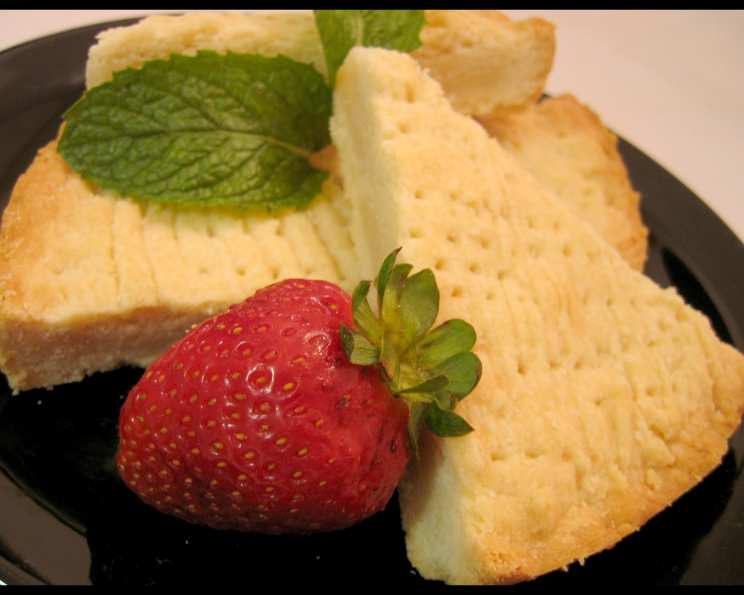
Scottish Shortbread: A Timeless Classic
The scent of shortbread baking always transports me back to my grandmother’s kitchen. She wasn’t Scottish, mind you, but she had a well-worn cookbook filled with recipes from around the world, and her shortbread was legendary. I remember sitting at her kitchen table, crumbs dusting my cheeks, as she told stories of her own childhood, the buttery sweetness of the shortbread mingling with the warmth of her voice, creating a memory I cherish to this day. It wasn’t just a cookie; it was a connection to family, a taste of pure comfort.
Recipe Overview
- Prep Time: 10 minutes
- Cook Time: 60-70 minutes
- Total Time: 1 hour 10 minutes
- Yields: 16 wedges
- Serves: 16
- Dietary Type: Vegetarian
Ingredients
- 1 1⁄4 cups cold unsalted butter
- 1⁄4 cup powdered sugar
- 1⁄4 cup granulated sugar
- 2 1⁄2 cups all-purpose flour
Equipment Needed
- Oven
- Two ungreased 8-inch cake pans
- Food Processor (Optional)
- Electric Mixer (Optional)
- Medium bowl
- Large bowl
- Plastic bag (Optional)
- Wire rack
- Flat cookie sheet
- Cutting board
- Long sharp knife
- Fork
Instructions
-
Prepare for Baking: Set your oven rack to the middle position. Preheat the oven to 275°F (135°C). Have two ungreased 8-inch cake pans ready. This low temperature is key to achieving that delicate, melt-in-your-mouth texture characteristic of true shortbread.
-
Food Processor Method (Optional): If using a food processor, cut the cold butter into 1-inch cubes, wrap it, and refrigerate for a few minutes to ensure it remains cold. This helps prevent the gluten from overdeveloping, resulting in a more tender shortbread.
-
Process the Sugars: In the food processor, process the powdered sugar and granulated sugar for about 1 minute, or until the sugar is very fine. This creates a smoother texture in the final product.
-
Incorporate the Butter: Add the cold butter to the food processor and pulse until the sugar disappears. Be careful not to over-process; you want the mixture to be combined, but not overly smooth.
-
Add the Flour: Add the all-purpose flour and pulse until there are a lot of moist, crumbly little pieces and no dry flour particles remain. Again, avoid over-processing to maintain the shortbread’s signature texture.
-
Form the Dough (Food Processor): Dump the mixture into a plastic bag and press it together until it forms a cohesive dough.
-
Knead Lightly (Food Processor): Remove the dough from the plastic bag and knead it lightly until it holds together. Over-kneading will develop the gluten and make the shortbread tough.
-
Electric Mixer or By Hand Method (Alternative): If using an electric mixer or mixing by hand, use superfine granulated sugar for the best texture and be sure to soften the butter slightly. It should still be cool, but not rock hard.
-
Combine Sugars (Mixer/Hand): In a medium bowl, whisk together the powdered sugar and granulated sugar.
-
Cream Butter and Sugars (Mixer/Hand): In a large bowl, cream the softened butter with the sugars until light and fluffy. This step incorporates air, which contributes to the shortbread’s delicate crumb.
-
Incorporate Flour (Mixer/Hand): With your fingers or with the electric mixer, mix in the flour until the mixture holds together. If using the mixer, add the flour in two parts to prevent overmixing.
-
Divide the Dough: For both methods (food processor or mixer/hand), divide the dough into two equal parts.
-
Shape the Shortbread: Pat each half of the dough into an ungreased 8-inch round cake pan. Aim for an even thickness to ensure even baking.
-
Create the Design: Use the tines of a fork to press 3/4-inch lines radiating like rays of sun all around the perimeter of the dough. This is a traditional design element, and it also helps to create consistent slices after baking.
-
Prick the Dough: Prick the rest of the dough all over with the tines of the fork. This step is crucial; it keeps the shortbread even during baking and prevents it from puffing up. The perforations allow steam to escape.
-
Bake: Bake for 60-70 minutes or until the shortbread is pale golden (do not brown). Watch it carefully towards the end of the baking time. The shortbread should be firm to the touch.
-
Ensure Even Baking: For even baking, rotate the pans from top to bottom and front to back halfway through the baking period. This compensates for any hot spots in your oven.
-
Cool Slightly: Cool in the pans, on a wire rack, for 10 minutes. This allows the shortbread to firm up slightly before inverting.
-
Invert and Slice: Invert the shortbread onto a flat cookie sheet and slide it onto a cutting board.
-
Cut into Wedges: While still warm, use a long, sharp knife to cut each 8-inch round of shortbread into 8 pie-shaped wedges. Cutting while warm prevents the shortbread from crumbling.
-
Cool Completely: Transfer the wedges to wire racks to cool completely. This allows the shortbread to crisp up.
Expert Tips & Tricks
-
Cold Butter is Key: Using cold butter is essential for creating the flaky, melt-in-your-mouth texture of shortbread. The cold butter creates pockets of fat that melt during baking, resulting in a tender crumb.
-
Don’t Overmix: Overmixing develops the gluten in the flour, leading to a tough shortbread. Mix the ingredients just until they come together.
-
Low and Slow Baking: The low baking temperature ensures that the shortbread cooks evenly and doesn’t brown too quickly.
-
Docking is Important: Pricking the shortbread with a fork (docking) prevents it from puffing up and becoming uneven during baking.
-
Use Superfine Sugar: If you can find superfine (caster) sugar, it will dissolve more easily into the butter and create a smoother texture.
Serving & Storage Suggestions
Serve the Scottish shortbread with a cup of tea or coffee for a classic pairing. It’s also delicious with a scoop of vanilla ice cream or fresh berries.
Store the cooled shortbread in an airtight container at room temperature for up to a week. For longer storage, you can freeze the shortbread for up to 2 months. Thaw completely before serving. The texture might change slightly after freezing, but it will still be delicious.
Nutritional Information
| Nutrient | Amount per Serving | % Daily Value |
|---|---|---|
| Calories | 217.6 kcal | N/A |
| Calories from Fat | 131 g | 60% |
| Total Fat | 14.6 g | 22% |
| Saturated Fat | 9.1 g | 45% |
| Cholesterol | 38.1 mg | 12% |
| Sodium | 2.4 mg | 0% |
| Total Carbohydrate | 19.9 g | 6% |
| Dietary Fiber | 0.5 g | 2% |
| Sugars | 5 g | N/A |
| Protein | 2.2 g | 4% |
Variations & Substitutions
-
Gluten-Free Shortbread: Substitute the all-purpose flour with a gluten-free blend. Ensure the blend contains xanthan gum or another binding agent.
-
Lemon Shortbread: Add the zest of one lemon to the dough for a bright, citrusy flavor.
-
Chocolate Chip Shortbread: Stir in 1/2 cup of mini chocolate chips to the dough before shaping.
-
Scottish Oatmeal Shortbread: Substitute 1/2 cup of the flour with finely ground oatmeal for a nuttier flavor and slightly coarser texture.
-
Lavender Shortbread: Infuse the butter with culinary lavender before creaming it with the sugar. This adds a delicate floral note. To do this, melt the butter and steep a tablespoon of dried lavender in it for 30 minutes. Strain before using.
FAQs (Frequently Asked Questions)
Q: Why is my shortbread crumbly and not holding together?
A: This is likely due to insufficient moisture or over-mixing. Ensure your butter is properly softened (but not melted) and avoid overworking the dough. You can also try adding a tablespoon of milk or cream to help bind the ingredients.
Q: Can I make shortbread without a food processor?
A: Absolutely! The recipe provides instructions for using an electric mixer or mixing by hand. The key is to ensure the butter is softened slightly and that you don’t overmix the dough.
Q: How do I know when the shortbread is done?
A: The shortbread should be pale golden in color and firm to the touch. Avoid browning, as this will result in a dry shortbread.
Q: Can I freeze shortbread?
A: Yes, you can freeze shortbread for up to 2 months. Wrap it tightly in plastic wrap and then place it in an airtight container. Thaw completely before serving.
Q: Why does my shortbread taste bland?
A: Shortbread relies on the quality of its ingredients. Use high-quality butter for the best flavor. You can also add a pinch of salt to enhance the sweetness.
Final Thoughts
Scottish shortbread is more than just a recipe; it’s an experience. The simplicity of the ingredients belies the complex flavors and textures that come together in each bite. Whether you’re a seasoned baker or a beginner, I encourage you to try this recipe. Share it with loved ones, experiment with variations, and most importantly, savor the moment. And please, do let me know how it turns out for you! Perhaps pair it with a smoky single malt whisky for the full Scottish experience.