
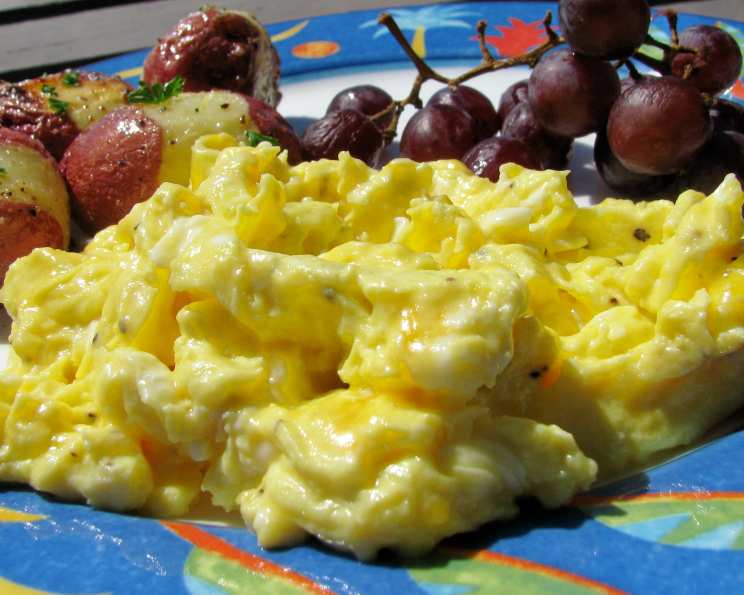
The Art of the Perfect Scrambled Eggs: A Culinary Journey
There’s a certain magic in the simplicity of scrambled eggs. I remember, as a child, watching my grandmother in her sun-drenched kitchen. The gentle clatter of her whisk against the ceramic bowl, the sizzle of butter in the pan, and that warm, comforting aroma filling the air. Her scrambled eggs were legendary, a testament to the fact that the most exquisite dishes often stem from the humblest of ingredients. They were always perfect – creamy, never dry, and infused with a love that only a grandmother can impart. Today, I strive to recreate that magic, each scramble a little ode to her.
Recipe Overview
- Prep Time: 2 minutes
- Cook Time: 10 minutes
- Total Time: 12 minutes
- Servings: 4-6
- Yield: Varies based on egg size
- Dietary Type: Can be Gluten-Free; check cheese ingredients
Ingredients
- 2 tablespoons butter
- 8 eggs
- 4 teaspoons water or 4 teaspoons milk
- Salt, to taste
- Pepper, to taste
- 2 tablespoons whipping cream (at room temperature)
- 2 tablespoons cheddar cheese, finely shredded
- Parsley sprig, for garnish
Equipment Needed
- Mixing bowl
- Whisk
- Non-stick skillet
- Spatula
Instructions
-
In a mixing bowl, combine the eggs, salt, pepper, and water (or milk). Whisk vigorously for about 30 seconds, ensuring the mixture is well combined and slightly frothy. This step is crucial for achieving a light and airy texture.
-
Place a non-stick skillet over low heat. Add the butter and allow it to melt completely, coating the entire surface of the pan. Be careful not to let the butter brown, as this will affect the flavor of the eggs.
-
Pour the egg mixture into the preheated skillet. Let the eggs begin to set around the edges, then gently push the cooked edges towards the center of the pan with a spatula, allowing the uncooked egg to flow underneath. Continue this process, stirring slowly and deliberately, to create thick, creamy ribbons.
-
The key to perfect scrambled eggs is low and slow cooking. Keep the heat at a gentle simmer, and avoid over-stirring, which can result in dry, rubbery eggs.
-
Remove the skillet from the heat just before the eggs appear completely cooked. They will continue to cook from the residual heat.
-
Stir in the whipping cream and shredded cheddar cheese. The cream adds richness and moisture, while the cheese provides a delightful savory element. Gently fold the ingredients together until the cheese is melted and evenly distributed.
-
Taste and season with additional salt and pepper as needed. Remember that the cheese will also contribute to the saltiness of the dish, so adjust accordingly.
-
Garnish with a sprig of fresh parsley for a touch of color and freshness.
Expert Tips & Tricks
- Temperature is key: Low heat is your best friend. Rushing the cooking process will lead to dry, tough eggs.
- Don’t over-whisk: Over-whisking incorporates too much air, which can cause the eggs to puff up and then deflate, resulting in a less creamy texture. Aim for a brief, thorough whisking until just combined.
- Cream at Room Temperature: Adding cold cream can lower the temperature of the eggs and prevent them from cooking properly. Always use cream that is at room temperature.
- The Carryover Cook: Removing the eggs from the heat slightly before they appear fully cooked prevents overcooking and ensures a moist, creamy final product.
- Pre-shred your cheese: Finely shredded cheese melts more evenly and quickly, creating a smoother, more integrated flavor.
- For extra fluffy eggs, try adding a tablespoon of sour cream or crème fraîche along with the whipping cream.
Serving & Storage Suggestions
Serve the scrambled eggs immediately while they are still warm and creamy. They pair perfectly with toast, bagels, croissants, or as part of a larger breakfast or brunch spread. Consider serving them alongside bacon, sausage, avocado, or fresh fruit.
Leftover scrambled eggs can be stored in an airtight container in the refrigerator for up to 2 days. However, keep in mind that they will likely become slightly drier upon reheating. To reheat, gently warm them in a skillet over low heat, stirring occasionally, or microwave in short intervals, stirring in between. Adding a splash of milk or cream can help to restore some of the original moisture. Freezing scrambled eggs is not recommended, as it can significantly alter their texture.
Nutritional Information
| Nutrient | Amount per Serving (estimated) | % Daily Value (approximate) |
|---|---|---|
| Calories | 280 kcal | 14% |
| Total Fat | 22g | 28% |
| Saturated Fat | 13g | 65% |
| Cholesterol | 420mg | 140% |
| Sodium | 250mg | 11% |
| Total Carbohydrate | 2g | 1% |
| Dietary Fiber | 0g | 0% |
| Sugars | 1g | N/A |
| Protein | 16g | 32% |
Note: Nutritional information is an estimate and can vary based on specific ingredients and portion sizes.
Variations & Substitutions
- Cheese Variations: Experiment with different types of cheese, such as Gruyère, Parmesan, or goat cheese, to create unique flavor profiles.
- Spice it Up: Add a pinch of red pepper flakes or a dash of hot sauce for a spicy kick.
- Herb Infusion: Incorporate fresh herbs, such as chives, dill, or tarragon, for a more aromatic dish.
- Vegetable Medley: Sauté diced vegetables, such as mushrooms, onions, peppers, or spinach, and add them to the eggs for a more substantial and nutritious meal.
- Dairy-Free Option: Substitute the whipping cream with a dairy-free alternative, such as almond milk or coconut cream. Use a dairy-free cheese alternative as well. Be aware that the texture and flavor will be slightly different.
FAQs (Frequently Asked Questions)
Q: Why are my scrambled eggs dry and rubbery?
A: Overcooking is the most common cause of dry scrambled eggs. Cook them over low heat and remove them from the heat just before they appear fully cooked, as they will continue to cook from the residual heat.
Q: Can I use milk instead of cream?
A: Yes, you can use milk instead of cream, but the texture will be less rich and creamy. For best results, use whole milk or half-and-half.
Q: How can I prevent my scrambled eggs from sticking to the pan?
A: Use a non-stick skillet and ensure it is properly preheated before adding the butter. Coat the entire surface of the pan with the butter to create a barrier between the eggs and the pan.
Q: Can I make scrambled eggs ahead of time?
A: While scrambled eggs are best enjoyed fresh, you can make them a few hours ahead of time and keep them warm in a slow cooker or warming tray. However, they may become slightly drier.
Q: What’s the secret to fluffy scrambled eggs?
A: Whisk the eggs thoroughly, but not excessively, to incorporate air. Also, don’t overcook the eggs!
Final Thoughts
Scrambled eggs are more than just a simple breakfast dish; they are a blank canvas for culinary creativity. Don’t be afraid to experiment with different flavors, textures, and ingredients to create your own signature version. Whether you prefer them creamy and cheesy or spicy and herbaceous, the perfect scrambled eggs are waiting to be discovered. So grab your whisk, fire up the stove, and embark on your own culinary journey. And, if you happen to stumble upon a variation that rivals my grandmother’s, please, do share!