
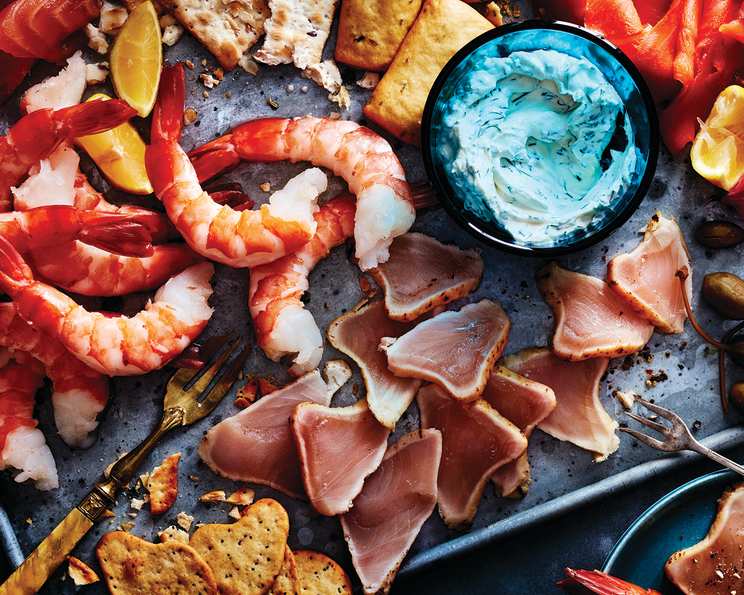
The Ultimate Seacuterie Platter: A Chef’s Guide
My earliest memory of seafood platters involves summer evenings on the Maine coast. The briny air, the clinking of sailboat masts, and the communal joy of sharing freshly caught seafood – those moments are forever etched in my mind. While traditional charcuterie boards were always a hit, there was something undeniably special about a platter overflowing with the ocean’s bounty. Today, I bring that experience to you, with a seacuterie platter designed to impress and delight.
Recipe Overview
- Prep Time: 15 minutes
- Cook Time: 0 minutes
- Total Time: 15 minutes
- Servings: 5
- Dietary Type: Pescatarian
Ingredients
- 1 package (600 g) black tiger shrimp, thawed
- 1 package (112 g) tuna, PC Tuna Tataki, thawed, with accompanying Tataki sauce
- 1 package (150 g) smoked salmon
- 1 package (150 g) PC Maple & Rye Cold Smoked Salmon, thawed
- 1 lemon, thinly sliced
- ¼ cup red onion, thinly sliced
- 2 tablespoons capers, drained
- Assorted crackers and cut flatbread
- Fresh sprigs of dill (for garnish, optional)
Equipment Needed
- Large serving platter or board
- Small bowls for sauces (optional)
Instructions
- Begin by ensuring all your seafood is properly thawed, if frozen. Black tiger shrimp should be completely thawed and patted dry. PC Tuna Tataki and PC Maple & Rye Cold Smoked Salmon should also be thawed according to package instructions.
- Now, the fun part – arranging your seacuterie platter! On your large serving platter or board, artfully arrange the shrimp, smoked salmon, and tuna. Consider grouping similar items together to create visual appeal. The Tuna Tataki comes with its own sauce; place this nearby for easy dipping.
- Distribute the lemon slices strategically across the board. These not only add a burst of color but also provide a refreshing acidic element to complement the richness of the seafood.
- Scatter the thinly sliced red onion and drained capers over the smoked salmon and around the lemon slices. The red onion provides a sharp bite, while the capers offer a salty, briny counterpoint.
- Just before serving, pile the assorted crackers and cut flatbread onto the platter. This ensures they remain crisp and fresh.
- For a final touch of elegance, garnish the platter with fresh sprigs of dill. The vibrant green adds a pop of color and its delicate flavor pairs beautifully with seafood.
Expert Tips & Tricks
- Seafood Quality is Key: Since this platter relies on the quality of the seafood, invest in the freshest possible ingredients. Look for bright, firm shrimp, and salmon that is vibrant in color and free of any fishy odors.
- Temperature Matters: Serve the seacuterie platter chilled. This enhances the flavors and textures of the seafood. Keep the individual components refrigerated until just before assembly.
- Prepare Ahead (Partially): You can slice the lemon and red onion, and drain the capers a few hours ahead of time. Store them separately in the refrigerator until ready to use.
- Enhance the Tataki Sauce: For an extra layer of flavor, add a dash of sesame oil or a squeeze of lime juice to the Tataki sauce.
- DIY Smoked Salmon: If you’re feeling adventurous, try smoking your own salmon! It adds a unique touch to the platter. There are many simple home-smoking methods available online.
- Consider a Theme: Build your platter around a specific theme, like “Mediterranean” (with olives, feta, and sun-dried tomatoes) or “Asian-inspired” (with seaweed salad, wasabi, and pickled ginger).
- Add a Sweet Element: A small bowl of honey or a few slices of ripe melon can provide a delightful contrast to the savory seafood.
- Don’t Overcrowd: Leave some empty space on the platter so it doesn’t look too cluttered. This makes it easier for guests to select what they want.
Serving & Storage Suggestions
Serve your seacuterie platter immediately after assembling to ensure the seafood is fresh and the crackers are crisp. Arrange on a visually appealing board or platter. Consider providing small forks or tongs for guests to easily serve themselves.
Leftover seafood should be stored in an airtight container in the refrigerator. Consume within 24 hours for optimal quality and safety. It is not recommended to freeze seafood after it has been thawed and served. Discard any crackers or flatbread that have become soggy.
Nutritional Information
| Nutrient | Amount per Serving | % Daily Value |
|---|---|---|
| Calories | 195.1 kcal | N/A |
| Calories from Fat | 44g | 23% |
| Total Fat | 5 g | 7 % |
| Saturated Fat | 1 g | 4 % |
| Cholesterol | 173.5 mg | 57 % |
| Sodium | 1261.7 mg | 52 % |
| Total Carbohydrate | 3.1 g | 1 % |
| Dietary Fiber | 0.6 g | 2 % |
| Sugars | 0.6 g | N/A |
| Protein | 32.8 g | 65 % |
Note: Nutritional information is an estimate and may vary based on specific ingredients used.
Variations & Substitutions
- Different Seafood: Feel free to customize the platter with your favorite seafood. Consider adding cooked mussels, oysters on the half shell, crab legs, or smoked trout.
- Gluten-Free Option: Use gluten-free crackers and flatbread to accommodate guests with dietary restrictions.
- Spicy Kick: Add a pinch of red pepper flakes to the smoked salmon or serve with a spicy dipping sauce.
- Vegetarian Additions: Include vegetarian elements such as marinated artichoke hearts, roasted red peppers, or grilled asparagus to cater to mixed diets.
- Local Sourcing: Prioritize sourcing seafood locally whenever possible. This not only supports local fishermen but also ensures the freshest, highest-quality ingredients.
FAQs (Frequently Asked Questions)
Q: Can I make this platter ahead of time?
A: It’s best to assemble the platter just before serving to maintain the freshness and quality of the seafood. However, you can prepare the components (slicing lemons, red onions, and draining capers) in advance and store them separately.
Q: What kind of crackers are best for a seacuterie platter?
A: Choose a variety of crackers to offer different textures and flavors. Options include water crackers, sesame crackers, whole-wheat crackers, and baguette slices.
Q: How do I prevent the shrimp from becoming rubbery?
A: Ensure that the shrimp are properly thawed and not overcooked. If using pre-cooked shrimp, handle them gently and avoid leaving them out at room temperature for too long.
Q: What drinks pair well with a seacuterie platter?
A: Crisp white wines like Sauvignon Blanc or Pinot Grigio are excellent choices. Alternatively, consider a dry rosé or a light-bodied beer.
Q: Can I add sauces besides the Tataki sauce?
A: Absolutely! Consider adding a classic cocktail sauce, a creamy dill sauce, or a lemon-garlic aioli for dipping.
Final Thoughts
Creating a seacuterie platter is more than just arranging seafood; it’s about crafting an experience. It’s about sharing the flavors of the ocean with friends and family. So, gather your ingredients, embrace your creativity, and dive into this delightful culinary adventure. I encourage you to experiment with different seafood combinations, add your personal touch, and most importantly, enjoy the process. Bon appétit!