
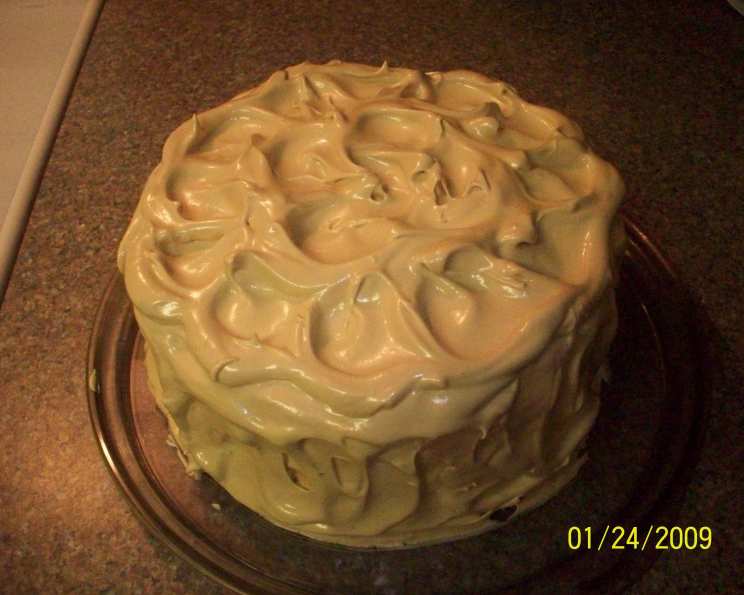
The Cloud-Like Delight of Seafoam Icing: A Culinary Journey
My grandmother, bless her heart, always said that a cake wasn’t truly finished until it was crowned with a swirl of seafoam icing. I remember as a child, watching her whisk with tireless energy over a steaming double boiler, her face flushed with the heat and the sheer joy of creation. The scent of caramelized sugar and vanilla would fill her cozy kitchen, promising a taste of pure, unadulterated happiness. This recipe, passed down through generations, isn’t just an icing; it’s a taste of home, a reminder of love, and a cloud-like dream come true.
Recipe Overview
- Prep Time: 5 minutes
- Cook Time: 5 minutes
- Total Time: 10 minutes
- Yields: Enough icing for a 2-layer cake
- Dietary Type: Not suitable for Vegans or those allergic to eggs.
Ingredients
- 2 egg whites, unbeaten
- 1 1/2 cups brown sugar
- 5 tablespoons ice water
- 1/8 teaspoon salt
- 1 1/2 teaspoons dark corn syrup
- 1/8 teaspoon cream of tartar
- 1 teaspoon vanilla
Equipment Needed
- Double boiler (or heat-safe bowl and saucepan)
- Electric mixer (handheld or stand mixer)
- Whisk (optional, for initial mixing)
- Measuring cups and spoons
Instructions
- In the top of a double boiler, combine the egg whites, brown sugar, ice water, salt, dark corn syrup, and cream of tartar. If you don’t have a double boiler, you can create one by placing a heat-safe bowl over a saucepan filled with about an inch or two of simmering water, ensuring the bottom of the bowl doesn’t touch the water.
- Place the double boiler over boiling water. Ensure the water is simmering gently, not at a rolling boil, to prevent the egg whites from cooking too quickly.
- Using an electric mixer (either handheld or stand mixer), begin to beat the ingredients on low speed until they are thoroughly mixed. This initial mixing helps to dissolve the sugar and prevents it from scorching during the cooking process.
- Increase the heat to medium and continue to cook, beating constantly on high speed, until the icing forms stiff peaks and “stands by itself.” This usually takes about 5 minutes. You’ll know it’s ready when the icing holds its shape when the beaters are lifted, and a glossy peak forms.
- Remove the icing from the heat and stir in the vanilla.
- Continue to beat the icing for 1 more minute to incorporate the vanilla evenly and create a smooth, airy texture.
Expert Tips & Tricks
- Achieving Stiff Peaks: The key to perfect seafoam icing is achieving stiff peaks. Ensure your mixing bowl and beaters are impeccably clean and free of any grease, as even a trace amount of fat can prevent the egg whites from whipping properly.
- Temperature Control: Maintaining a gentle simmer in the double boiler is crucial. Too much heat can cause the egg whites to cook prematurely, resulting in a grainy or curdled icing. Too little heat and the icing won’t reach the proper consistency.
- Brown Sugar Matters: The type of brown sugar you use can subtly affect the color and flavor of the icing. Light brown sugar will yield a lighter-colored, milder icing, while dark brown sugar will impart a richer, more molasses-like flavor and a slightly darker hue. Feel free to experiment to find your preference.
- Troubleshooting a Grainy Icing: If your icing appears grainy, it’s likely due to undissolved sugar. Next time, try mixing the ingredients for a longer period on low speed at the beginning to ensure the sugar is fully dissolved before cooking.
- Preventing a Runny Icing: If your icing is too runny, it likely hasn’t been cooked long enough to achieve stiff peaks. Continue to cook it, beating constantly, until it reaches the desired consistency. Be patient; it may take a few extra minutes.
- Make-Ahead Tip: While seafoam icing is best used fresh, you can prepare the ingredients ahead of time. Measure out all the ingredients and have them ready to go before you start cooking. This will streamline the process and ensure you have everything at your fingertips.
Serving & Storage Suggestions
Seafoam icing is best enjoyed fresh, as its airy texture tends to deflate over time. Frost your cake or cupcakes immediately after the icing is ready, and serve as soon as possible.
If you have leftover icing, you can store it in an airtight container in the refrigerator for up to 2 days. However, be aware that the texture will change, and it will likely become denser and less fluffy.
To revive refrigerated icing, you can try re-whipping it with an electric mixer before using. However, it may not return to its original cloud-like consistency.
It is not recommended to freeze seafoam icing, as the texture will be significantly altered upon thawing.
Nutritional Information
Here’s an estimated nutritional breakdown per serving, based on the assumption that the recipe yields enough icing for a 2-layer cake, divided into 12 servings:
| Nutrient | Amount per Serving | % Daily Value* |
|---|---|---|
| Calories | 119.5 kcal | 6% |
| Total Fat | 0.008g | 0% |
| Saturated Fat | 0.004g | 0% |
| Cholesterol | 0mg | 0% |
| Sodium | 50.7 mg | 2% |
| Total Carbohydrate | 30.1g | 10% |
| Dietary Fiber | 0g | 0% |
| Sugars | 27.7g | 111% |
| Protein | 0.6g | 1% |
*Percent Daily Values are based on a 2,000 calorie diet. Your daily values may be higher or lower depending on your calorie needs.
Variations & Substitutions
- Maple Seafoam Icing: Substitute half of the brown sugar with maple sugar for a distinct maple flavor.
- Espresso Seafoam Icing: Add a teaspoon of instant espresso powder to the icing while it’s cooking for a mocha twist.
- Lemon Seafoam Icing: Replace the vanilla extract with lemon extract for a zesty, citrusy flavor. You can also add a teaspoon of lemon zest for extra tang.
- Peppermint Seafoam Icing: Add 1/4 teaspoon of peppermint extract after removing from heat. A pinch of red food coloring will also give it a festive look.
FAQs (Frequently Asked Questions)
Q: Can I use granulated sugar instead of brown sugar?
A: While you can, the flavor and texture will be different. Brown sugar adds a depth of flavor and moisture that granulated sugar lacks.
Q: Why is my icing not thickening?
A: Ensure the water in your double boiler is simmering gently. Also, make sure your mixing bowl and beaters are clean and grease-free. The icing needs enough time and consistent beating to form stiff peaks.
Q: My icing is too sweet. Can I reduce the amount of sugar?
A: Reducing the sugar significantly may affect the icing’s structure. Try adding a pinch of salt or a squeeze of lemon juice to balance the sweetness.
Q: Can I make this icing without cream of tartar?
A: Cream of tartar helps stabilize the egg whites and prevents them from collapsing. If you don’t have it, you can try substituting it with an equal amount of lemon juice or white vinegar.
Q: Can I use pasteurized egg whites?
A: Pasteurized egg whites may not whip up as well as fresh egg whites. For the best results, use fresh, high-quality eggs.
Final Thoughts
Seafoam icing is more than just a topping; it’s a testament to the power of simple ingredients transformed by love and patience. Don’t be intimidated by the double boiler – with a little practice, you’ll be whipping up cloud-like masterpieces in no time. I encourage you to try this recipe and share your own culinary memories with it. Perhaps you’ll discover your own special touch, or simply enjoy the sweet comfort of this timeless classic. Happy baking!