
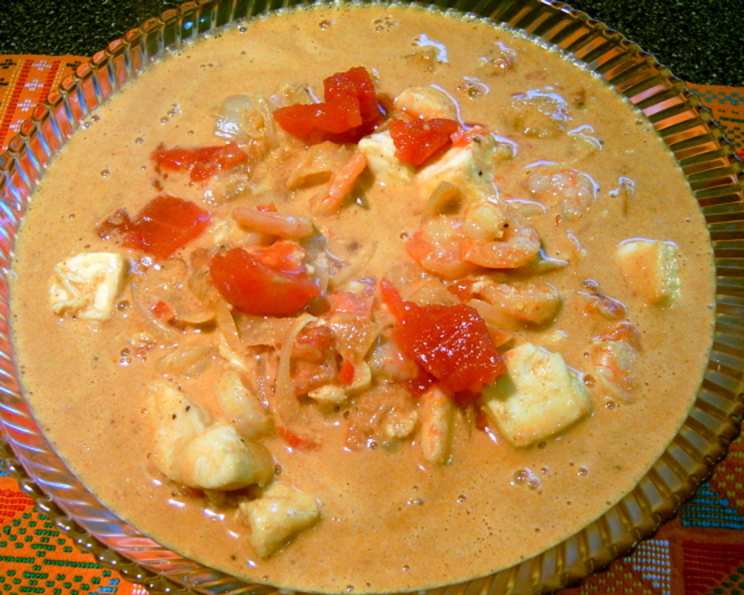
Seafood Curry (Malu Curry): A Taste of Sri Lanka
I still remember the first time I tasted a truly authentic seafood curry. It was in a tiny, family-run restaurant nestled along the coast of Sri Lanka, the air thick with the scent of spices and the sound of crashing waves. The vibrant colors of the dish, the delicate aroma of coconut milk and lemongrass, and the explosion of flavors – it was a culinary experience that forever changed my perception of seafood and curry. This recipe attempts to recreate that memory, bringing the essence of Sri Lankan Malu Curry to your kitchen.
Recipe Overview
- Prep Time: 20 minutes
- Cook Time: 45 minutes
- Total Time: 1 hour 5 minutes
- Servings: 6
- Dietary Type: Dairy-Free
Ingredients
- 1 lb crabmeat or 1 lb peeled and cooked shrimp
- 3 fresh red chilies
- 3 tablespoons vegetable oil
- 1 onion, finely chopped
- 2 garlic cloves, finely chopped
- 2 tablespoons medium-hot curry powder
- 1 ounce fresh gingerroot, grated
- 2 cans (7-3/4 oz. ea) coconut milk
- 1⁄2 leek, cut into 1/2-inch slices
- 1 lb cod fish fillet, cut into pieces
- Lemongrass, to taste, inner white root section, if desired
- 2 medium tomatoes, peeled & cut into wedges
- Juice of 1-2 limes or 1 lemon
- Water, as needed
- Cooked rice or couscous, for serving
Equipment Needed
- Large skillet
- Gloves (optional, for handling chilies)
- Cutting board
- Knife
- Grater
Instructions
-
First, prepare the crabmeat or shrimp. If using crabmeat, break it into bite-sized pieces. If using shrimp, ensure it’s peeled and cooked. Set aside.
-
Next, prepare the chilies. This step is crucial for adding heat and depth of flavor. To prevent skin irritation from the chilies, wear rubber or plastic gloves. Cut the chilies open lengthwise and remove the seeds and pith (the white membrane inside) to control the level of spiciness. Finely chop the chilies.
-
Now, begin building the curry base. Heat the vegetable oil in a large skillet over medium heat.
-
Add the finely chopped onion and garlic to the heated oil. Sauté until they are golden brown and fragrant, approximately 5-7 minutes. This step is vital for developing a rich, savory flavor.
-
Stir in the chopped chilies, curry powder, and grated gingerroot into the sautéed onion and garlic.
-
Continue stirring constantly, cooking for 2 to 3 minutes. This allows the spices to bloom and release their full aroma. Be careful not to burn the spices.
-
Pour in the coconut milk and add the sliced leek.
-
Bring the mixture to a simmer and then reduce the heat to low. Simmer for 10 minutes, allowing the flavors to meld together.
-
Gently add the crabmeat or shrimp, cod, and lemongrass (if desired) to the simmering curry.
-
Cook for another 10 minutes over low heat, shaking the pan occasionally to prevent sticking or burning. The cod should be cooked through and flaky.
-
Add the peeled and wedged tomatoes and cook for an additional 5 minutes. The tomatoes should soften slightly, releasing their juices into the curry.
-
Season the curry with lime or lemon juice to taste. The acidity brightens the flavors and balances the richness of the coconut milk. Add water as needed to adjust the consistency of the curry. The amount of water needed will depend on your preference and the thickness of the coconut milk.
-
Taste and adjust the seasoning as needed. You may want to add more lime juice, salt, or a pinch of sugar to balance the flavors.
-
Serve hot with cooked rice or couscous.
Expert Tips & Tricks
- For a richer flavor, toast the curry powder in a dry pan for a few minutes before adding it to the oil. This intensifies the aroma and depth of the spices. Be careful not to burn it.
- If you don’t have fresh chilies, you can use chili flakes or chili powder. Adjust the amount to your desired level of spiciness.
- Use good quality coconut milk. Full-fat coconut milk will result in a creamier and more flavorful curry.
- To prevent the fish from overcooking, add it towards the end of the cooking time.
- If you’re short on time, you can use store-bought curry paste instead of making your own spice blend. However, the flavor will not be as complex.
Serving & Storage Suggestions
Serve the Seafood Curry hot over a bed of fluffy rice or light and airy couscous. Garnish with fresh cilantro or parsley for a pop of color and freshness. A squeeze of lime juice right before serving can also enhance the flavors.
Leftovers can be stored in an airtight container in the refrigerator for up to 3 days. Reheat gently over low heat on the stovetop, adding a splash of water or coconut milk if needed to prevent it from drying out. You can also reheat it in the microwave, but be careful not to overcook the fish.
Freezing is not recommended as the texture of the fish and coconut milk may change upon thawing.
Nutritional Information
| Nutrient | Amount per Serving | % Daily Value |
|---|---|---|
| Calories | 228 kcal | – |
| Calories from Fat | 74 g | 33% |
| Total Fat | 8.3 g | 12% |
| Saturated Fat | 1.1 g | 5% |
| Cholesterol | 64.3 mg | 21% |
| Sodium | 680.7 mg | 28% |
| Total Carbohydrate | 9.4 g | 3% |
| Dietary Fiber | 2.1 g | 8% |
| Sugars | 3.6 g | – |
| Protein | 28.8 g | 57% |
Variations & Substitutions
- Vegan Version: Substitute the seafood with firm tofu or a mix of vegetables like cauliflower, broccoli, and sweet potatoes.
- Spicier Curry: Add more chilies or a pinch of cayenne pepper to increase the heat.
- Creamier Curry: Use full-fat coconut milk and add a dollop of coconut cream at the end of cooking.
- Different Seafood: Experiment with other types of seafood such as mussels, clams, or squid.
- Vegetable Additions: Add other vegetables like bell peppers, spinach, or green beans for added nutrients and flavor.
FAQs (Frequently Asked Questions)
Q: Can I use dried curry leaves in this recipe?
A: While fresh curry leaves add a unique aroma, dried curry leaves can be used if fresh ones are unavailable. Use about half the amount of dried curry leaves as you would fresh ones.
Q: How do I prevent the coconut milk from separating?
A: Keep the heat low and avoid boiling the curry after adding the coconut milk. This will help prevent it from separating.
Q: Can I make this curry ahead of time?
A: Yes, you can make the curry a day or two in advance. The flavors will actually meld together and improve over time. Add the seafood closer to serving, so it doesn’t overcook during reheating.
Q: What can I serve with this curry besides rice or couscous?
A: You can also serve it with naan bread, roti, or quinoa.
Q: How can I adjust the thickness of the curry?
A: To thicken the curry, simmer it for a longer period of time to reduce the liquid. To thin it, add water or coconut milk until you reach your desired consistency.
Final Thoughts
I hope this recipe inspires you to embark on your own culinary adventure to Sri Lanka, right from your very own kitchen. This Seafood Curry, or Malu Curry, is more than just a dish; it’s an experience that evokes memories of warm coastal breezes and the vibrant flavors of Sri Lankan cuisine. Don’t be afraid to experiment with the ingredients and adjust the recipe to your own preferences. Most importantly, have fun and enjoy the process of creating a delicious and authentic meal. I would love to hear your thoughts and feedback after you try this recipe!