
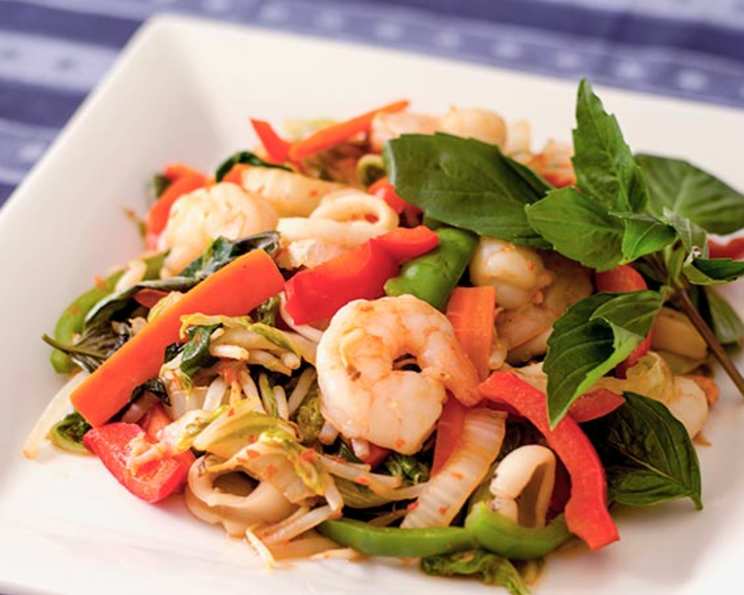
Seafood Hot Pepper Stir Fry With Thai Basil (Pudt Prig): A Symphony of Flavors
I still remember the aroma that wafted through the air the first time I encountered Pudt Prig. It was a tiny, unassuming Thai restaurant tucked away in a bustling city alley. The vibrant blend of chilies, fragrant basil, and the sweet tang of seafood created an intoxicating scent that drew me in. Each bite was an explosion of flavor, a dance of heat and freshness that left me craving more. From that moment, I was hooked, determined to recreate this culinary masterpiece in my own kitchen.
Recipe Overview
- Prep Time: 20 minutes
- Cook Time: 15 minutes
- Total Time: 35 minutes
- Servings: 3-4
- Dietary Type: Varies (see variations)
Ingredients
- 1 red bell pepper, seeds and ribs removed, cut into chunks
- 1-4 fresh Thai hot chili peppers, seeds removed (adjust to your spice preference)
- 4 tablespoons fish sauce
- 3-4 tablespoons sugar (I prefer organic whole cane sugar, like Rapadura, for a deeper flavor)
- Oil, for sautéing (vegetable, canola, or peanut oil work well)
- 3/4 lb squid, sliced into rings or bite-sized pieces
- 3/4 lb shrimp, peeled and deveined
- 4 Chinese cabbage leaves, roughly sliced
- 1 carrot, peeled and sliced
- 1 green pepper, seeds and ribs removed, sliced
- 1 red pepper, seeds and ribs removed, sliced
- 1 1/2 cups bean sprouts
- 1 1/2 cups scallions, cut in 2-inch slices
- 25-30 Thai basil leaves
Equipment Needed
- Blender or food processor
- Wok or large sauté pan
- Small bowl
Instructions
-
Prepare the chili paste: In a blender or food processor, combine the red bell pepper chunks and fresh Thai hot chili peppers. Blend until the mixture resembles a wet relish. Start with one chili pepper for a mild spice level, increasing to 2-3 for medium heat, or 4 or more for a truly fiery dish. Set aside.
-
Make the sauce: In a small bowl, whisk together the fish sauce and sugar until the sugar is dissolved. Taste and adjust the sweetness if needed. Set aside.
-
Cook the seafood: Heat a generous amount of oil in a wok or large sauté pan over high heat. Once the oil is shimmering, add the sliced squid and shrimp. Sauté the seafood until it is cooked through and slightly browned, about 2-3 minutes. Be careful not to overcrowd the pan, or the seafood will steam instead of sear. If necessary, cook the seafood in batches. Once cooked, drain the seafood and set aside. Wipe out the pan to remove any residue.
-
Sauté the vegetables: Heat more oil in the same pan over medium-high heat. Add the Chinese cabbage, carrot, green pepper, and red pepper. Sauté the vegetables until they are tender but still crisp, about 3-5 minutes. Stir frequently to prevent burning.
-
Combine the flavors: Add the chili pepper mixture and fish sauce mixture to the pan with the vegetables. Stir well to combine, coating the vegetables in the flavorful sauce. Cook for another 1-2 minutes, allowing the sauce to thicken slightly.
-
Add the finishing touches: Add the bean sprouts and scallions to the pan. Return the cooked seafood to the pan and sauté for another minute or two, just until the bean sprouts are slightly softened and the seafood is heated through. Be careful not to overcook the seafood at this stage, as it can become rubbery.
-
Finish with Thai basil: Turn off the heat. Add the Thai basil leaves to the pan and stir until they are wilted and fragrant. The residual heat will be enough to cook the basil without turning it black.
-
Serve immediately. Remember to infuse love into the dish before serving!
Expert Tips & Tricks
- Spice Level Control: The number of chili peppers is crucial. Start with one and taste as you go. You can always add more heat, but you can’t easily take it away!
- Wok Hei (Breath of a Wok): Achieving that characteristic smoky flavor of wok cooking requires high heat and rapid stirring. If you don’t have a powerful burner, cook in smaller batches to maintain the pan’s temperature.
- Seafood Freshness: Use the freshest seafood possible for the best flavor and texture. Avoid seafood that smells fishy or has a slimy texture.
- Vegetable Prep: Slice the vegetables uniformly for even cooking.
- Sugar Selection: While white sugar works, using brown sugar, palm sugar, or Rapadura (whole cane sugar) adds depth and complexity to the sauce.
- Fish Sauce Substitute: If you don’t have fish sauce, a combination of soy sauce and a tiny splash of Worcestershire sauce can work in a pinch, but it won’t have the same authentic flavor.
- Make-Ahead Tip: You can prepare the chili paste and the fish sauce mixture ahead of time and store them in the refrigerator.
Serving & Storage Suggestions
Serve this vibrant Seafood Hot Pepper Stir Fry immediately over steamed jasmine rice for a complete and satisfying meal. Garnish with extra Thai basil leaves and a sprinkle of red pepper flakes for added visual appeal.
Leftovers can be stored in an airtight container in the refrigerator for up to 2 days. Reheat gently in a wok or sauté pan over medium heat, adding a splash of water or broth if needed to prevent sticking. Be careful not to overcook the seafood when reheating, as it can become tough. Freezing is not recommended as the vegetables will become mushy.
Nutritional Information
| Nutrient | Amount per Serving | % Daily Value |
|---|---|---|
| Calories | 350 kcal | 18% |
| Total Fat | 12g | 18% |
| Saturated Fat | 2g | 10% |
| Cholesterol | 200mg | 67% |
| Sodium | 1500mg | 63% |
| Total Carbohydrate | 35g | 12% |
| Dietary Fiber | 5g | 20% |
| Sugars | 20g | – |
| Protein | 30g | 60% |
Nutritional information is an estimate and may vary based on specific ingredients and portion sizes.
Variations & Substitutions
- Vegetarian/Vegan: Substitute the seafood with firm tofu, tempeh, or extra vegetables like mushrooms, broccoli, or snow peas. Use soy sauce or tamari instead of fish sauce.
- Gluten-Free: Ensure that the fish sauce is gluten-free, or substitute with tamari.
- Protein Swaps: Use chicken, pork, or beef instead of seafood. Adjust the cooking time accordingly.
- Vegetable Variations: Feel free to add or substitute other vegetables, such as bamboo shoots, water chestnuts, or baby corn.
- Coconut Milk: For a creamier sauce, add a splash of coconut milk along with the fish sauce mixture. This will mellow out the spiciness slightly.
- Lime Juice: Squeeze a wedge of fresh lime juice over the stir-fry just before serving for an extra burst of acidity.
FAQs (Frequently Asked Questions)
Q: Can I use dried chili flakes instead of fresh chili peppers?
A: While fresh chili peppers are preferred for the best flavor, you can substitute with dried chili flakes in a pinch. Start with a small amount and adjust to taste.
Q: How do I prevent the seafood from becoming rubbery?
A: Avoid overcooking the seafood. Cook it quickly over high heat until just cooked through. Don’t overcrowd the pan, and be careful not to overcook it when reheating.
Q: What is the best type of wok to use?
A: A carbon steel wok is ideal for stir-frying because it heats up quickly and evenly. However, a large sauté pan can also be used.
Q: Can I make this dish ahead of time?
A: While it’s best served fresh, you can prepare the chili paste and the fish sauce mixture ahead of time. Store them separately in the refrigerator.
Q: What do I do if the sauce is too spicy?
A: Add a little more sugar or a splash of coconut milk to balance the heat.
Final Thoughts
This Seafood Hot Pepper Stir Fry with Thai Basil is more than just a recipe; it’s a culinary adventure. The combination of spicy chilies, fragrant basil, and succulent seafood creates a symphony of flavors that will tantalize your taste buds. Don’t be afraid to experiment with the ingredients and adjust the spice level to your liking. So, gather your ingredients, fire up your wok, and embark on a journey to recreate this authentic Thai delight in your own kitchen. I encourage you to try this recipe, share your feedback, and maybe even pair it with a crisp, cold Thai beer for the full experience!