
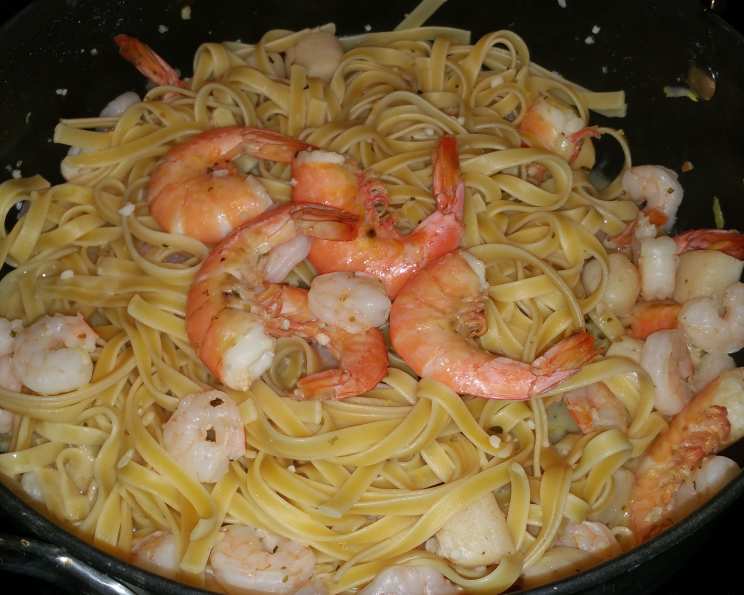
Seafood Linguini With White Wine Sauce
The clatter of pans, the sizzle of garlic in olive oil, the briny scent of the sea mingling with the crisp aroma of white wine – these are the sounds and smells of my childhood summers spent on the Italian coast. My grandmother, Nonna Emilia, would effortlessly whip up a seafood linguini that transported us from her humble kitchen to the sun-drenched shores. This recipe, while my own creation, is an homage to her and those memories, a celebration of simple ingredients transformed into something extraordinary.
Recipe Overview
- Prep Time: 10 minutes
- Cook Time: 15 minutes
- Total Time: 25 minutes
- Servings: 4-6
- Dietary Type: Pescatarian
Ingredients
- 1 lb linguine
- 1 lb shrimp, peeled and deveined
- ½ lb bay scallops
- 2 tablespoons extra virgin olive oil
- 3 tablespoons garlic, minced
- ¾ teaspoon crushed red pepper flakes
- 3 tablespoons butter
- 1 ½ cups white wine (sauvignon blanc)
- 1 teaspoon lemon zest
- Sea salt (Tuscan Seasoned) or regular sea salt with dried Italian spices to taste
- Ground black pepper, to taste
- Fresh parsley, chopped, to garnish
Equipment Needed
- Large pot
- Large skillet
- Serving bowl
- Foil (optional)
Instructions
-
Begin by cooking the linguine according to the package directions. It’s crucial to cook the pasta al dente, meaning “to the tooth” in Italian. This ensures it has a slight resistance when bitten, preventing it from becoming mushy when combined with the sauce.
-
While the pasta is cooking, prepare the seafood sauce. In a large skillet over medium heat, warm the extra virgin olive oil. Be careful not to overheat the oil, as it can burn and impart a bitter taste.
-
Add the minced garlic and crushed red pepper flakes to the warmed olive oil. Cook for a couple of minutes, stirring frequently, until fragrant. This step is crucial for infusing the oil with the aromatic flavors of garlic and a subtle kick of heat. Be careful not to burn the garlic; it should be lightly golden and intensely fragrant.
-
Melt a couple of tablespoons of the butter into the olive oil and garlic mixture. This adds richness and depth to the sauce. Once the butter is melted, add the shrimp.
-
Pour in the white wine (sauvignon blanc) and bring the mixture to a boil. The alcohol in the wine will evaporate during this process, leaving behind a complex and flavorful base for the sauce.
-
Once boiling, reduce the heat to low and simmer for another 3-5 minutes, or until the wine reduces slightly, concentrating its flavors. The sauce should thicken slightly, becoming more viscous.
-
Add the scallops, remaining 1 tablespoon of butter, and lemon zest to the skillet. The lemon zest adds a bright, citrusy note that complements the seafood beautifully.
-
Cook the scallops for another couple of minutes until just warmed through and opaque. It is important not to overcook the scallops as they will become rubbery. They should be tender and succulent.
-
Season the sauce with sea salt (Tuscan Seasoned) and ground black pepper to taste. If you don’t have Tuscan seasoned salt, you can use regular sea salt and add a pinch of dried Italian herbs, such as oregano, basil, and rosemary, to enhance the flavor.
-
When the pasta is cooked al dente, drain it well and add it to a large serving bowl. Be sure to reserve about a cup of the pasta water before draining; you can add a little to the sauce if you need to thin it out later.
-
Top the linguine with the seafood and white wine sauce. Ensure that the seafood is evenly distributed throughout the pasta.
-
Sprinkle with the chopped fresh parsley for a final touch of freshness and visual appeal.
-
(Optional) I like to let the pasta sit for a bit covered in foil to absorb some of the sauce before serving. This allows the flavors to meld together even further, resulting in a more flavorful dish.
Expert Tips & Tricks
- Don’t overcrowd the pan: Cook the shrimp and scallops in batches if necessary to ensure they cook evenly. Overcrowding the pan can lower the temperature and cause the seafood to steam instead of sear, resulting in a less flavorful dish.
- Use high-quality seafood: The flavor of this dish relies heavily on the quality of the seafood. Opt for fresh, sustainably sourced shrimp and scallops whenever possible.
- Adjust the heat to your liking: If you prefer a spicier dish, add more crushed red pepper flakes. If you’re sensitive to heat, reduce the amount or omit it altogether.
- Add a touch of cream: For an even richer and creamier sauce, stir in a splash of heavy cream or crème fraîche at the end of cooking. However, this will alter the intended flavor profile somewhat.
- Deglaze the pan properly: Make sure to scrape up any browned bits from the bottom of the pan after adding the wine. These browned bits, known as fond, are packed with flavor and will enhance the sauce.
Serving & Storage Suggestions
Serve the seafood linguini immediately after preparation for the best flavor and texture. Garnish with extra chopped parsley and a wedge of lemon. A crusty bread, such as Italian bread or garlic bread, is a perfect accompaniment for soaking up the delicious sauce.
Storage: Leftovers can be stored in an airtight container in the refrigerator for up to 2 days. Reheat gently in a skillet over low heat, adding a splash of white wine or broth if needed to prevent the pasta from drying out. Freezing is not recommended, as the seafood can become rubbery.
Nutritional Information
| Nutrient | Amount per Serving | % Daily Value |
|---|---|---|
| Calories | 761 kcal | N/A |
| Total Fat | 18.6g | 28% |
| Saturated Fat | 6.9g | 34% |
| Cholesterol | 179.4mg | 59% |
| Sodium | 953.3mg | 39% |
| Total Carbohydrate | 92.5g | 30% |
| Dietary Fiber | 3.9g | 15% |
| Sugars | 4g | N/A |
| Protein | 37.7g | 75% |
Note: Nutritional information is an estimate and may vary based on specific ingredients and preparation methods.
Variations & Substitutions
- Gluten-free: Use gluten-free linguine. Many brands offer excellent gluten-free pasta options that closely mimic the texture and flavor of traditional wheat pasta.
- Different Seafood: Feel free to experiment with other types of seafood, such as mussels, clams, calamari, or lobster. Adjust the cooking time accordingly, as some seafood may require longer to cook than others.
- Vegetarian: Omit the seafood and add vegetables such as zucchini, bell peppers, and mushrooms for a vegetarian version. Sauté the vegetables in the olive oil before adding the garlic and crushed red pepper flakes.
- Spicier: Add more crushed red pepper flakes or a pinch of cayenne pepper for extra heat. You can also use a spicy Italian sausage in place of some of the seafood.
- Creamy Sauce: Stir in 1/2 cup of heavy cream or crème fraîche at the end of cooking for a creamier sauce.
FAQs (Frequently Asked Questions)
Q: Can I use a different type of white wine?
A: Absolutely! While Sauvignon Blanc works well, a Pinot Grigio or Chardonnay would also be delicious. Just avoid overly sweet wines.
Q: Can I make this dish ahead of time?
A: It’s best to serve the seafood linguini immediately, but you can prepare the sauce ahead of time and store it in the refrigerator for up to 24 hours. Add the cooked pasta just before serving.
Q: How do I prevent the pasta from sticking together?
A: Be sure to cook the pasta in plenty of salted water and drain it well. Adding a little olive oil to the cooked pasta can also help prevent sticking.
Q: Can I use frozen seafood?
A: Yes, you can use frozen seafood, but be sure to thaw it completely before cooking. Pat it dry with paper towels to remove any excess moisture.
Q: What if I don’t have fresh parsley?
A: You can use dried parsley as a substitute, but fresh parsley will provide a brighter, more vibrant flavor.
Final Thoughts
This Seafood Linguini with White Wine Sauce is more than just a recipe; it’s an invitation to create memories, to gather around the table with loved ones, and to savor the simple pleasures of life. Don’t be afraid to experiment with different variations and substitutions to make it your own. I encourage you to try this recipe and share your feedback! Buon appetito!