
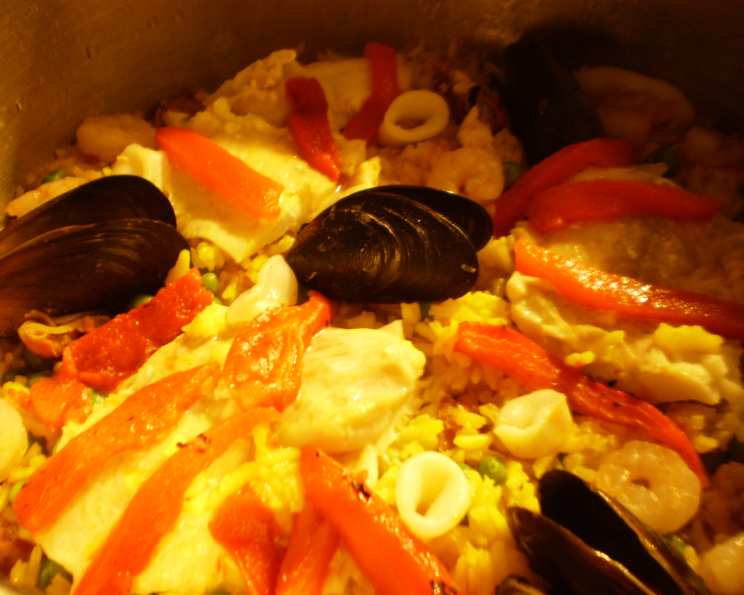
Seafood Paella (Avec Eric)
The clatter of pans, the sizzle of sofrito, and the aroma of saffron weaving through the air – these are the sounds and scents that instantly transport me back to my grandmother’s kitchen. Every year, without fail, she would craft a paella so magnificent, it could feed an army (and usually did!). It wasn’t just a meal; it was an event, a celebration of family, flavor, and the simple joy of shared sustenance. This recipe, inspired by the renowned Chef Eric Ripert, captures that same spirit of generosity and culinary artistry.
Recipe Overview
- Prep Time: 30 minutes
- Cook Time: 50 minutes
- Total Time: 1 hour 20 minutes
- Servings: 8
- Yield: 1 large paella
- Dietary Type: Pescatarian
Ingredients
- 1/4 cup olive oil
- 1 lb Spanish chorizo, sliced 1/4 inch thick
- 1 onion, chopped
- 6 garlic cloves, minced
- 1/2 tablespoon saffron threads
- 1 teaspoon turmeric
- 3 cups short-grain rice (such as Bomba or Arborio)
- 3 cups chicken stock
- 2 cups green peas
- 1 lb sea bass fillet, cut into 8 pieces
- 2 dozen cockles or 2 dozen littleneck clams, scrubbed
- 1 lb mussels, rinsed and debearded
- 18 large shrimp, peeled and deveined
- 1/2 lb calamari, cleaned well and cut into 1/2 inch rings
- 1 red pepper, roasted, peeled, and cut into 1/4 inch strips
- 1/4 cup fresh parsley, chopped
- 1 lemon, cut into 8 wedges
Equipment Needed
- Large cast iron or stainless steel paella pan (or a large, wide skillet)
- Cutting board
- Sharp knife
- Mixing bowls
- Tongs
- Roasting pan (for the red pepper)
Instructions
-
Begin by roasting the red pepper. Preheat your oven to 450°F (230°C). Place the pepper on a baking sheet and roast for about 30-40 minutes, turning occasionally, until the skin is blackened and blistered all over. Remove from the oven and immediately place the pepper in a bowl covered with plastic wrap. Let it steam for 10-15 minutes. This will make peeling the skin much easier. Once cooled, peel the skin, remove the seeds, and cut the pepper into 1/4 inch strips. Set aside.
-
In a large cast iron or stainless steel paella pan (or a similarly large, wide skillet), heat the olive oil over medium-high heat. Add the sliced chorizo and cook, rendering the fat, for about 5 minutes, or until the chorizo is nicely browned and has released its flavorful oils.
-
Reduce the heat to medium. Add the chopped onion and minced garlic, along with the saffron threads and turmeric. Allow the onions to sweat until softened, but not browned, about 8 minutes. Stir frequently to prevent burning. The aroma at this stage is truly intoxicating!
-
Stir in the short-grain rice, ensuring it is well coated with the flavorful oil and spices. Lightly toast the rice for about 3 minutes, stirring constantly to prevent sticking. This step is crucial for developing the nutty flavor of the paella.
-
Add the chicken stock to the pan. Bring to a simmer and cook for 15 minutes, stirring occasionally to prevent the rice from sticking to the bottom. If the mixture seems to be drying out too quickly, add a little water.
-
Stir in the green peas.
-
Gently nestle the sea bass pieces into the rice, ensuring they are evenly distributed. Let the paella cook until the fish just starts to get opaque, about 5 minutes.
-
Arrange the cockles or clams in a decorative pattern, placing the hinge side down into the rice so they open nicely during cooking. Then, place the mussels around the pan in a similar manner.
-
Turn the sea bass pieces over using tongs. Place the shrimp in a pleasing pattern as well. Arrange the roasted red pepper strips like wheel spokes, creating a visually appealing dish.
-
Cook for another 5 minutes. Then, turn the shrimp over to ensure even cooking. Arrange the calamari rings all around the paella.
-
Continue cooking until all the shells are open (discard any that fail to open). The seafood should all be opaque and cooked through. The rice at the bottom should be slightly crispy, forming a socarrat (a prized crust).
-
Sprinkle the finished paella with the chopped fresh parsley. Arrange the lemon wedges around the outer edge of the pan. Serve immediately.
Expert Tips & Tricks
-
Socarrat is key: The slightly crispy rice at the bottom of the pan is a sign of a perfectly cooked paella. To encourage socarrat formation, avoid stirring the paella in the final minutes of cooking and increase the heat slightly. Listen for the subtle crackling sound.
-
Use quality ingredients: The best paella starts with the best ingredients. Use fresh, high-quality seafood and flavorful Spanish chorizo. Don’t skimp on the saffron; it’s essential for the authentic flavor and color.
-
Don’t overcook the seafood: Seafood cooks quickly. Overcooked seafood will be rubbery and tough. Pay close attention and remove the paella from the heat as soon as the seafood is cooked through.
-
Make your own chicken stock: While store-bought chicken stock works in a pinch, homemade stock will add a richer, more complex flavor to your paella.
-
Ingredient Swaps: If you cannot find a specific type of seafood, feel free to substitute with something similar. Firm white fish like cod or halibut can replace sea bass. Other types of clams or mussels are also acceptable.
Serving & Storage Suggestions
Serve the paella immediately, directly from the pan, to maximize the visual impact and keep the dish warm. Allow guests to serve themselves, ensuring everyone gets a good mix of rice and seafood. The lemon wedges are essential for adding a bright, acidic contrast to the rich flavors.
Leftover paella can be stored in an airtight container in the refrigerator for up to 2 days. To reheat, add a splash of chicken stock or water to the paella to prevent it from drying out. Reheat gently in a skillet over medium heat, or in the microwave. While paella is best enjoyed fresh, leftovers can still be quite delicious. Freezing is not recommended as it can affect the texture of the rice and seafood.
Nutritional Information
| Nutrient | Amount per Serving | % Daily Value |
|---|---|---|
| Calories | 652 kcal | N/A |
| Calories from Fat | 193 g | 30% |
| Total Fat | 21.4 g | 33% |
| Saturated Fat | 5.8 g | 29% |
| Cholesterol | 104.6 mg | 34% |
| Sodium | 747.7 mg | 31% |
| Total Carbohydrate | 74.8 g | 24% |
| Dietary Fiber | 4.9 g | 19% |
| Sugars | 4.9 g | 19% |
| Protein | 36.7 g | 73% |
Note: Nutritional information is an estimate and may vary based on specific ingredients and portion sizes.
Variations & Substitutions
-
Vegetarian Paella: Omit the chorizo and seafood and add more vegetables, such as artichoke hearts, bell peppers, zucchini, and mushrooms. Use vegetable stock instead of chicken stock.
-
Spicy Paella: Add a pinch of cayenne pepper or some chopped chili peppers to the sofrito for a spicy kick.
-
Paella with Chicken and Rabbit: Substitute some of the seafood with chicken thighs and rabbit for a more traditional Spanish paella.
-
Black Paella (Paella Negra): Add squid ink to the chicken stock for a dramatic black color and a briny flavor.
FAQs (Frequently Asked Questions)
Q: What type of rice is best for paella?
A: Short-grain rice, such as Bomba or Arborio, is ideal for paella. These types of rice absorb liquid well and hold their shape during cooking, resulting in a creamy texture.
Q: Can I make paella ahead of time?
A: Paella is best served fresh, but you can prepare the sofrito (onion, garlic, and spices) ahead of time. Store it in the refrigerator for up to 2 days and add it to the paella pan when ready to cook.
Q: How do I know when the paella is done?
A: The rice should be cooked through and slightly al dente. The seafood should be opaque and cooked through. The bottom of the pan should have a slightly crispy layer of rice (socarrat).
Q: What if I don’t have a paella pan?
A: A large, wide skillet or cast iron pan can be used as a substitute for a paella pan. The wider the pan, the better, as it allows the rice to cook evenly and develop a good socarrat.
Q: How do I prevent the rice from sticking to the bottom of the pan?
A: Stir the rice occasionally during the first 15 minutes of cooking. After that, avoid stirring to allow the socarrat to form. Adding a little water if the mixture becomes too dry can also help.
Final Thoughts
This Seafood Paella (Avec Eric) is more than just a recipe; it’s an invitation to gather around the table with loved ones and share a truly memorable meal. The combination of fragrant saffron, flavorful chorizo, and succulent seafood creates a symphony of flavors that will tantalize your taste buds and transport you to the sunny shores of Spain. Don’t be intimidated by the length of the recipe; each step is simple and straightforward. So, gather your ingredients, embrace the process, and prepare to create a paella masterpiece that will impress your family and friends. I encourage you to try this recipe and share your feedback and experiences. Perhaps you’ll pair it with a crisp Spanish white wine like Albariño and a simple green salad for a complete and satisfying meal. ¡Buen provecho!