
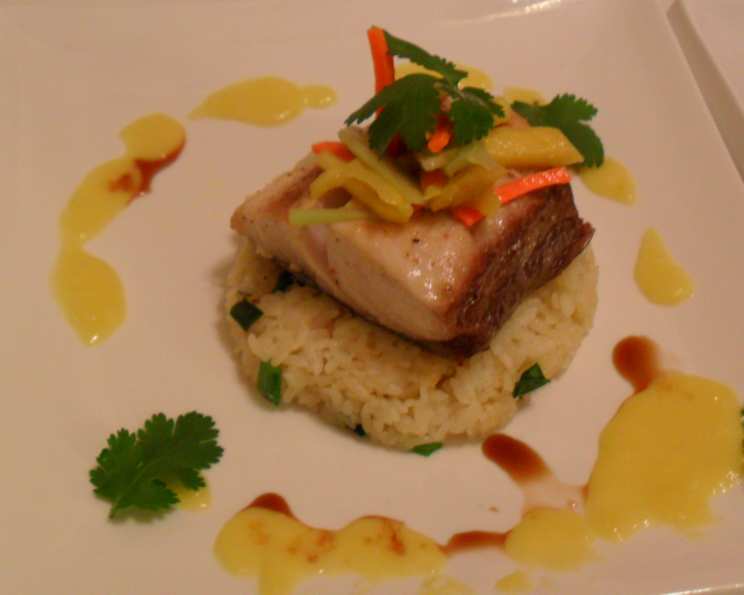
Seared Mahi-Mahi with Risotto & Mango Sauce: A Taste of the Tropics
My grandmother, a woman who believed every meal should be a celebration, had a knack for transforming simple ingredients into extraordinary dishes. I remember one sun-drenched afternoon in her coastal kitchen, the air thick with the aroma of simmering seafood and ripe mangoes. She was preparing a dish strikingly similar to this seared mahi-mahi. The vibrant colors of the plate – the golden fish, the creamy risotto, and the bright mango sauce – were a feast for the eyes, and the taste… pure sunshine. This recipe, adapted from my early culinary explorations, brings back that joyful memory with every bite.
Recipe Overview
- Prep Time: 25 minutes
- Cook Time: 35 minutes
- Total Time: 1 hour
- Servings: 4
- Yield: 4 plates
- Dietary Type: Gluten-Free (potentially, check wine and stock ingredients)
Ingredients
- 1 mango, peeled and sliced
- 1 teaspoon rice wine vinegar
- 1 tablespoon fresh cilantro leaves
- 1 garlic clove, quartered
- 1 teaspoon chopped fresh ginger
- 1 ounce bottled water
- 1/4 cup canola oil
- 1 1/2 teaspoons stone ground mustard
- 1 lime
- Salt and pepper, to taste
- 1 tablespoon olive oil
- 1 tablespoon chopped shallot
- 1 cup arborio rice
- 1/2 cup white wine
- 3 cups chicken stock
- 2 tablespoons unsalted butter
- 4 (6 ounce) mahi mahi fillets
- 1/4 cup olive oil
- Fresh ground black pepper, to taste
- 2-3 scallions, chopped, for garnish
Equipment Needed
- Blender
- Large saucepan
- Saute pan
- Utility platter
Instructions
-
Prepare the Mango Sauce: Peel the mango, cut it into slices, and drop the slices into the feed tube of a running blender to puree. Add the rice wine vinegar, cilantro, garlic, ginger, water, canola oil, stone ground mustard, and the juice of the lime. Season with salt and pepper to taste. Set the sauce aside.
-
Simmer the Stock: In a saucepan, bring the chicken stock to a simmer. Maintain at a gentle simmer throughout the risotto-making process.
-
Toast the Rice: In a separate large saucepan on an adjacent burner, heat the olive oil over medium heat. Add the chopped shallot and the arborio rice. Lightly sauté the rice, essentially toasting it. Cook until the rice becomes translucent and the shallots soften, stirring constantly. This process typically takes 3-5 minutes.
-
Deglaze the Pan: Add the white wine to the rice mixture. This will deglaze the pan, lifting any flavorful browned bits from the bottom. Stir continuously until the wine is almost completely absorbed by the rice.
-
Build the Risotto: Begin slowly adding the warm chicken stock, one ladle-full at a time, to the rice pan, stirring frequently as you go. This continuous stirring helps release the starch in the rice, which is key to achieving a creamy risotto. As the mixture absorbs the broth, ladle more into the pot.
-
Simmer and Stir: Continue adding the stock one ladle at a time, allowing each addition to be absorbed before adding the next. When all of the stock has been ladled into the rice pot, reduce the heat to low and slowly simmer until the rice is soft and creamy. This will take approximately 20-25 minutes. Stir frequently to prevent sticking and ensure even cooking.
-
Finish the Risotto: Stir the unsalted butter into the risotto for added flavor and creaminess. This final touch enhances the richness of the dish. Set the risotto aside, keeping it warm until needed. A low oven (around 200°F or 95°C) is ideal for maintaining warmth without overcooking.
-
Prepare the Fish: Heat a sauté pan over medium-high heat. While the pan is heating, rub the mahi mahi fillets with the olive oil, salt, and freshly ground black pepper.
-
Sear the Mahi-Mahi: Place the fish fillets in the hot pan, skin side facing up. Sear for 3 to 4 minutes, or until a golden-brown crust forms. Turn the fish over and cook for another 3 to 4 minutes, or until cooked through. The fish is done when the flesh springs back lightly when touched. Be careful not to overcook the fish, as it can become dry.
-
Plate and Serve: Remove the mahi-mahi from the pan and transfer it to a utility platter to rest briefly. This allows the juices to redistribute, resulting in a more tender and flavorful fish. Place a mound of risotto on each plate. Top with a mahi-mahi fillet. Drizzle some of the mango sauce around the plate. Garnish with the chopped scallions.
Expert Tips & Tricks
- Perfect Risotto: The key to a great risotto is patience and constant stirring. Don’t rush the process of adding the stock; allowing each addition to absorb properly is what creates that creamy texture.
- Doneness of Fish: For perfectly cooked mahi-mahi, use a meat thermometer. The internal temperature should reach 137°F (58°C).
- Mango Sauce Variation: If you prefer a spicier sauce, add a pinch of red pepper flakes or a small piece of finely minced jalapeño to the blender.
- Make Ahead: The mango sauce can be made a day in advance and stored in the refrigerator. This will allow the flavors to meld together even more.
- Risotto Consistency: If the risotto becomes too thick while resting, add a splash of warm chicken stock to loosen it up.
Serving & Storage Suggestions
Serve this dish immediately after preparing the fish to ensure the best flavor and texture. The vibrant colors and elegant presentation make it perfect for a dinner party or a special occasion.
Leftover risotto can be stored in an airtight container in the refrigerator for up to 2 days. Reheat gently on the stovetop with a splash of chicken stock, or in the microwave.
Leftover cooked mahi-mahi is best consumed within 1 day. Store it in an airtight container in the refrigerator. Reheat gently in a skillet or oven; avoid microwaving, as it can make the fish tough.
The mango sauce can be stored in an airtight container in the refrigerator for up to 3 days.
Nutritional Information
| Nutrient | Amount per Serving | % Daily Value |
|---|---|---|
| Calories | 650 kcal | 33% |
| Total Fat | 35g | 45% |
| Saturated Fat | 10g | 50% |
| Cholesterol | 120mg | 40% |
| Sodium | 400mg | 17% |
| Total Carbohydrate | 55g | 20% |
| Dietary Fiber | 3g | 10% |
| Sugars | 12g | N/A |
| Protein | 35g | 70% |
Nutritional information is an estimate and may vary based on specific ingredients and preparation methods.
Variations & Substitutions
- Gluten-Free: To ensure the dish is completely gluten-free, use gluten-free chicken stock and check that the white wine is processed without gluten.
- Dairy-Free: Substitute the unsalted butter with a dairy-free butter alternative or a tablespoon of olive oil to finish the risotto.
- Fish Substitution: If you can’t find mahi-mahi, other firm white fish such as cod, halibut, or snapper would work well. Adjust cooking times accordingly.
- Seasonal Mangoes: If fresh mangoes are not in season, you can use frozen mango chunks, thawed and drained, for the sauce.
- Citrus Twist: Add a little lime zest to the risotto for a bright, citrusy flavor.
FAQs (Frequently Asked Questions)
Q: Can I use a different type of rice for the risotto?
A: While arborio rice is traditional for risotto due to its high starch content, you could experiment with other short-grain rice varieties like carnaroli or vialone nano. Avoid long-grain rice, as it won’t produce the same creamy texture.
Q: How do I prevent the fish from sticking to the pan?
A: Make sure your pan is properly heated before adding the fish and use enough oil. Also, avoid moving the fish around in the pan until it has developed a good sear, which will naturally release it.
Q: Can I make the risotto ahead of time?
A: You can partially cook the risotto ahead of time, stopping when it’s still slightly undercooked. Then, finish cooking it just before serving, adding the remaining stock and butter.
Q: What’s the best way to reheat the fish without drying it out?
A: Reheat the fish gently in a skillet over low heat with a little bit of oil or butter, or in a preheated oven at 300°F (150°C) covered in foil. Avoid microwaving, as it can make the fish tough.
Q: Can I freeze the mango sauce?
A: Yes, you can freeze the mango sauce in an airtight container for up to 2 months. Thaw it in the refrigerator overnight before using.
Final Thoughts
This Seared Mahi-Mahi with Risotto & Mango Sauce is more than just a recipe; it’s an invitation to create your own memories in the kitchen. Don’t be afraid to experiment with flavors and techniques, and most importantly, enjoy the process. I encourage you to try this recipe and share your feedback. Consider pairing this dish with a crisp Sauvignon Blanc or a refreshing sparkling wine for a truly unforgettable dining experience. Bon appétit!