
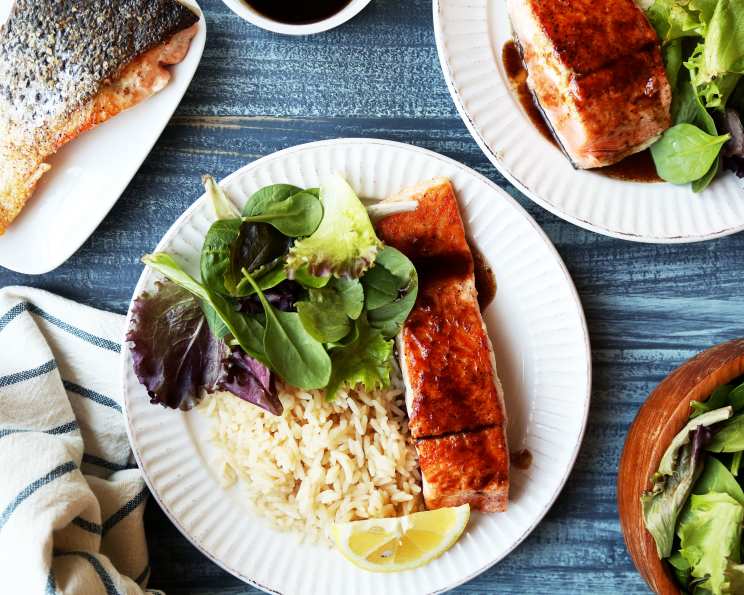
Seared Salmon With Balsamic Glaze: A Culinary Love Affair
The scent of balsamic vinegar always transports me back to my Nonna’s kitchen in Tuscany. She had a knack for transforming simple ingredients into culinary masterpieces, and her balsamic glaze was legendary. I remember watching her carefully reduce the vinegar, the air thick with its sweet and tangy aroma. This seared salmon with balsamic glaze is my homage to her, a dish that captures the essence of her simple yet exquisite cooking style, blending the richness of salmon with the complex sweetness of balsamic.
Recipe Overview
- Prep Time: 5 minutes
- Cook Time: 15 minutes
- Total Time: 20 minutes
- Servings: 4
- Dietary Type: Gluten-Free, Dairy-Free
Ingredients
- ¼ cup balsamic vinegar
- ¼ cup water
- 1 ½ tablespoons fresh lemon juice
- 1 tablespoon plus 1 teaspoon packed brown sugar
- 4 salmon fillets, skin on (center cut)
- Salt and freshly ground black pepper
- 2 teaspoons olive oil
Equipment Needed
- Small bowl
- 12-inch nonstick skillet
Instructions
-
In a small bowl, stir together the balsamic vinegar, water, lemon juice, and brown sugar. Whisk until the brown sugar is mostly dissolved.
-
Pat the salmon fillets dry with paper towels. This is crucial for achieving a good sear. Season generously with salt and freshly ground black pepper. Don’t be shy with the seasoning; it’s what brings out the salmon’s natural flavor.
-
Place a 12-inch nonstick skillet over medium-high heat. Add the olive oil. The pan is ready when the oil shimmers and flows easily. Be careful not to let the oil smoke, which indicates the pan is too hot.
-
Increase the heat to high. Gently place the salmon fillets in the hot skillet, skin side up. Sear the salmon until the skin is deeply browned and crispy, about 4 minutes. Press down lightly on the fillets to ensure even contact with the pan. A good sear on the presentation side is key to an appealing final dish.
-
Carefully turn the salmon fillets over. Continue to sear until the salmon is just cooked through, about 3 to 4 minutes more, depending on the thickness of the fillets. The internal temperature should reach 145°F (63°C). You can use a meat thermometer to check. If you don’t have a meat thermometer, look for the salmon to be opaque and flake easily with a fork.
-
Transfer the seared salmon to individual plates. Be careful when handling the hot fillets.
-
Carefully add the balsamic vinegar mixture to the now-empty skillet. (The liquid will bubble vigorously and release steam, so be cautious!)
-
Simmer, stirring constantly, until the sauce has thickened and reduced to about 1/3 cup. This should take approximately 2 minutes. The glaze will become syrupy and cling to the back of a spoon when it’s ready. Watch it closely to prevent it from burning.
-
Spoon the luscious balsamic glaze generously over the seared salmon fillets.
-
Serve immediately and enjoy! The contrast of the rich salmon and the sweet and tangy glaze is a truly delightful experience.
Expert Tips & Tricks
- For a more intense balsamic flavor, use a high-quality aged balsamic vinegar. The difference in taste is remarkable.
- If your balsamic glaze becomes too thick, add a tablespoon of water at a time until you reach the desired consistency.
- If you don’t have brown sugar, you can substitute it with an equal amount of granulated sugar plus a teaspoon of molasses.
- To prevent the salmon from sticking to the skillet, make sure the pan is properly heated before adding the oil. Also, avoid moving the salmon around too much while it’s searing.
- For extra flavor, add a clove of minced garlic or a pinch of red pepper flakes to the balsamic glaze while it’s simmering.
- If you want to make the dish ahead of time, sear the salmon and prepare the balsamic glaze separately. Store them in the refrigerator, and then reheat the salmon gently in a pan or oven before serving. Spoon the freshly made glaze over the reheated salmon just before serving.
Serving & Storage Suggestions
Serve the seared salmon with balsamic glaze immediately after cooking for the best flavor and texture. It pairs beautifully with roasted vegetables like asparagus, broccoli, or Brussels sprouts. A side of quinoa or wild rice is also a great accompaniment.
Leftover salmon can be stored in an airtight container in the refrigerator for up to 2 days. To reheat, gently warm the salmon in a pan over low heat or in a microwave. Be careful not to overcook it, as it will become dry. Reheating the salmon in the oven is also an option, place it in a preheated oven at 300°F for 10-15 minutes or until heated through. The balsamic glaze can also be stored separately in the refrigerator and reheated gently before serving.
Nutritional Information
| Nutrient | Amount per Serving | % Daily Value |
|---|---|---|
| Calories | 456.5 kcal | N/A |
| Calories from Fat | 146 g | 32% |
| Total Fat | 16.3 g | 25% |
| Saturated Fat | 2.9 g | 14% |
| Cholesterol | 146.3 mg | 48% |
| Sodium | 244 mg | 10% |
| Total Carbohydrate | 7.6 g | 2% |
| Dietary Fiber | 0 g | 0% |
| Sugars | 7 g | 27% |
| Protein | 65.3 g | 130% |
Variations & Substitutions
- Maple Balsamic Glaze: Substitute maple syrup for the brown sugar for a slightly different flavor profile.
- Honey Balsamic Glaze: Use honey instead of brown sugar.
- Herb-Infused Glaze: Add fresh herbs like thyme, rosemary, or oregano to the balsamic glaze while it’s simmering.
- Spice it Up: Add a pinch of red pepper flakes to the balsamic glaze for a touch of heat.
- Citrus Burst: Add a teaspoon of orange or grapefruit zest to the balsamic glaze for a bright, citrusy flavor.
FAQs (Frequently Asked Questions)
Q: Can I use frozen salmon for this recipe?
A: Yes, but make sure to thaw the salmon completely before cooking. Pat it dry with paper towels to remove excess moisture for better searing.
Q: How do I know when the salmon is cooked through?
A: The internal temperature should reach 145°F (63°C). Alternatively, the salmon should be opaque and flake easily with a fork.
Q: Can I use a different type of vinegar?
A: While balsamic vinegar is recommended for its unique flavor, you can experiment with other types of vinegar like red wine vinegar or apple cider vinegar. The taste will be different but still delicious.
Q: What if my balsamic glaze is too thin?
A: Continue to simmer the glaze until it reaches the desired thickness. Be sure to stir frequently to prevent burning.
Q: Can I make this recipe in the oven?
A: Yes, you can bake the salmon in a preheated oven at 400°F (200°C) for about 12-15 minutes, or until cooked through. Sear it on the stovetop first for added flavor and texture.
Final Thoughts
This seared salmon with balsamic glaze is more than just a recipe; it’s an invitation to create a memorable dining experience. Whether you’re cooking for a special occasion or a simple weeknight meal, this dish is sure to impress. Don’t be afraid to experiment with different flavors and variations to make it your own. I encourage you to try this recipe and share your feedback. Pair it with a crisp white wine and some crusty bread to soak up every last drop of that delicious balsamic glaze. Bon appétit!