
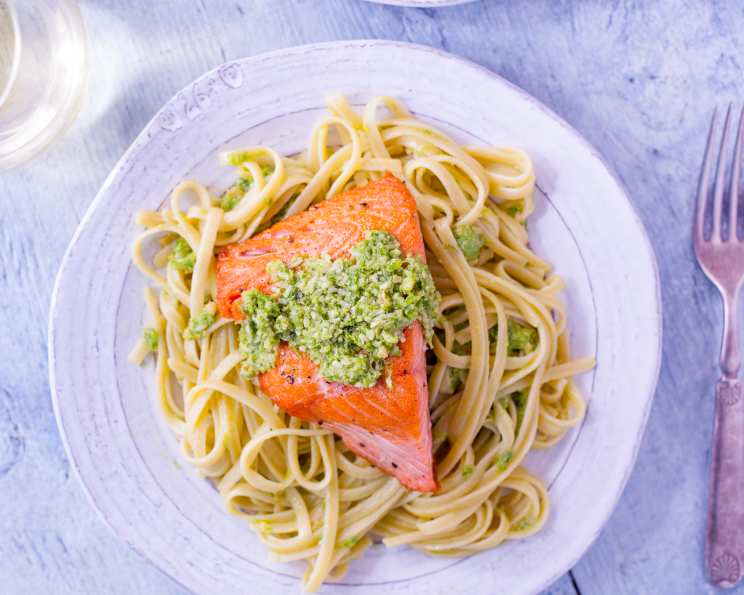
Seared Salmon With Linguine and Ramp Pesto
The first time I tasted ramp pesto, it was spring in the Appalachian mountains. The air was crisp, the forest floor damp, and the pungent aroma of ramps hung heavy in the air. My friend, a forager of some renown, had whipped up a batch and tossed it with freshly made pasta. The bright, garlicky, oniony flavor, so emblematic of spring, completely transformed the simple dish. That singular experience cemented my love for ramps and their unique, ephemeral flavor, forever linking them in my mind with the freshness and rejuvenation of springtime.
Recipe Overview
- Prep Time: 20 minutes
- Cook Time: 15 minutes
- Total Time: 35 minutes
- Servings: 6
- Dietary Type: Pescatarian
Ingredients
- 6 tablespoons olive oil, divided
- 2/3 cup ramps, trimmed and thinly sliced bulbs and slender stems
- 3 cups ramps, thinly sliced green tops
- 1 cup asiago cheese, freshly grated
- 1/3 cup almonds (marcona)
- 2 tablespoons tarragon, fresh and chopped
- 12 ounces linguine
- 36 ounces salmon fillets, skin on or off
Equipment Needed
- Large nonstick skillet
- Food processor
- Large pot
Instructions
- Begin by making the ramp pesto. Heat 1 tablespoon of olive oil in a large nonstick skillet over medium heat. Add the 2/3 cup of thinly sliced ramp bulbs and stems to the skillet.
- Sauté the ramp bulbs and stems until they are just soft but not browned, about 5 minutes. Be sure to reduce the heat if necessary to prevent them from browning – you want them to soften and become fragrant, not caramelize.
- Transfer the sautéed ramps to a food processor (do not clean the skillet yet; you’ll need it again for the salmon).
- Add the 3 cups of thinly sliced ramp green tops, 1 cup of freshly grated asiago cheese, 1/3 cup of marcona almonds, and 2 tablespoons of fresh, chopped tarragon to the food processor.
- Process the ingredients until they are finely chopped.
- With the machine running, gradually add 1/2 cup of olive oil and puree until the pesto is almost smooth.
- Transfer the finished pesto to a bowl and season to taste with salt and pepper.
- Pro Tip: The pesto can be made up to 1 day ahead. Cover and chill it in the refrigerator until ready to use.
- Bring a large pot of salted water to a rolling boil. Add the 12 ounces of linguine and cook until it is just tender but still firm to the bite (al dente), stirring occasionally to prevent sticking.
- While the pasta is cooking, prepare the salmon. Heat the remaining 1 tablespoon of olive oil in the same large skillet (that you used for the ramp bulbs) over medium-high heat.
- Sprinkle the 36 ounces of salmon fillets with salt and pepper on both sides.
- Add the salmon fillets to the hot skillet and cook until they are just opaque in the center, about 4 minutes per side. The exact cooking time will depend on the thickness of your fillets. Aim for an internal temperature of 145°F (63°C).
- Once the pasta is cooked, drain it, reserving 3/4 cup of the pasta cooking liquid. The starchy water is key to creating a luscious sauce.
- Return the drained pasta to the pot. Add all but 1/4 cup of the ramp pesto to the pasta and toss to coat.
- Add enough of the pasta cooking liquid by tablespoonfuls to moisten the pasta and create a light, emulsified sauce. You may not need all of the reserved liquid. Season the pasta with salt and pepper to taste.
- Divide the pasta among plates. Top each serving with a seared salmon fillet.
- Spread the remaining 1/4 cup of pesto over the fish and serve immediately.
Expert Tips & Tricks
- Ramp Substitutions: If you can’t find ramps, you can substitute with a combination of scallions and garlic. Use about 1 cup of chopped scallions and 2 cloves of minced garlic for every cup of ramps called for in the recipe.
- Pesto Consistency: For a smoother pesto, blanch the ramp greens for a few seconds in boiling water before processing. This will also help retain their vibrant green color.
- Salmon Skin: If you prefer crispy salmon skin, sear the salmon skin-side down first. Press down on the fillets with a spatula to ensure even contact with the pan.
- Prevent Overcooking: Use a meat thermometer to ensure the salmon is cooked to 145°F (63°C) to prevent overcooking and drying out the fish.
Serving & Storage Suggestions
Serve the Seared Salmon with Linguine and Ramp Pesto immediately for the best flavor and texture. Garnish with extra tarragon sprigs or a sprinkle of grated Asiago cheese.
Leftovers can be stored in an airtight container in the refrigerator for up to 2 days. The pesto may darken slightly over time, but the flavor will still be delicious. To reheat, gently warm the pasta and salmon in a skillet over low heat, adding a splash of water or broth to prevent drying out. The pesto can also be used as a spread for sandwiches or a topping for grilled vegetables. Freezing is not recommended, as it can negatively affect the texture of the pasta and pesto.
Nutritional Information
| Nutrient | Amount per Serving | % Daily Value |
|---|---|---|
| Calories | 549.7 kcal | N/A |
| Calories from Fat | 197 g | 36% |
| Total Fat | 21.9 g | 33% |
| Saturated Fat | 3.4 g | 17% |
| Cholesterol | 77.4 mg | 25% |
| Sodium | 131.2 mg | 5% |
| Total Carbohydrate | 43.4 g | 14% |
| Dietary Fiber | 1.9 g | 7% |
| Sugars | 1.5 g | 6% |
| Protein | 42.3 g | 84% |
Variations & Substitutions
- Gluten-Free: Use gluten-free linguine for a gluten-free version of this dish.
- Vegetarian: Substitute the salmon with grilled halloumi cheese for a vegetarian option. Halloumi has a similar texture and salty flavor that pairs well with the pesto.
- Nut-Free: Replace the marcona almonds with sunflower seeds or pumpkin seeds for a nut-free pesto.
- Cheese Variation: Parmesan cheese can be substituted for Asiago if preferred.
- Herb Variation: Basil can be used in addition to, or in place of the Tarragon.
FAQs (Frequently Asked Questions)
Q: What are ramps, and where can I find them?
A: Ramps are a wild onion with a strong garlic-like flavor that grows in the spring. Look for them at farmers’ markets or specialty grocery stores during their short season.
Q: Can I make the pesto ahead of time?
A: Yes, the pesto can be made up to 1 day in advance and stored in the refrigerator.
Q: How do I prevent the pesto from browning?
A: To prevent browning, press a piece of plastic wrap directly onto the surface of the pesto before refrigerating. The olive oil will also help to preserve the color.
Q: How can I tell if the salmon is cooked properly?
A: The salmon is cooked when it is opaque in the center and flakes easily with a fork. The internal temperature should be 145°F (63°C).
Q: What is the best way to reheat leftover salmon?
A: Reheat leftover salmon gently in a skillet over low heat or in the oven at 300°F (150°C) to prevent it from drying out. Add a splash of water or broth to keep it moist.
Final Thoughts
This Seared Salmon with Linguine and Ramp Pesto is more than just a recipe; it’s an invitation to celebrate the arrival of spring. The vibrant flavors and simple preparation make it a perfect dish for a weeknight dinner or a special occasion. Don’t be intimidated by the ramps – their unique flavor is worth the effort. I hope you’ll try this recipe and share your creations and feedback with me! Consider pairing it with a crisp white wine like Sauvignon Blanc to complement the bright, herbaceous notes of the pesto. Enjoy!