
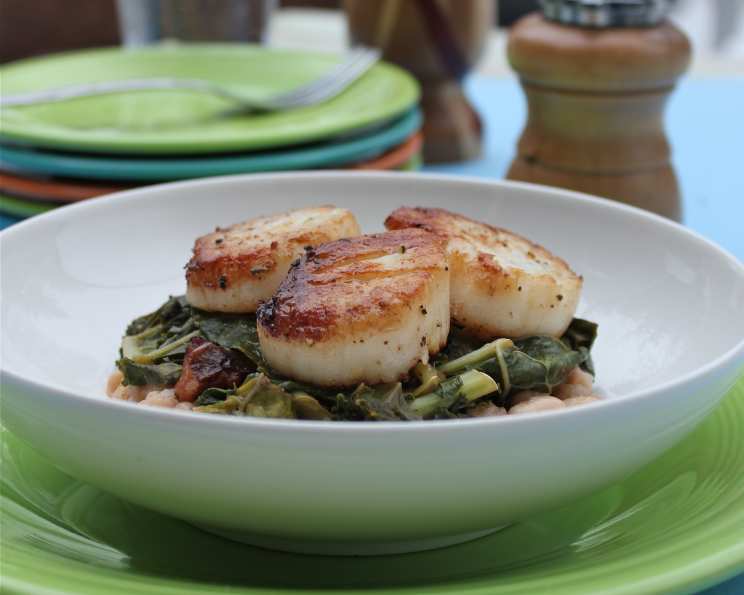
Seared Scallops With Wilted Chard: A Culinary Symphony
The memory still lingers: a cozy seaside bistro in Maine, the salty air mixing with the buttery aroma wafting from my plate. It was there I first tasted seared scallops paired with vibrant, slightly bitter greens – a revelation! The sweetness of the perfectly caramelized scallops, contrasted against the earthy chard, was a dance of flavors I’ve been chasing ever since. This recipe is my homage to that perfect bite, a dish that elevates simple ingredients into an elegant, unforgettable experience.
Recipe Overview
- Prep Time: 15 minutes
- Cook Time: 10 minutes
- Total Time: 25 minutes
- Servings: 4
- Dietary Type: Gluten-Free
Ingredients
- 3 slices thick-cut bacon, cut into pieces
- 2 shallots, sliced thin
- 2-3 cloves garlic, minced
- 2 bunches chard
- 1 tablespoon soy sauce
- 1 tablespoon red wine vinegar
- Salt and pepper, to taste
- 12 large sea scallops
- 2 tablespoons olive oil
- 1 tablespoon butter
Equipment Needed
- Large, deep pan
- Iron skillet
Instructions
-
Begin by preparing the chard. Slice the chard stems into thin pieces and the leaves into larger strips. This separation ensures the stems cook properly without overcooking the delicate leaves.
-
Heat a large, deep pan to medium-high heat. This type of pan will give enough surface area for the greens. Add the bacon pieces and cook for 3-4 minutes, or until they begin to crisp and render their fat. The bacon fat will form the base of flavor for the greens.
-
Introduce the shallots to the pan and cook until softened, approximately 3 more minutes. The shallots should become translucent and fragrant.
-
Next, add the minced garlic and the sliced chard stems. The stems require a bit more cooking time than the leaves.
-
Cook for another 4-5 minutes, allowing the chard stems to soften and the garlic to become aromatic, but not browned.
-
Now, add the chard leaves to the pan. Toss gently to incorporate them with the other ingredients and cook until the leaves wilt significantly, about 2-3 minutes. Don’t overcook them; they should retain some texture.
-
Season the wilted chard with soy sauce, red wine vinegar, salt, and pepper to taste. The soy sauce adds umami and saltiness, while the red wine vinegar provides a welcome acidity to balance the richness. Stir well to ensure even distribution of the seasoning. Keep the greens warm over low heat while you prepare the scallops.
-
Heat an iron skillet to high heat. An iron skillet is preferred because it retains heat very well.
-
While the skillet is heating, thoroughly dry the scallops with paper towels. This is crucial for achieving a good sear. Season the dried scallops generously with salt and pepper.
-
Add the olive oil to the hot skillet and swirl it around to coat the surface evenly. The oil should shimmer and almost begin to smoke.
-
When the oil is hot, carefully add the scallops to the skillet. Be careful not to overcrowd the pan, as this will lower the temperature and prevent proper searing. If necessary, sear the scallops in batches.
-
Cook the scallops on high heat for approximately 1-2 minutes per side, without moving them. This allows a beautiful crust to form.
-
Flip the scallops and add the butter to the pan. As the butter melts, spoon it over the scallops as they cook for another 1-2 minutes. The butter adds richness and helps to baste the scallops, enhancing their flavor and keeping them moist. The internal temperature of the scallops should reach 120-125°F. They should be opaque and slightly firm to the touch. Be careful not to overcook the scallops, as they can become tough and rubbery.
-
Serve the seared scallops immediately over the warm wilted chard.
Expert Tips & Tricks
- Achieving the Perfect Sear: The key to perfectly seared scallops is to ensure they are completely dry before cooking and that the skillet is screaming hot. Don’t overcrowd the pan!
- Don’t Overcook: Scallops cook very quickly. Overcooked scallops are tough and lose their delicate sweetness. Aim for an internal temperature of around 120-125°F.
- Adding Flavor: Infuse the butter with herbs like thyme or rosemary for an extra layer of flavor. Simply add a sprig of your chosen herb to the pan when you add the butter.
- Make-Ahead Prep: You can slice the shallots, mince the garlic, and prepare the chard ahead of time. Store them separately in the refrigerator. This will significantly reduce the cooking time when you’re ready to assemble the dish.
Serving & Storage Suggestions
For an elegant presentation, arrange the wilted chard artfully on a plate and top with the seared scallops. A drizzle of balsamic glaze or a squeeze of fresh lemon juice can add a final touch of brightness. This dish pairs well with a crisp white wine like Sauvignon Blanc or Pinot Grigio.
Leftover seared scallops and wilted chard can be stored in an airtight container in the refrigerator for up to 2 days. However, be aware that the scallops may lose some of their tenderness upon reheating. To reheat, gently warm the scallops and chard in a skillet over low heat, adding a touch of butter or olive oil to prevent them from drying out. Microwaving is not recommended, as it can make the scallops rubbery.
Nutritional Information
| Nutrient | Amount per Serving | % Daily Value |
|---|---|---|
| Calories | 320 kcal | 16% |
| Total Fat | 18g | 28% |
| Saturated Fat | 6g | 30% |
| Cholesterol | 80mg | 27% |
| Sodium | 650mg | 28% |
| Total Carbohydrate | 15g | 5% |
| Dietary Fiber | 3g | 12% |
| Sugars | 4g | – |
| Protein | 25g | 50% |
Variations & Substitutions
- Kale or Spinach: If you can’t find chard, kale or spinach make excellent substitutes. Keep in mind that kale may require a slightly longer cooking time.
- Vegetarian Option: Omit the bacon for a vegetarian-friendly dish. Consider adding a tablespoon of smoked paprika to the greens for a smoky flavor.
- Lemon Butter Sauce: Instead of plain butter, make a lemon butter sauce by adding a squeeze of lemon juice and a pinch of red pepper flakes to the melting butter in the skillet.
- Spice it Up: Add a pinch of red pepper flakes to the chard while it’s wilting for a touch of heat.
FAQs (Frequently Asked Questions)
Q: Can I use frozen scallops for this recipe?
A: Yes, you can use frozen scallops, but make sure to thaw them completely and pat them dry with paper towels before searing. Excess moisture will prevent them from browning properly.
Q: What if I don’t have an iron skillet?
A: A stainless steel skillet can be used as a substitute. The key is to ensure it’s heated thoroughly before adding the scallops.
Q: How do I know when the scallops are cooked through?
A: Scallops are done when they are opaque and slightly firm to the touch. Avoid overcooking, as they can become rubbery. An internal temperature of 120-125°F is ideal.
Q: Can I make this dish ahead of time?
A: It’s best to serve the scallops immediately after searing. You can prepare the wilted chard ahead of time and gently reheat it before serving.
Q: What kind of wine pairs well with this dish?
A: A crisp, dry white wine like Sauvignon Blanc or Pinot Grigio complements the flavors of the scallops and chard beautifully.
Final Thoughts
This Seared Scallops with Wilted Chard recipe is more than just a meal; it’s an experience. The delicate sweetness of the scallops, perfectly seared to a golden-brown crust, combined with the earthy, slightly bitter chard, creates a symphony of flavors that will tantalize your taste buds. Don’t be intimidated by the seemingly fancy nature of this dish; it’s surprisingly easy to prepare and is guaranteed to impress. I encourage you to try it, put your own spin on it, and share your culinary masterpiece with loved ones. Bon appétit!