
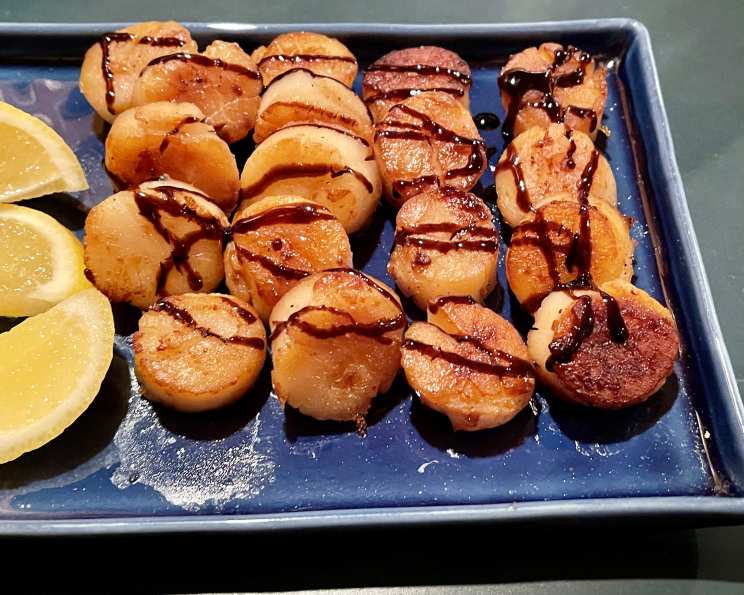
Perfectly Seared Sea Scallops: A Chef’s Guide to Golden-Brown Goodness
The first time I ever tasted a perfectly seared scallop, I was standing in a tiny seafood shack on the coast of Maine. The briny air filled my lungs as I bit into the sweet, caramelized scallop, its interior meltingly tender. The simplicity of the dish – just the scallop, a kiss of butter, and a sprinkle of sea salt – allowed the natural sweetness of the scallop to shine. It was a revelation, a reminder that sometimes the best food is the most uncomplicated. Now, I aim to recreate that experience every time I cook these oceanic gems.
Recipe Overview
- Prep Time: 2 minutes
- Cook Time: 3 minutes
- Total Time: 5 minutes
- Servings: 4
- Dietary Type: Pescatarian, Gluten-Free, Dairy-Optional
Ingredients
- 1 lb sea scallops, rinsed and patted completely dry
- Salt and freshly ground black pepper
- 1 tablespoon olive oil
- 1 tablespoon butter (optional, but highly recommended for flavor)
Equipment Needed
- Large, heavy-bottomed skillet (cast iron or stainless steel preferred)
- Paper towels
Instructions
-
Ensure your sea scallops are perfectly dry. This is the most critical step to achieving a beautiful sear. Rinse the scallops under cold water, then place them on a plate lined with several layers of paper towels. Gently pat the tops dry with more paper towels. Repeat this process until the paper towels come away completely dry. Excess moisture will steam the scallops instead of searing them.
-
Season the scallops generously on both sides with salt and freshly ground black pepper. Don’t be shy! Proper seasoning is crucial for bringing out the scallop’s natural sweetness.
-
Place a large, heavy-bottomed skillet (cast iron or stainless steel works best) over medium-high heat. Add the olive oil and butter (if using). Allow the pan to heat up until the oil is shimmering and the butter is melted and foamy, but not browned. This is important! A hot pan is essential for a good sear.
-
Carefully place the scallops in the hot pan, making sure they are not overcrowded. Overcrowding the pan will lower the temperature and steam the scallops instead of searing them. Work in batches if necessary. Leave a little space between each scallop.
-
Here’s the most important rule: Do not move the scallops for the first 1.5 minutes. Resist the urge to peek or fiddle! This is what allows the scallop to develop a beautiful, golden-brown crust. Trust the process.
-
After 1.5 minutes, gently flip the scallops using a spatula. They should release easily from the pan if they have a good sear. If they are sticking, they are not ready to be flipped. Wait another 15-30 seconds and try again.
-
Sear the scallops on the second side for another 1.5 minutes, or until they are cooked through and opaque. The internal temperature should reach 120-125°F (49-52°C). Avoid overcooking the scallops, as they will become rubbery.
-
Remove the seared scallops from the pan immediately and serve.
Expert Tips & Tricks
- Scallop Selection: Look for dry-packed scallops, not wet-packed. Wet-packed scallops are treated with phosphates, which cause them to absorb water, making them difficult to sear. Dry-packed scallops will have a natural, slightly sweet aroma.
- The Maillard Reaction is Key: The beautiful brown crust on a perfectly seared scallop is a result of the Maillard reaction, a chemical reaction between amino acids and reducing sugars that occurs at high temperatures. Ensuring your scallops are dry and your pan is hot is essential for achieving this reaction.
- Don’t Be Afraid of High Heat: Medium-high heat is crucial for searing scallops properly. Don’t be afraid to crank up the heat a little! Just be careful not to burn the butter.
- Flavor Infusion: For an extra layer of flavor, add a sprig of fresh thyme or rosemary to the pan along with the butter and olive oil. The herbs will infuse the oil with their aroma, adding a subtle but delicious complexity to the scallops.
- Preventing Splatter: If you’re concerned about oil splatter, use a splatter screen. However, be aware that a splatter screen can also trap steam, which can prevent the scallops from searing properly.
- Even Cooking: For even cooking, choose scallops that are similar in size.
- Adjust Sear Time: Sear time may vary slightly depending on the thickness and size of the scallops and the heat of your pan. Use the 1.5 minutes per side as a guideline and adjust accordingly.
Serving & Storage Suggestions
Seared scallops are incredibly versatile and can be served in a variety of ways. They are delicious on their own, as an appetizer, or as part of a main course.
- Serving Suggestions: Serve immediately while hot. Pair them with a simple pan sauce made with white wine, lemon juice, and butter. They are also excellent served over risotto, pasta, or a bed of fresh greens. A squeeze of fresh lemon juice is always a welcome addition.
- Storage: Leftover seared scallops can be stored in an airtight container in the refrigerator for up to 2 days.
- Reheating: Reheat gently in a skillet over low heat, or in the microwave. Be careful not to overcook them, as they will become rubbery. They are best enjoyed fresh, so try to eat them within a day or two of cooking. Freezing is not recommended.
Nutritional Information
| Nutrient | Amount per Serving | % Daily Value |
|---|---|---|
| Calories | 155 kcal | N/A |
| Calories from Fat | 64 kcal | 41% |
| Total Fat | 7.1 g | 10% |
| Saturated Fat | 2.4 g | 11% |
| Cholesterol | 45.1 mg | 15% |
| Sodium | 203.6 mg | 8% |
| Total Carbohydrate | 2.7 g | 0% |
| Dietary Fiber | 0 g | 0% |
| Sugars | 0 g | 0% |
| Protein | 19.1 g | 38% |
Note: Nutritional information is an estimate and may vary based on specific ingredients and preparation methods.
Variations & Substitutions
- Dairy-Free: Omit the butter and use only olive oil. The scallops will still be delicious.
- Spice It Up: Add a pinch of red pepper flakes to the pan along with the olive oil and butter for a touch of heat.
- Citrus Burst: Finish the scallops with a squeeze of lime juice instead of lemon juice for a different flavor profile.
- Herbaceous: Experiment with different herbs, such as parsley, chives, or tarragon.
- Garlic Infusion: Add a clove of minced garlic to the pan during the last minute of cooking for a garlicky flavor.
- Bacon Fat: For an extra savory twist, sear the scallops in bacon fat instead of olive oil and butter.
- Wine Reduction: After searing the scallops, deglaze the pan with a splash of dry white wine. Reduce the wine until it thickens slightly, then drizzle it over the scallops.
FAQs (Frequently Asked Questions)
Q: Why are my scallops rubbery?
A: Overcooked scallops are often rubbery. Be sure to sear them just until they are cooked through and opaque, but not longer. The internal temperature should reach 120-125°F (49-52°C).
Q: How do I know when the pan is hot enough?
A: The pan is hot enough when the oil is shimmering and the butter (if using) is melted and foamy, but not browned. A drop of water flicked into the pan should sizzle immediately.
Q: Can I use frozen scallops?
A: Yes, but be sure to thaw them completely before cooking. Pat them very dry to remove any excess moisture.
Q: What kind of pan should I use?
A: A heavy-bottomed skillet, such as cast iron or stainless steel, works best. These pans distribute heat evenly and retain heat well.
Q: Why are my scallops not searing properly?
A: The most common reasons for scallops not searing properly are: the scallops are not dry enough, the pan is not hot enough, or the pan is overcrowded. Make sure to follow the instructions carefully for best results.
Final Thoughts
Seared sea scallops are a testament to the beauty of simple cooking. With just a few ingredients and a few minutes of your time, you can create a dish that is both elegant and satisfying. Don’t be intimidated by the idea of searing scallops. Follow these tips and tricks, and you’ll be able to achieve perfectly golden-brown results every time. Now, go ahead and give it a try! Share your culinary creations and experiences with friends, family, or online. Consider pairing your scallops with a crisp white wine or a light salad for a complete and memorable meal. Bon appétit!