
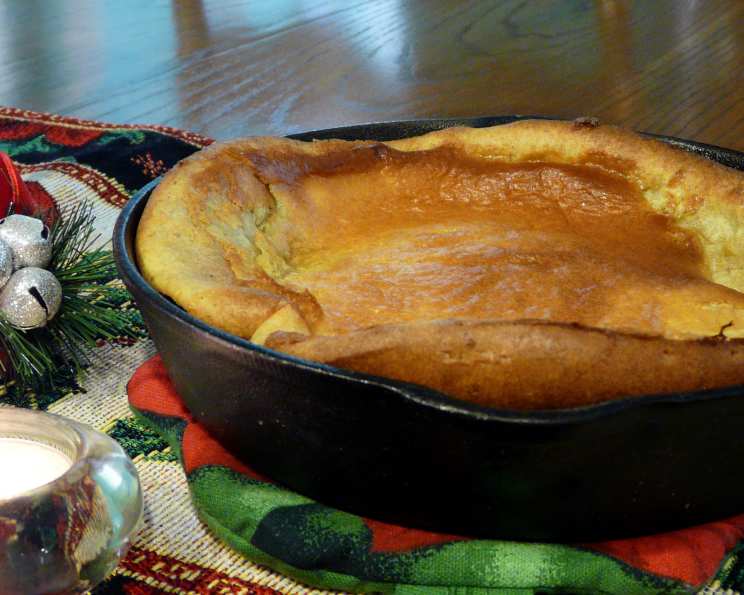
Season’s German Pancake
The aroma of cinnamon and nutmeg mingling with warm butter… it instantly transports me back to Sunday mornings in my grandmother’s kitchen. We’d all gather around the worn, wooden table, eager for the first slice of her famous German Pancake. It wasn’t just breakfast; it was a ritual, a moment of shared joy and simple indulgence that cemented itself in my childhood memories. The slightly crisp edges giving way to a custardy center – it’s a taste I’ve been chasing ever since, and this recipe captures that nostalgic perfection.
Recipe Overview
- Prep Time: 5 minutes
- Cook Time: 21-23 minutes
- Total Time: 26-28 minutes
- Servings: 1-2
- Yield: 1 pancake
- Dietary Type: Vegetarian
Ingredients
- 2 eggs
- ½ cup skim milk
- 2 tablespoons sugar
- ¼ teaspoon salt
- 1 teaspoon oil
- ¼ teaspoon cinnamon
- ⅛ teaspoon nutmeg
- 1 teaspoon vanilla
- ½ cup flour
- 2 tablespoons butter
Equipment Needed
- Blender
- 8×8 inch baking dish or skillet
Instructions
- Begin by preheating your oven to 400 degrees Fahrenheit (200 degrees Celsius). This initial high heat is crucial for creating the pancake’s signature puff.
- In a blender, whip the eggs until they are light and frothy. This step incorporates air into the batter, contributing to the pancake’s airy texture. Don’t over-blend; you just want them well-beaten.
- Add the skim milk, nutmeg, cinnamon, sugar, salt, oil, vanilla, and flour to the blender.
- Mix the ingredients together just until the batter is smooth and well combined. Avoid over-mixing, which can develop the gluten in the flour and result in a tougher pancake. A few small lumps are fine.
- Place the butter in an 8×8 inch baking dish or skillet. It’s important to use a baking dish of this size to achieve the correct thickness for the pancake.
- Place the baking dish with the butter into the preheated 400-degree oven until the butter is completely melted. This should only take a few minutes, so keep a close eye on it.
- Once the butter is melted, carefully remove the baking dish from the oven.
- Swirl the melted butter around in the pan to ensure that it coats the bottom and sides evenly. This will prevent the pancake from sticking and will contribute to a beautifully golden-brown crust.
- Immediately pour the batter into the hot pan with the melted butter.
- Bake in the 400-degree oven for 15 minutes. During this time, the pancake will dramatically puff up. Resist the urge to open the oven door, as this can cause it to deflate.
- After 15 minutes, turn down the oven temperature to 350 degrees Fahrenheit (175 degrees Celsius) and continue baking for another 6-8 minutes, or until the pancake is golden brown and set. A toothpick inserted into the center should come out clean.
Expert Tips & Tricks
- For an extra-fluffy pancake, let the batter rest for 15-20 minutes before pouring it into the hot pan. This allows the gluten to relax and the flour to fully absorb the liquid.
- Don’t have skim milk? Whole milk or even a non-dairy alternative like almond milk can be used, though the texture may be slightly different.
- If your oven tends to bake unevenly, rotate the baking dish halfway through the baking time to ensure even browning.
- For a richer flavor, use brown butter instead of regular melted butter. To make brown butter, simply cook the butter in a saucepan over medium heat until it turns a nutty brown color and emits a fragrant aroma. Be careful not to burn it!
- If you notice the edges of the pancake browning too quickly, loosely tent a piece of foil over the baking dish during the last few minutes of baking.
Serving & Storage Suggestions
Serve immediately after baking while the pancake is still puffed and warm. Dust generously with powdered sugar and a squeeze of fresh lemon juice for a classic presentation. Fresh berries, whipped cream, fruit compotes, or even a drizzle of maple syrup also make delicious toppings.
Leftovers can be stored in an airtight container in the refrigerator for up to 2 days. However, the pancake will deflate and lose its crispness as it sits. To reheat, warm in a preheated oven at 350 degrees Fahrenheit (175 degrees Celsius) for a few minutes, or microwave briefly. Reheating is best for flavor but will not restore the original texture.
Nutritional Information
| Nutrient | Amount per Serving | % Daily Value |
|---|---|---|
| Calories | 777.1 kcal | N/A |
| Calories from Fat | 342 g | 44% |
| Total Fat | 38.1 g | 58% |
| Saturated Fat | 18.7 g | 93% |
| Cholesterol | 435.5 mg | 145% |
| Sodium | 1000.7 mg | 41% |
| Total Carbohydrate | 81.7 g | 27% |
| Dietary Fiber | 2.1 g | 8% |
| Sugars | 26.3 g | 105% |
| Protein | 24.2 g | 48% |
Variations & Substitutions
- Gluten-Free: Substitute the all-purpose flour with a gluten-free blend. Be sure to choose a blend that contains xanthan gum or guar gum for binding.
- Dairy-Free: Replace the skim milk with your favorite non-dairy milk, such as almond milk, soy milk, or oat milk. Use a dairy-free butter alternative.
- Flavor Variations: Add a dash of almond extract or orange zest to the batter for a unique twist. You can also incorporate spices like cardamom or ginger for a more complex flavor profile.
- Savory: Reduce the sugar to 1 tablespoon and omit the vanilla. Add herbs like thyme or rosemary to the batter for a savory pancake that pairs well with roasted vegetables or eggs.
FAQs (Frequently Asked Questions)
Q: Why is my German Pancake not puffing up?
A: The oven temperature is crucial. Make sure your oven is preheated to the correct temperature before baking. Also, avoid opening the oven door during baking, as this can cause the pancake to deflate.
Q: Can I make the batter ahead of time?
A: While you can make the batter ahead, it’s best to bake it immediately for the best results. Letting the batter sit for too long can cause the gluten to develop, resulting in a less tender pancake.
Q: Can I use a different size baking dish?
A: Using a different size baking dish will affect the thickness and baking time of the pancake. An 8×8 inch dish is recommended for this recipe, but a slightly larger or smaller dish can be used with adjusted baking times.
Q: How do I know when the pancake is done?
A: The pancake is done when it is golden brown and set around the edges, and a toothpick inserted into the center comes out clean.
Q: Can I freeze leftover German Pancake?
A: Freezing is not recommended, as the pancake will lose its texture and become soggy when thawed. It’s best to enjoy it fresh or refrigerate leftovers and reheat them.
Final Thoughts
This German Pancake is more than just a recipe; it’s a gateway to creating cherished memories. It’s a simple dish that can be elevated with endless toppings and variations, making it perfect for any occasion. So, preheat your oven, gather your ingredients, and let the comforting aroma of this delightful pancake fill your home. Don’t be afraid to experiment with different toppings and flavors to create your own unique version. And most importantly, share it with loved ones and savor the joy of simple, delicious food.