
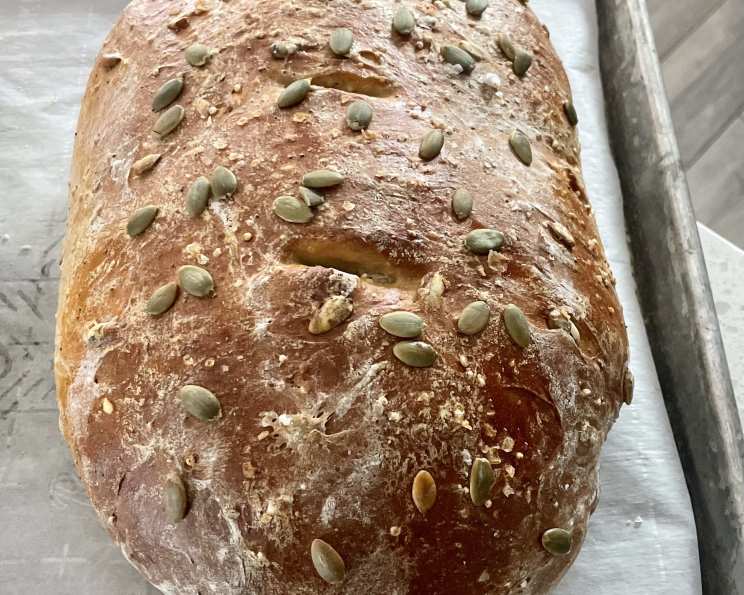
Seeduction Bread: A Copycat Recipe from Whole Foods
The aroma of freshly baked bread has always been a powerful time machine for me. It takes me back to my grandmother’s kitchen, a haven of warmth and comforting smells. Every Sunday, she would knead and proof dough, filling the house with the promise of something delicious. While her specialty was a simple, crusty sourdough, this Seeduction Bread, with its nutty, seedy exterior and subtly sweet interior, reminds me of the artisanal loaves I’d occasionally find at local bakeries – a delightful contrast to my grandmother’s rustic creation, yet equally evocative of home and comfort. Recreating this Whole Foods favorite allows me to bring that sophisticated, yet comforting flavor to my own kitchen.
Recipe Overview
- Prep Time: 2 hours 30 minutes
- Cook Time: 40-45 minutes
- Total Time: 3 hours 15 minutes
- Yield: 1 loaf
- Dietary Type: Vegetarian
Ingredients
- 1 1⁄4 cups warm water (105 degrees to 115 degrees)
- 2 tablespoons molasses
- 2 tablespoons honey
- 1 (25 ounce) package active dry yeast
- 2 tablespoons canola oil
- 2 cups unbleached all-purpose flour
- 1 cup whole wheat flour
- 1 1⁄2 teaspoons sea salt
- 3 tablespoons raw pumpkin seeds
- 2 tablespoons raw sunflower seeds
- 1 tablespoon poppy seed
- 2 tablespoons millet seeds
- 3 tablespoons malted barley flour
- 1 tablespoon wheat gluten
- 1 egg white
- 1 teaspoon millet seed (for topping)
Equipment Needed
- Large bowl
- Small bowl
- Measuring cups and spoons
- Lightly floured surface
- 9 x 13 baking sheet
- Razor blade or serrated knife
Instructions
- In a large bowl, gently stir together the warm water, molasses, honey, and yeast. Let stand until foamy, about 5 minutes. This step is crucial; if the yeast doesn’t foam, it’s likely inactive and your bread won’t rise properly. You may need to start over with fresh yeast.
- Pour the canola oil into the yeast mixture. This will add richness and help create a tender crumb.
- In a separate bowl, mix together the all-purpose flour, whole wheat flour, sea salt, pumpkin seeds, sunflower seeds, poppy seeds, 2 tablespoons of the millet seeds, malted barley flour, and wheat gluten. The malted barley flour adds a subtle sweetness and enhances the bread’s overall flavor complexity. The wheat gluten helps to give the dough more structure.
- Stir the flour and seed mixture into the yeast mixture until it pulls together. At first, it will seem shaggy and dry, but as you mix, the dough will come together.
- Turn the dough out of the bowl onto a lightly floured surface. Knead for 7-8 minutes, adding additional flour as needed. The dough should be slightly tacky but not sticky. Don’t over-knead, as this can result in a tough bread.
- Place the dough in a large oiled bowl, cover, and let stand in a warm place until doubled in size, about 1 hour. The rising time will depend on the temperature of your environment. A warm, draft-free spot is ideal.
- Grease a 9 x 13 baking sheet. This will prevent the bread from sticking and ensure even baking.
- Punch down the risen dough and turn it out of the bowl onto a lightly floured surface. This releases the built-up carbon dioxide and allows for a more even texture.
- Form the dough into a round or oval loaf shape and place it onto the prepared baking sheet. Be gentle when shaping the loaf to avoid deflating the dough.
- Cover the dough and allow it to rise until doubled in size again, about 40 minutes. This second rise is essential for a light and airy loaf.
- Preheat oven to 375 degrees Fahrenheit toward the end of this second rise. This ensures the oven is at the correct temperature when the bread is ready to bake.
- Slash the top of the loaf diagonally with a sharp razor blade or serrated knife. These slashes allow the bread to expand evenly during baking and prevent it from cracking randomly. Make sure to cut deep enough, but not too deep, about ½ inch is perfect.
- Carefully brush with the beaten egg white, and sprinkle with the remaining millet seeds over the top. The egg white will give the crust a beautiful shine and help the seeds adhere.
- Bake in the preheated oven until the bread sounds hollow when thumped on the side, 40 – 45 minutes. You can also use a thermometer; the internal temperature should be around 200-210 degrees Fahrenheit. If the crust starts to brown too quickly, tent the bread with foil during the last 15 minutes of baking.
Expert Tips & Tricks
- For a richer flavor, try using brown sugar instead of honey or molasses.
- If you don’t have malted barley flour, you can substitute it with an equal amount of all-purpose flour. However, the flavor will be slightly different.
- To ensure even baking, rotate the baking sheet halfway through the baking time.
- If your kitchen is cold, you can proof the dough in a slightly warmed oven (around 100 degrees Fahrenheit) or in a microwave with a cup of hot water.
- Use a bench scraper to make the kneading process easier, especially when the dough is still sticky.
- For a crispier crust, lightly spray the loaf with water before placing it in the oven.
- Let the bread cool completely on a wire rack before slicing. This prevents it from becoming gummy.
Serving & Storage Suggestions
This Seeduction Bread is delicious served warm or toasted, with butter, jam, or cheese. It also makes a great base for sandwiches or can be used to make croutons.
Store the bread in an airtight container at room temperature for up to 3 days. For longer storage, you can freeze it for up to 2 months. To freeze, slice the bread and wrap it tightly in plastic wrap or foil. Thaw at room temperature before serving. To reheat, wrap the bread in foil and bake in a preheated oven at 350 degrees Fahrenheit for about 10-15 minutes, or until heated through.
Nutritional Information
| Nutrient | Amount per Serving | % Daily Value |
|---|---|---|
| Calories | 4617.8 kcal | N/A |
| Calories from Fat | 1023 g | 22% |
| Total Fat | 113.7 g | 174% |
| Saturated Fat | 13.6 g | 68% |
| Cholesterol | 0 mg | 0% |
| Sodium | 3945.4 mg | 164% |
| Total Carbohydrate | 684.1 g | 228% |
| Dietary Fiber | 220.2 g | 880% |
| Sugars | 59.4 g | 237% |
| Protein | 350.6 g | 701% |
Variations & Substitutions
- Gluten-Free: Substitute the all-purpose and whole wheat flours with a gluten-free blend. You may need to adjust the amount of liquid depending on the blend.
- Vegan: Replace the honey with maple syrup or agave nectar. Omit the egg wash or replace it with a plant-based milk like almond or soy milk.
- Seed Variations: Experiment with different types of seeds, such as sesame seeds, flax seeds, or chia seeds.
- Nut Variations: Add chopped nuts like walnuts or pecans for extra flavor and texture.
FAQs (Frequently Asked Questions)
Q: Why is my bread dense and not rising properly?
A: This could be due to several factors, including inactive yeast, not kneading the dough enough, or not allowing it to rise in a warm enough environment. Make sure your yeast is fresh, knead the dough for the recommended time, and find a warm spot for proofing.
Q: Can I use a stand mixer to knead the dough?
A: Yes, you can use a stand mixer with a dough hook attachment. Knead on low speed for about 6-8 minutes, or until the dough is smooth and elastic.
Q: How do I know when the bread is done baking?
A: The bread is done when it sounds hollow when thumped on the side and has an internal temperature of 200-210 degrees Fahrenheit.
Q: Can I make this recipe into rolls instead of a loaf?
A: Absolutely! After the first rise, divide the dough into smaller portions, shape them into rolls, and bake for a shorter amount of time (around 20-25 minutes).
Q: What can I do if my crust is browning too quickly?
A: Tent the bread with foil during the last 15 minutes of baking to prevent the crust from burning.
Final Thoughts
Baking this Seeduction Bread is more than just following a recipe; it’s about creating an experience. The rhythmic kneading, the anticipation as the dough rises, and the intoxicating aroma that fills your kitchen – it’s all part of the joy of homemade bread. So, gather your ingredients, embrace the process, and bake a loaf of this delightful bread. Share it with your loved ones and savor the simple pleasure of a freshly baked, seedy masterpiece. Don’t hesitate to tweak the recipe to your liking, experiment with different seeds or flours, and make it your own. And please, share your baking adventures and feedback – I’d love to hear how it turned out! A crusty loaf of this bread pairs perfectly with a hearty soup or a simple salad, making it a versatile addition to any meal.