
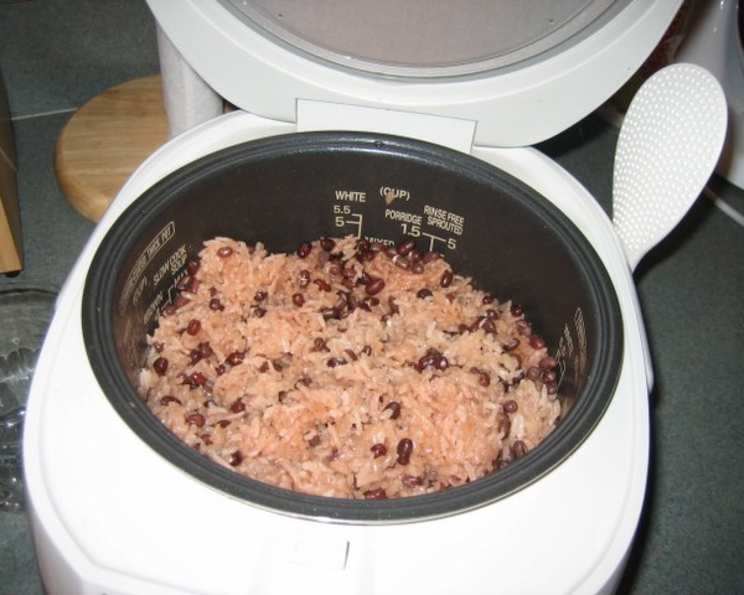
Sekihan: A Celebration in Red Rice
The first time I tasted sekihan, I was a child at my grandmother’s house during a Shichi-Go-San celebration. The subtle sweetness of the glutinous rice, stained a beautiful, auspicious red from the adzuki beans, was unlike anything I’d ever had. The earthy aroma mingled with the roasted sesame seeds, creating a comforting and celebratory scent that filled the entire house, a scent that instantly evokes memories of family, tradition, and pure joy. It wasn’t just a meal; it was a symbol of good fortune and togetherness, a feeling I’ve tried to recreate in my own kitchen ever since.
Recipe Overview
- Prep Time: 1 hour 15 minutes (includes soaking time)
- Cook Time: 45 minutes – 1 hour
- Total Time: 2 hours – 2 hours 15 minutes
- Servings: 4-6
- Yield: Varies depending on serving size
- Dietary Type: Gluten-Free, Dairy-Free (naturally vegan, but check sesame seed source for potential cross-contamination)
Ingredients
- 1/2 cup adzuki beans (small red beans)
- 3 cups sweet glutinous rice, well rinsed, soaked for 1/2 to 1 hour, and drained (mochi gome. Regular rice isn’t sticky enough)
- 3 1/2 cups water
- 1 tablespoon black dry-roasted sesame seeds
- Shiso or watercress, if desired (to garnish)
Equipment Needed
- Medium saucepan
- Rice steamer (or large pot with a tight-fitting lid)
- Decorative shallow dish or lacquer tray
Instructions
-
In a medium saucepan, combine the adzuki beans and water. Bring the mixture to a boil over high heat.
-
Once boiling, reduce the heat to low and simmer for 45 minutes to 1 hour, or until the beans are soft but not completely cooked. It’s important that the beans still hold their shape.
-
Remove the saucepan from the heat and allow the bean mixture to cool to room temperature. This step is crucial for allowing the color to leach into the water.
-
Once cooled, drain the beans, carefully reserving the liquid. This liquid is what will give the rice its signature red hue and subtle bean flavor.
-
In a bowl, thoroughly mix the drained beans, the drained glutinous rice, and 3 tablespoons of the reserved bean cooking liquid. Ensure the rice is evenly coated with the liquid for uniform color.
-
Cook the mixture in a rice steamer according to the manufacturer’s instructions. If you don’t have a rice steamer, proceed to step 7 for stovetop cooking instructions.
-
For stovetop cooking: Transfer the mixture to a large pot with a tight-fitting lid. Ensure the pot is heavy-bottomed to prevent scorching. Bring the mixture to a gentle simmer over medium heat. Then, immediately reduce the heat to the lowest setting, cover tightly, and cook for approximately 20-25 minutes, or until all the liquid has been absorbed and the rice is tender. Avoid lifting the lid during cooking to ensure even steaming.
-
Once the rice is cooked, gently fluff it with a rice paddle or spatula. Be careful not to mash the beans.
-
Spread the cooked beans and rice into a decorative shallow dish or lacquer tray. This is traditionally how sekihan is served.
-
Sprinkle the black dry-roasted sesame seeds evenly over the rice.
-
Garnish with shiso or watercress, if desired, for added visual appeal and flavor.
-
Serve warm or at room temperature.
Expert Tips & Tricks
- Soaking is Key: Don’t skip the soaking step for the glutinous rice! This helps it cook evenly and achieve the perfect sticky texture.
- Bean Liquid Color: The intensity of the red color depends on the adzuki beans and the amount of liquid used. If you want a deeper color, use slightly more of the reserved bean liquid, but be careful not to make the rice too wet.
- Roasting Sesame Seeds: Roasting the sesame seeds enhances their flavor. You can do this in a dry pan over medium heat until they become fragrant, or in the oven at 350°F (175°C) for a few minutes. Watch them carefully, as they burn easily.
- Salt Addition: Some cooks add a pinch of salt to the bean liquid to enhance the flavor of the rice. This is optional but can add a nice balance to the sweetness of the glutinous rice.
- Make-Ahead Tip: The adzuki beans can be cooked ahead of time and stored in the refrigerator for up to 2 days.
Serving & Storage Suggestions
Sekihan is best served warm or at room temperature. It’s often enjoyed on special occasions, but it also makes a satisfying and nutritious meal any day of the week.
- Serving: Serve sekihan as a main course or a side dish. It pairs well with grilled fish, pickled vegetables, or other Japanese delicacies.
- Storage: Leftover sekihan can be stored in an airtight container in the refrigerator for up to 2 days.
- Reheating: To reheat, you can microwave it for a minute or two, or steam it gently over low heat until warmed through. Add a splash of water if it seems dry.
- Freezing: While not ideal, sekihan can be frozen. Wrap it tightly in plastic wrap and then place it in a freezer bag. It can be stored in the freezer for up to 1 month. Thaw it completely before reheating. The texture may be slightly altered after freezing.
Nutritional Information
Please note that these values are estimates and may vary based on specific ingredients and portion sizes.
| Nutrient | Amount per Serving | % Daily Value |
|---|---|---|
| Calories | 450 kcal | 23% |
| Total Fat | 3g | 4% |
| Saturated Fat | 0.5g | 3% |
| Cholesterol | 0mg | 0% |
| Sodium | 20mg | 1% |
| Total Carbohydrate | 90g | 30% |
| Dietary Fiber | 5g | 20% |
| Sugars | 1g | 2% |
| Protein | 10g | 20% |
Variations & Substitutions
- Brown Rice Sekihan: While traditional sekihan uses glutinous white rice, you can experiment with using brown glutinous rice for a nuttier flavor and added fiber. Adjust cooking time as needed.
- Sweet Potato Addition: For a sweeter twist, add small cubes of cooked sweet potato to the rice mixture before cooking.
- Chestnut Sekihan: In some regions, chestnuts are added to sekihan. Add roasted and peeled chestnuts to the rice mixture before cooking.
- Salted Sekihan: In some variations, salt is mixed into the bean water rather than leaving the dish sweet.
- Different Garnishes: Instead of shiso or watercress, try using finely chopped mitsuba (Japanese parsley) or edible flowers for garnish.
FAQs (Frequently Asked Questions)
Q: Why is glutinous rice used in Sekihan?
A: Glutinous rice, also known as mochi rice, has a higher starch content than regular rice, giving it a sticky and chewy texture that is characteristic of sekihan. This unique texture is an essential part of the dish’s appeal.
Q: Can I use canned adzuki beans?
A: While you can use canned adzuki beans in a pinch, the flavor and color won’t be as vibrant as using dried beans. If using canned beans, reduce the simmering time significantly as they are already cooked. Make sure to still reserve and use the can liquid.
Q: How do I prevent the rice from sticking to the bottom of the pot when cooking on the stove?
A: Use a heavy-bottomed pot and keep the heat very low after bringing the mixture to a simmer. Avoid lifting the lid during cooking to trap steam. You can also try placing a heat diffuser under the pot to distribute the heat more evenly.
Q: Can I make this in an Instant Pot?
A: Yes, you can adapt this recipe for an Instant Pot. After soaking the rice, combine all ingredients in the Instant Pot. Cook on high pressure for 22 minutes, then allow for a natural pressure release for 10 minutes before manually releasing any remaining pressure.
Q: What if I don’t have shiso or watercress for garnish?
A: If you don’t have shiso or watercress, you can skip the garnish altogether or use another fresh herb, such as parsley or cilantro, for a pop of color and freshness.
Final Thoughts
Sekihan is more than just a recipe; it’s a connection to culture, tradition, and loved ones. Don’t be intimidated by the slightly longer cooking time – the results are well worth the effort. Embrace the process, enjoy the aromas, and savor the unique flavors of this special dish. Whether you’re celebrating a special occasion or simply looking for a comforting and flavorful meal, I encourage you to try this recipe and share it with those you cherish. Your feedback and experiences are always welcome, and I hope this dish brings as much joy to your table as it has to mine. Consider pairing sekihan with a simple miso soup or some flavorful tsukemono (Japanese pickles) for a complete and satisfying meal.