
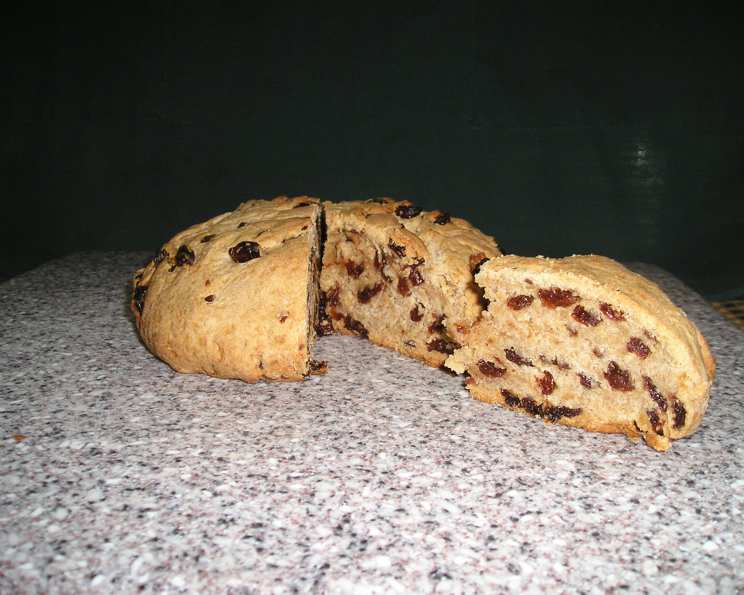
Selkirk Bannock: A Taste of Scottish Tradition
The scent of warm, yeasty dough studded with plump, juicy raisins… it instantly transports me back to a cozy Edinburgh bakery I stumbled upon years ago during a drizzly autumn visit. The baker, a kind woman with flour dusting her apron, offered me a slice of Selkirk Bannock fresh from the oven. The sweetness of the raisins against the slightly salty, buttery dough was a revelation, a perfect comfort on a chilly day. That first bite sparked a lifelong appreciation for this humble yet delightful Scottish bread.
Recipe Overview
- Prep Time: 30 minutes
- Cook Time: 60 minutes
- Total Time: 1 hour 30 minutes
- Servings: Varies based on pan size
- Yield: 3 loaves
- Dietary Type: Not specified (contains dairy)
Ingredients
- 4-5 cups flour
- 1 (1/4 ounce) package yeast
- 2 teaspoons salt
- 1 1/2 cups hot water
- 1 cup butter, room temperature
- 1/2 cup lard, room temperature (or shortening)
- 1 cup sugar
- 2 lbs dark raisins (or sultanas)
Equipment Needed
- 3 round 8 or 9 inch cake pans
- Large mixing bowl
- Separate mixing bowl
- Spoon
- Mixer (optional, but recommended)
- Flat beater (for mixer)
- Dough hook (for mixer)
- Lightly floured work surface
- Wax paper
- Oven
- Metal rack
Instructions
-
Grease three round 8 or 9 inch cake pans thoroughly. Ensure all surfaces are coated to prevent sticking.
-
Measure one cup of flour into a large mixing bowl. Stir in the entire package of yeast, salt, and hot water. Set aside this mixture for a moment. This allows the yeast to activate and get a head start.
-
In a separate bowl, cream together the butter, lard (or shortening), and sugar. Make sure the butter and lard are truly at room temperature for optimal creaming; they should be soft but not melted. Creaming creates air pockets, contributing to a lighter texture in the final product.
-
Thoroughly combine the creamed butter mixture with the flour mixture you prepared earlier. Mix until well incorporated.
-
Stir in the remaining flour, about 1/2 cup at a time. Initially, use a spoon to mix. As the dough becomes more firm, switch to mixing by hand. If using a mixer, begin with the flat beater attachment and replace it with the dough hook when the dough gets too heavy for the flat beater. This prevents the mixer from straining.
-
The dough will be buttery and oily, and won’t cling to the sides of the bowl. Add flour as needed, just enough to make a dough that is firm but elastic. Avoid adding too much flour, as this will result in a dry, tough bannock.
-
Kneading: Place the dough on a lightly floured work surface. Knead by hand for about 2 minutes using a strong push-turn-fold motion. Alternatively, knead for the same length of time using the dough hook attachment on your mixer.
-
Add the raisins. This is a substantial amount of raisins, and it will take some time for the dough to fully incorporate them. Continue kneading the dough as you gradually work the raisins in. Ensure the raisins are evenly distributed throughout the dough to provide sweetness in every bite.
-
Knead by hand or with the dough hook for approximately 8 minutes, or until all of the raisins are incorporated and the dough forms an elastic but firm ball that will hold its shape when placed in a pan.
-
Shaping: Divide the dough into three equal parts. Mold each piece into a large, round bun. Place each bun into a prepared cake pan.
-
The dough should not touch the sides of the pan; it should rise up in a gentle curve away from the sides. This ensures even baking and prevents the bannock from sticking to the pan.
-
Rising: Cover the pans with wax paper. Leave the dough to rise at room temperature until doubled in size, about 30 minutes. The rising time may be shorter if using rapid-rise yeast. A warm environment will accelerate the rising process.
-
Preheat the oven to 350 degrees Fahrenheit (175 degrees Celsius) about 20 minutes before baking. This ensures the oven is at the correct temperature when the bannocks are ready to bake.
-
Bake on the middle shelf of the preheated oven for about 1 hour. The bannocks are done when tapping the bottom crust yields a hard, hollow sound.
-
If the crust starts to brown too quickly during baking, cover it loosely with a piece of foil or brown paper sack to prevent burning.
-
Remove the breads from the oven. Carefully transfer them to a metal rack to cool completely before slicing and serving.
Expert Tips & Tricks
- For an extra rich flavor, consider using brown butter (beurre noisette) instead of regular butter. Brown the butter slowly on the stovetop until it develops a nutty aroma and golden color. Allow it to cool slightly before adding it to the dough.
- If you find the dough too sticky to handle, lightly oil your hands instead of adding more flour. This will prevent the dough from drying out.
- Before adding the raisins, soak them in warm water or rum for about 30 minutes to plump them up. This will make them even juicier and more flavorful in the finished bannock. Drain well before adding them to the dough.
- To prevent the bannock from sticking to the pans, you can also line the bottoms of the pans with parchment paper circles.
- For a sweeter bannock, brush the tops with melted butter and sprinkle with coarse sugar (such as turbinado or demerara sugar) before baking.
Serving & Storage Suggestions
Selkirk Bannock is best served warm, either plain or with a smear of butter or clotted cream. It also pairs beautifully with a cup of tea or coffee. Leftover bannock can be stored at room temperature in an airtight container for up to 3 days. For longer storage, wrap the bannock tightly in plastic wrap and freeze it for up to 2 months. To reheat, thaw the bannock at room temperature and then warm it in a 350°F (175°C) oven for about 10-15 minutes, or until heated through. You can also reheat individual slices in a toaster or microwave.
Nutritional Information
| Nutrient | Amount per Serving (estimated) | % Daily Value (estimated) |
|---|---|---|
| Calories | 876 kcal | 44% |
| Total Fat | 48.7 g | 75% |
| Saturated Fat | 32.7 g | 164% |
| Cholesterol | 130.1 mg | 43% |
| Sodium | 675.5 mg | 28% |
| Total Carbohydrate | 100.8 g | 34% |
| Dietary Fiber | 4.2 g | 17% |
| Sugars | 66.2 g | N/A |
| Protein | 7.5 g | 15% |
Note: Nutritional information is an estimate and may vary based on specific ingredients and portion sizes.
Variations & Substitutions
- Sultana Bannock: Use golden sultanas instead of dark raisins for a milder, sweeter flavor.
- Spice Bannock: Add 1 teaspoon of ground cinnamon, 1/2 teaspoon of ground nutmeg, and 1/4 teaspoon of ground cloves to the flour mixture for a warm, spiced version.
- Citrus Bannock: Add the zest of one orange or lemon to the dough for a bright, citrusy flavor.
- Gluten-Free Bannock: Substitute a gluten-free flour blend for the all-purpose flour. You may need to adjust the amount of liquid to achieve the desired dough consistency. Also, be sure to use gluten-free certified yeast.
- Dairy-Free Bannock: Replace the butter with a plant-based butter alternative or a neutral-tasting oil like coconut oil.
FAQs (Frequently Asked Questions)
Q: Why is the dough so oily?
A: The high proportion of butter and lard in the recipe contributes to the oily texture of the dough. This is normal and helps create a rich, tender bannock.
Q: Can I use rapid-rise yeast instead of regular yeast?
A: Yes, you can use rapid-rise yeast. Reduce the rising time accordingly, as rapid-rise yeast works much faster.
Q: My bannock is browning too quickly. What should I do?
A: Cover the bannock loosely with foil or brown paper to prevent it from burning.
Q: How can I tell if the bannock is done?
A: The bannock is done when the bottom crust yields a hard, hollow sound when tapped. You can also insert a toothpick into the center; it should come out clean.
Q: Can I add other dried fruits besides raisins?
A: Absolutely! Try adding dried cranberries, chopped apricots, or chopped dates for a different flavor profile.
Final Thoughts
Selkirk Bannock is more than just a bread; it’s a taste of history, a connection to the rolling hills and welcoming kitchens of Scotland. Don’t be intimidated by the slightly unconventional dough – embrace the buttery richness and the abundance of sweet raisins. I encourage you to give this recipe a try and share your own memories and variations with those you love. Pair it with a strong cup of Scottish Breakfast tea and let the warmth of the bannock transport you. And, if you find yourself in Scotland, be sure to seek out an authentic Selkirk Bannock from a local bakery – you won’t be disappointed!