
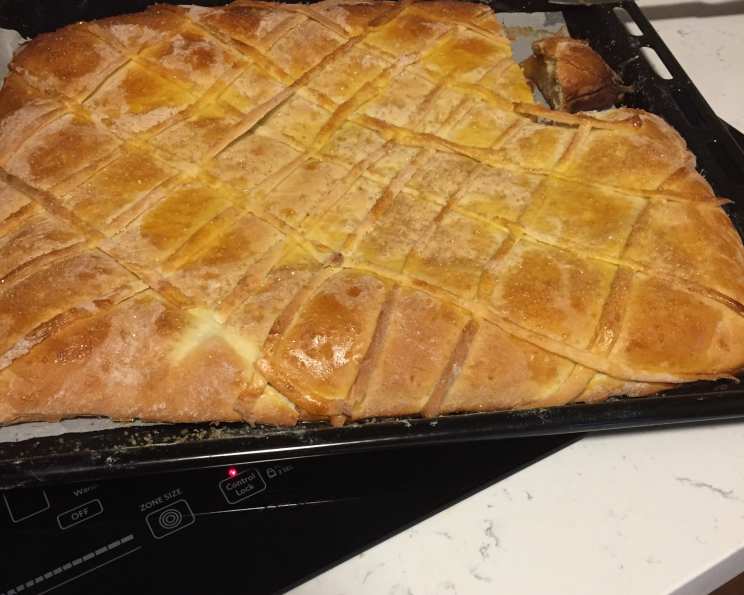
Semita de Piña: A Taste of El Salvador
The memory of my grandmother’s kitchen in El Salvador is forever intertwined with the sweet, warm aroma of baking semita de piña. I can still picture her, her hands dusted with flour, meticulously layering the pineapple filling between the tender dough, a symphony of sweet and comforting smells filling the air. It wasn’t just a pastry; it was love baked into every bite, a tradition passed down through generations, and a taste of home that always brings me back.
Recipe Overview
- Prep Time: 3 hours 10 minutes
- Cook Time: 30-40 minutes
- Total Time: 3 hours 40 minutes – 3 hours 50 minutes (including rising and resting)
- Servings: 12-14
- Yield: 1 large semita
- Dietary Type: Not specified. Can be adapted to vegetarian by ensuring butter is vegetarian
Ingredients
- 3/4 cup milk
- 1/2 cup unsalted butter, softened
- 1/4 cup sugar
- 1 1/4 teaspoons salt
- 1/3 cup warm water (110°F)
- 1 (1/4 ounce) package active dry yeast
- 5-6 cups all-purpose flour
- 3 eggs, lightly beaten
- 1 1/2 cups pineapple preserves or pineapple marmalade
- 2 teaspoons ground cinnamon
- 1 egg
- 2 tablespoons milk or water
- 1/4 cup sugar
Equipment Needed
- Saucepan
- Small bowl
- Large mixing bowl
- Wooden spoon
- Floured work surface
- Large, lightly oiled bowl
- Clean towel or plastic wrap
- Greased 11×17-inch baking pan
- Fork
- Toothpick
Instructions
-
In a saucepan, combine the milk, butter, sugar, and salt. Heat over medium-low, stirring constantly, until the butter is melted and the sugar is dissolved. Remove from the heat and allow the mixture to cool until it is lukewarm to the touch. This is crucial for activating the yeast without scalding it.
-
In a small bowl, mix the warm water and yeast. Set aside for 5-10 minutes, or until the yeast has proofed and become foamy. This step ensures that the yeast is active and will properly leaven the dough.
-
In a large mixing bowl, add 4 cups of the flour. Make a well in the center of the flour. Pour in the yeast mixture, the lukewarm milk mixture, and the beaten eggs.
-
Using a wooden spoon, stir the ingredients together to incorporate them gradually. Continue stirring until the dough begins to come together. The dough will initially be quite sticky.
-
Transfer the dough to a lightly floured work surface. Knead the dough, adding more flour as needed, until it no longer sticks to your hands and becomes silky and elastic. This process typically takes 8-10 minutes. The amount of flour needed may vary depending on the humidity and the type of flour used. The dough should be smooth and pliable, not dry or stiff.
-
Place the dough in a large, lightly oiled bowl. Turn the dough to coat it with oil, preventing it from drying out. Cover the bowl with a clean towel or plastic wrap. Set the bowl in a warm place to rise for 1 to 1 1/2 hours, or until the dough has doubled in size.
-
Once the dough has doubled, transfer it to a lightly floured work surface. Punch down the dough with your fists to deflate it, releasing the built-up gases.
-
Divide the dough into two equal-sized portions.
-
Roll out one of the portions to fit the bottom of a greased 11×17-inch baking pan. Carefully transfer the rolled-out dough into the baking pan and trim any excess dough to fit. Save the trimmings, as they will be used later for decoration.
-
In a separate bowl, combine the pineapple preserves or marmalade with the ground cinnamon. Stir to ensure the cinnamon is evenly distributed throughout the pineapple filling.
-
Spread the pineapple filling evenly over the bottom layer of dough in the baking pan, leaving a 1-inch border around the edges. This border will allow for proper sealing of the top layer of dough.
-
Cut off about 1/4 of the second dough ball and set it aside. This smaller piece will be used to create the decorative strips on top of the semita.
-
Roll out the remaining portion of the second dough ball to fit the baking pan as a top layer for the semita.
-
Carefully lay the second layer of dough over the pineapple filling, covering it completely. Trim any excess dough to fit the pan.
-
Use a fork to press down the edges of the semita firmly, sealing the top and bottom layers of dough together. This prevents the filling from leaking out during baking.
-
Knead the reserved dough (the trimmings from the first layer and the 1/4 portion from the second dough ball) into a ball. Roll it out to approximately 1/4-inch thickness and about 10 inches in length.
-
Cut the rolled-out dough into long strips, about 1/4-inch wide. These strips will be used to create a decorative criss-cross pattern on top of the semita.
-
Preheat your oven to 350°F (175°C).
-
In a small bowl, whisk together the remaining egg with the milk or water to create an egg wash.
-
Brush the top of the semita generously with the egg wash. This will give the pastry a golden-brown, glossy finish.
-
Arrange the dough strips on top of the semita in a criss-cross pattern, trimming them to fit the pan.
-
Brush the dough strips with the remaining egg wash.
-
Sprinkle the entire top of the pastry liberally with sugar. This will add sweetness and create a slightly caramelized crust.
-
Let the semita rest for about 30 minutes before baking. This allows the gluten in the dough to relax, resulting in a more tender pastry.
-
Use a toothpick to poke holes all over the semita. This will prevent the pastry from puffing up excessively during baking and ensures that the filling cooks evenly.
-
Bake the semita in the preheated oven for 30 to 40 minutes, or until it is golden brown on top. Keep a close eye on it to prevent burning.
-
Remove the semita from the oven and let it cool completely in the pan before cutting it into 12 portions.
-
Serve with coffee, tea, or hot chocolate.
Expert Tips & Tricks
- For a richer flavor, consider using brown butter in the dough. To make brown butter, melt the butter in a saucepan over medium heat, allowing it to cook until it turns a nutty brown color. Cool slightly before adding to the other ingredients.
- If you don’t have pineapple preserves or marmalade on hand, you can make your own quick pineapple filling by simmering diced pineapple with sugar, cinnamon, and a touch of lemon juice until thickened.
- To ensure an even bake, rotate the semita halfway through the baking time.
- If the top of the semita starts to brown too quickly, you can tent it with foil to prevent burning.
Serving & Storage Suggestions
Semita de piña is best enjoyed warm or at room temperature. It is traditionally served as a sweet treat alongside a cup of coffee, tea, or hot chocolate. The pastry can be stored at room temperature for up to 2 days in an airtight container. For longer storage, it can be refrigerated for up to 5 days or frozen for up to 2 months. To reheat, simply warm it in a preheated oven at 350°F (175°C) for a few minutes, or microwave it for a shorter time.
Nutritional Information
| Nutrient | Amount per Serving | % Daily Value |
|---|---|---|
| Calories | 439.1 kcal | N/A |
| Calories from Fat | N/A | 22% |
| Total Fat | 10.5 g | 16% |
| Saturated Fat | 5.9 g | 29% |
| Cholesterol | 84.8 mg | 28% |
| Sodium | 356.6 mg | 14% |
| Total Carbohydrate | 77.2 g | 25% |
| Dietary Fiber | 2.2 g | 8% |
| Sugars | 27.9 g | N/A |
| Protein | 8.5 g | 17% |
Note: Nutritional information is an estimate and may vary based on specific ingredients and preparation methods.
Variations & Substitutions
- Other Fruit Fillings: While pineapple is traditional, feel free to experiment with other fruit preserves or marmalades, such as guava, mango, or even fig.
- Spice Variations: Add a pinch of nutmeg or cardamom to the pineapple filling for a warmer, more complex flavor.
- Gluten-Free: For a gluten-free version, use a gluten-free all-purpose flour blend and ensure all other ingredients are gluten-free.
- Vegan Adaptation: Substitute the butter with a vegan butter alternative and the egg with a flax egg (1 tablespoon of ground flaxseed mixed with 3 tablespoons of water, let sit for 5 minutes).
FAQs (Frequently Asked Questions)
Q: Can I make the dough ahead of time?
A: Yes, you can prepare the dough ahead of time and store it in the refrigerator for up to 24 hours. Let it come to room temperature before rolling it out.
Q: How can I tell if the semita is done baking?
A: The semita is done when the crust is golden brown and the filling is bubbling slightly. You can also insert a toothpick into the center to check for doneness; it should come out clean.
Q: Can I freeze the baked semita?
A: Yes, you can freeze the baked semita for up to 2 months. Wrap it tightly in plastic wrap and then in foil before freezing. Thaw it overnight in the refrigerator before reheating.
Q: What is the best way to prevent the bottom crust from getting soggy?
A: Make sure the baking pan is well-greased and use a thick layer of pineapple filling. You can also par-bake the bottom crust for a few minutes before adding the filling.
Q: Can I use fresh pineapple instead of preserves?
A: Yes, but you’ll need to cook the fresh pineapple with sugar and spices until it thickens into a jam-like consistency. This will help to prevent the filling from being too watery.
Final Thoughts
Semita de piña is more than just a pastry; it’s a celebration of flavors, traditions, and the simple joys of baking. This recipe, passed down through generations, brings a taste of El Salvador to your kitchen. I hope this recipe inspires you to create your own memories, experiment with different fillings, and share the warmth and sweetness of semita de piña with your loved ones. Don’t hesitate to leave a comment with your experiences or any variations you’ve tried – I’m always eager to learn from fellow bakers! Pair this delicious pastry with a strong cup of Salvadoran coffee for the ultimate experience.