
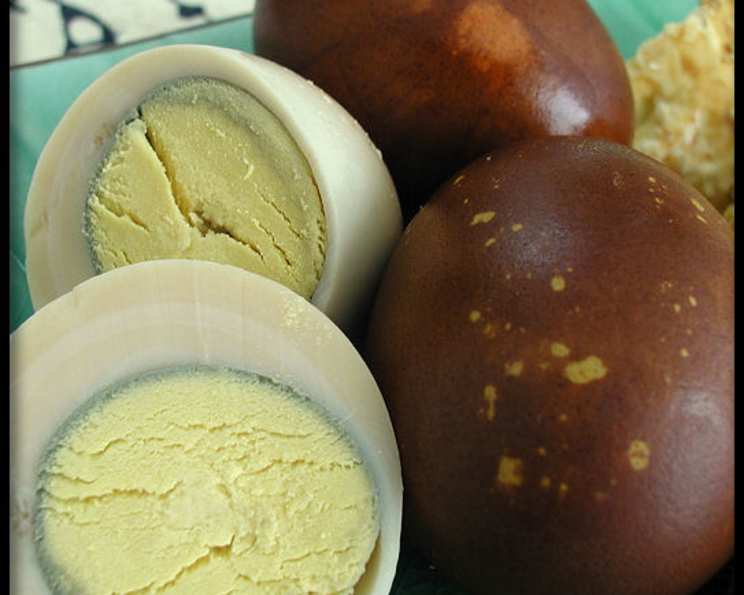
Sephardic Huevos Haminados: A Taste of Tradition
The aroma alone takes me back. My grandmother, Bubbe Sarah, would always have a pot simmering on the stove, filling her small kitchen with an earthy, savory scent that promised comfort and history. These weren’t just hard-boiled eggs; they were Huevos Haminados, Sephardic slow-cooked eggs, stained a beautiful mahogany color and imbued with a flavor that whispered of generations past. Peeling one, the aroma of onion clinging to the slightly beige egg white, was like unwrapping a culinary heirloom. They were often paired with her famous potato borekas, a combination that felt like a warm hug.
Recipe Overview
- Prep Time: 5 minutes
- Cook Time: 4 hours (stovetop) to 12 hours (oven)
- Total Time: 4 hours 5 minutes to 12 hours 5 minutes
- Servings: 6
- Yields: 6 eggs
- Dietary Type: Kosher, Gluten-Free, Dairy-Free
Ingredients
- 6 eggs
- 1 tablespoon vegetable oil
- 1 teaspoon salt
- 1 teaspoon pepper
- Vegetable peels (specifically dried onion peels) – the more, the deeper the color
- 1-2 tablespoons ground coffee (optional) or 1-2 tablespoons instant coffee (optional)
Equipment Needed
- Large pot or saucepan or Crock-Pot or 2-quart ovenproof casserole dish
- Tongs or slotted spoon
- Bowl for ice water
Instructions
- Begin by carefully placing the eggs in a pot or saucepan. Ensure the pot is large enough to hold the eggs comfortably and allow them to be fully submerged in water.
- Add plenty of onion skins to the pot. The type of onions used to produce the skins doesn’t matter – yellow, red, or Vidalia onions will all work beautifully, each contributing its own subtle nuance to the final flavor. The more skins you add, the deeper the color of the eggs will be.
- If desired, add the coffee. Stir in 1 to 2 tablespoons of ground coffee or instant coffee to the pot. The coffee, like the onion skins, will contribute to the color and add a delicate depth of flavor. This step is optional, but it adds a unique dimension to the Haminados.
- Add 1 tablespoon of vegetable oil to the pot. The oil helps the eggs to release easily from their shells after cooking.
- Season the water with 1 teaspoon of salt and 1 teaspoon of pepper.
- Cover the eggs with water. Ensure that the eggs are fully submerged, adding more water as needed.
- Bring the water to a boil over high heat. Once boiling, allow it to boil rapidly for at least five minutes. This initial rapid boil helps to set the eggs and begin the coloring process.
- Reduce the heat to low, and allow the water to simmer gently. Leave the pot uncovered and let the eggs simmer for at least four hours, or even overnight for a deeper color and more intense flavor. Don’t worry about overcooking them; the long, slow cooking process is what gives Haminados their unique character.
- Remove the eggs from the pot using tongs or a slotted spoon and immediately place them in a bowl of ice water. This stops the cooking process and makes the eggs easier to peel.
- Once cooled, gently crack the shells and peel the eggs. Wipe them clean with a paper towel.
- Serve the Haminados plain, either hot, warm, or cold, as desired.
Crock-Pot Method:
- Save the papery outer layers from onions, or obtain them from the grocery store if available.
- Place a generous amount of onion papers in the bottom of the Crock-Pot.
- Arrange the whole eggs in their shells in a single layer on top of the onion papers. It may be possible to use more than one layer of eggs if you have enough onion skins to separate them.
- Layer more onion papers between the eggs and on top of the eggs, ensuring they are well-covered.
- Add water, filling the Crock-Pot to about two-thirds full or more.
- Add a few glugs of olive oil (approximately 1 tablespoon).
- Cook on low heat for 4 to 10 hours, or even longer for a deeper color and flavor. The eggs will be colored brown from shell to yolk and have a delicious taste.
Oven Method:
- Preheat the oven to 175 degrees Fahrenheit (80 degrees Celsius).
- Place all the ingredients (eggs, onion skins, coffee if using, oil, salt, pepper, and water) into a 2-quart ovenproof casserole dish.
- Cover the casserole dish tightly with a lid or aluminum foil.
- Place the casserole dish in the preheated oven and allow it to cook undisturbed for at least 12 hours.
Expert Tips & Tricks
- For a richer, deeper color, add a black tea bag to the cooking water along with the onion skins and coffee.
- Don’t throw away the cooking water! It can be strained and used as a flavorful broth for soups and stews.
- If you want to ensure the yolks are perfectly centered, gently stir the eggs in the pot during the first hour of cooking.
- To easily peel the eggs, crack the shell all over and then roll the egg on a flat surface before peeling under running water.
- Adjust the cooking time to achieve your desired level of doneness. Longer cooking times result in a firmer, more deeply colored egg.
Serving & Storage Suggestions
Huevos Haminados are incredibly versatile and can be served in a variety of ways. Enjoy them plain as a simple snack or appetizer, or slice them and add them to salads, sandwiches, or deviled egg preparations. They are also a delicious addition to stews and tagines, providing a boost of protein and flavor.
Leftover Haminados should be stored in the refrigerator in their shells for up to a week. You can also peel them and store them in an airtight container filled with water to keep them moist. To reheat, simply place the eggs in warm water for a few minutes or microwave briefly. They are best served cold or at room temperature, as reheating can make the whites rubbery. They are generally not frozen as freezing changes the texture of the egg white significantly.
Nutritional Information
Note: Nutritional information is an estimate and may vary based on specific ingredients and cooking methods.
| Nutrient | Amount per Serving | % Daily Value |
|---|---|---|
| Calories | 94 kcal | 5% |
| Total Fat | 7.2g | 9% |
| Saturated Fat | 1.9g | 10% |
| Cholesterol | 212mg | 71% |
| Sodium | 458mg | 20% |
| Total Carbohydrate | 0.6g | 0% |
| Dietary Fiber | 0.1g | 0% |
| Sugars | 0.4g | 1% |
| Protein | 6.3g | 13% |
Variations & Substitutions
- Spicier Haminados: Add a pinch of cayenne pepper or a dried chili to the cooking water for a subtle kick.
- Herbed Haminados: Include fresh thyme, rosemary, or bay leaves in the pot for an aromatic twist.
- Sweet Haminados: Add a tablespoon of brown sugar or honey for a slightly sweeter flavor.
- Vegetable Medley: Instead of just onion skins, add other vegetable scraps like carrot peels, celery ends, and leek greens for a more complex flavor profile.
- Beet Dyed: Add beet peels to the water for a vibrant pink/red hue and earthy flavor.
FAQs (Frequently Asked Questions)
Q: Why are the eggs brown?
A: The brown color comes from the onion skins and coffee (if used) in the cooking water. The pigments from these ingredients seep into the eggshells during the long cooking process.
Q: Do the eggs taste like onions or coffee?
A: Not strongly! The flavor is very subtle. The eggs will have a pleasant, savory taste, but the onion and coffee flavors are not overpowering.
Q: Can I use brown eggs instead of white eggs?
A: Yes, you can. However, keep in mind that the color change might be less noticeable with brown eggs compared to white eggs.
Q: How long do Haminados last?
A: They last up to a week in the refrigerator, stored in their shells. Peel just before serving for the best quality.
Q: Can I make Haminados in an Instant Pot?
A: While the traditional method involves slow simmering, you can adapt the recipe for an Instant Pot. Use the “slow cook” setting for several hours, checking for desired color and doneness. You may need to experiment with cooking times.
Final Thoughts
Huevos Haminados are more than just cooked eggs; they are a culinary journey through time. The slow cooking process transforms simple ingredients into a dish filled with subtle flavors and rich history. I encourage you to try this recipe and experience the magic of Haminados for yourself. Share them with loved ones, and let the flavors transport you to a place of warmth, tradition, and culinary delight. Serve them alongside potato borekas, crusty bread, or a simple salad for a complete and satisfying meal. Bete’avon! – Enjoy!