
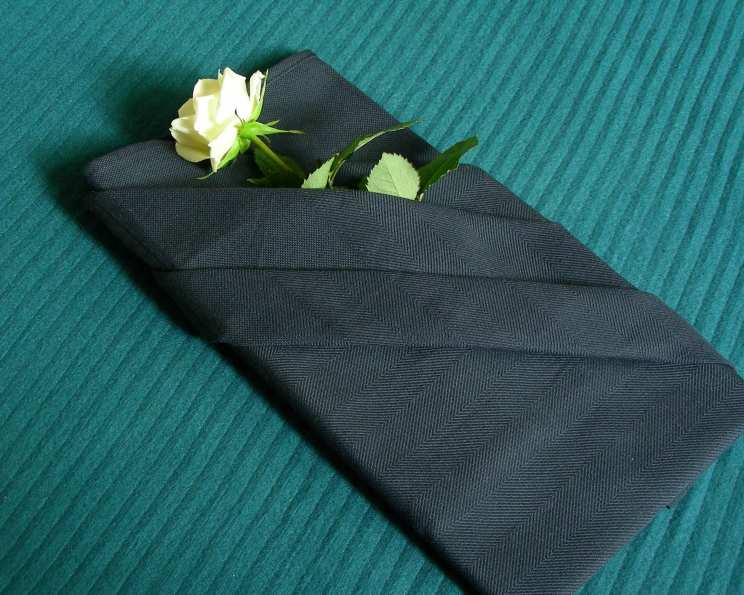
Mastering the French Pleat: An Elegant Serviette Fold with a Secret Pocket
The crisp rustle of starched linen and the satisfying weight of silverware – some of my earliest memories are of Sunday dinners at my Aunt Marie’s. She was the queen of understated elegance, and no detail was too small to perfect. While the roast chicken and perfectly turned vegetables were always divine, it was her meticulously folded napkins that truly captivated me. Each week brought a new design, a little piece of art waiting to be unfurled. The French Pleat, with its hidden pocket, was a particular favorite, often holding a tiny chocolate or a personalized name card – a delightful surprise that made every guest feel special.
Recipe Overview
- Prep Time: 2 minutes
- Ingredients: 2
- Serves: 2
Ingredients
- 1 large paper serviette
- 1 large cloth serviette
Equipment Needed
- Iron (optional, for cloth serviettes)
- Ironing board (optional, for cloth serviettes)
Instructions
- Begin by laying your serviette (either paper or cloth) flat on a clean surface. If using a cloth serviette, ensure it is freshly ironed for a crisp, professional look.
- Fold the serviette in half horizontally, bringing the top edge to meet the bottom edge. Crease the fold firmly.
- Take the folded serviette and fold it in half again vertically, bringing the left edge to meet the right edge. You should now have a small square, approximately a quarter of the size of the original serviette.
- Identify the corner of the square that has four open or loose edges. This is crucial for the next steps. Rotate the square so that it appears as a diamond shape, with the loose edges pointing upwards. For clarity, we’ll refer to this as the North corner.
- Take the topmost point (the one from the North corner) and create a relatively tight roll towards what would now be the South position. Continue rolling until you reach approximately the halfway point. You’ll notice you can’t roll any further and will have a diagonal, neat cuff running east to west across the diamond shape.
- Now, take the next loose corner at the North position and gently bring it towards the South, carefully tucking it underneath the cuff you created in the previous step. Crucially, leave a pleat showing above, matching the width of the cuff below. This creates the second diagonal pleat. You should now see two neat, diagonal cuffs or pleats stretching east to west across the diamond shape.
- Next, take the third loose point at the North position and bring it to the South position. While still holding the point, begin rolling it under itself, heading towards the North position. Again, stop rolling when you reach approximately the halfway point, as you won’t be able to roll any further. This forms the third horizontal, neat cuff running east to west, positioned next to the second one.
- Rotate the diamond shape so that the North point is now the top right corner. The shape in front of you should now resemble a square with three diagonal pleats running from the top left corner to the bottom right corner.
- Gently turn the serviette over to the backside. Bring the top right and bottom right corners into the center of the serviette.
- Repeat the previous step with the top left and bottom left corners, bringing them into the center as well.
- Turn the serviette back to the front side. You should now have a very neat rectangle with three diagonal pleats running across it. The space behind the pleats creates the pocket.
Expert Tips & Tricks
- Starch is Your Friend: For cloth napkins, a light starch spray before ironing will help create sharper pleats and a more professional finish.
- Practice Makes Perfect: Don’t be discouraged if your first attempt isn’t flawless. Like any skill, practice will improve your technique and speed.
- Vary the Size of the Pocket: Adjusting how tightly you roll the initial cuff will influence the depth of the pocket. Experiment to find what works best for your needs.
- Steam Press for Final Touches: Once folded, a quick steam press can set the pleats and create a more polished look, especially for linen serviettes.
Serving & Storage Suggestions
The French Pleat is best displayed on a place setting, either on the plate or to the left of the forks. The pocket can hold a variety of items:
- Name Cards: Perfect for formal dinners or special occasions.
- Small Treats: A chocolate square, a sugared almond, or a small bon bon adds a touch of whimsy.
- Fresh Flowers: A single bloom, like a pansy or a sprig of lavender, brings a touch of nature to the table.
Since this fold can be made in advance, you can iron and stack the finished serviettes for easy access when needed. Store them in a cool, dry place to prevent wrinkling or mildew. If using paper serviettes, simply dispose of them after use. Cloth serviettes can be laundered and reused.
Nutritional Information
Since this involves folding paper or cloth, there is no nutritional information.
| Nutrient | Amount per Serving | % Daily Value |
|---|---|---|
| Calories | 0 kcal | 0% |
| Total Fat | 0g | 0% |
| Saturated Fat | 0g | 0% |
| Cholesterol | 0mg | 0% |
| Sodium | 0mg | 0% |
| Carbohydrate | 0g | 0% |
| Fiber | 0g | 0% |
| Sugars | 0g | 0% |
| Protein | 0g | 0% |
Variations & Substitutions
- Color Coordination: Choose serviettes that complement your table setting or the theme of your event.
- Pattern Play: Experiment with patterned serviettes to add visual interest. Just be mindful that the pattern might slightly obscure the pleats.
- Fabric Choice: Linen offers a classic, elegant look, while cotton is more casual and practical. Paper serviettes are a convenient option for large gatherings or outdoor events.
- Pocket Enhancements: Instead of treats or cards, consider adding a small piece of greenery like rosemary or thyme for a fragrant touch.
FAQs (Frequently Asked Questions)
Q: Can I use smaller napkins for this fold?
A: While possible, the French Pleat works best with larger napkins (around 20×20 inches). Smaller napkins may result in a less defined pocket and a less impressive overall look.
Q: Is it easier to use paper or cloth napkins for this fold?
A: Cloth napkins, especially linen, tend to hold the pleats better and create a more structured result. However, paper napkins are a convenient alternative for casual settings or when dealing with a large number of guests.
Q: How can I prevent the pleats from unfolding before the guests arrive?
A: A light spray of starch (for cloth napkins) or a gentle press with a cool iron can help set the pleats. Store the folded napkins carefully to avoid disturbing the folds.
Q: What kind of items can I put in the pocket?
A: The pocket is ideal for small, lightweight items like name cards, chocolates, or small flowers. Avoid anything bulky or heavy that might distort the shape of the fold.
Q: Can I iron the napkins after they are folded?
A: Yes, you can gently iron the folded napkin on a low setting to sharpen the pleats and create a more polished look. Be careful not to flatten the pleats completely.
Final Thoughts
The French Pleat is more than just a napkin fold; it’s a statement of elegance and attention to detail. It transforms a simple table setting into something special, creating a sense of occasion and delight for your guests. Don’t be afraid to experiment with different fabrics, colors, and pocket fillings to create a unique presentation that reflects your personal style. So, go ahead, give it a try! I hope this helps you to create a beautiful table setting. Please share photos of your folded serviettes – I’d love to see your creativity! And if you’re feeling adventurous, pair your elegant table with a classic French dish like coq au vin or a delicate crème brûlée for a truly unforgettable dining experience.