
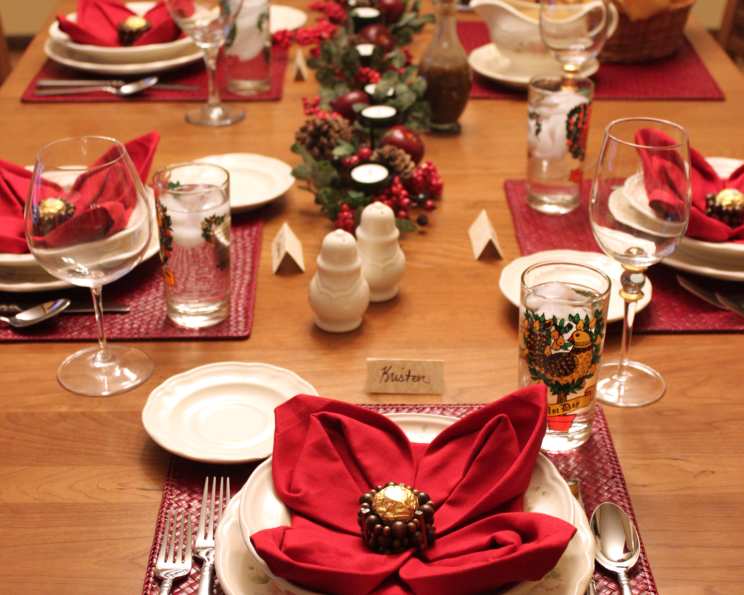
Marie’s Lily Pad Flower Serviette Fold: An Elegant Touch for Any Table
My earliest memories of beautifully set tables involve more than just the gleaming silverware and fine china. It was the artistry of the folded napkins that truly captured my imagination. My grandmother, a woman of impeccable taste, had a repertoire of folds, each reserved for a specific occasion. I remember being particularly captivated by a floral fold she called “Marie’s Lily Pad Flower.” It was more than just a napkin; it was a conversation starter, a small work of art that elevated the entire dining experience. Years later, I still find myself drawn to the simple elegance of this fold, a testament to the enduring power of thoughtful details.
Recipe Overview
- Prep Time: 5 minutes
- Servings: 1
- Dietary Type: Not Applicable
Ingredients
- 1 large paper serviette (napkin)
- OR 1 large cloth serviette (napkin)
Equipment Needed
- Iron (optional, for a neater presentation)
Instructions
- Begin by laying your serviette flat on a clean, even surface. Ensure it is oriented in a square shape directly in front of you. If using a cloth napkin, an ironed napkin will result in a sharper, more defined fold.
- Take the top right corner of the square and fold it precisely into the center point of the square. Crease the fold firmly.
- Repeat this process with the remaining three corners: the top left corner, the bottom left corner, and finally the bottom right corner, each being folded into the center point of the original square. The serviette should now resemble a diamond shape.
- Next, take the East point (the point on the right side) of the diamond shape and fold it into the center point. Again, create a sharp crease.
- Repeat this step with the remaining three points of the diamond: the North point (top), the West point (left), and the South point (bottom), each being folded into the center point. At this stage, the serviette will once again be a square. You will notice gaps in the form of an ‘X’ on the top.
- Carefully and deliberately turn the entire serviette over, so the unfolded side is now facing up.
- Repeat the previous folding step on this side: fold each of the four corners into the center point of the square. Crease each fold firmly.
- Carefully turn the serviette over again, back to the side you were working on before flipping it in step 6. You should now see four loose points on the underside. This step is primarily for visual clarification to make the next step easier.
- Turn back over to the previous side you were working on, lay the serviette down on the surface, and gently but firmly press down on the center point where the four corners meet.
- While maintaining pressure on the center, carefully reach underneath with your other hand and grab one of the loose points (from the underside that you saw in step 8). Gently pull this point outwards and upwards, bringing it to the outside edge of the corner that it belongs to. This action creates the outer petal of that quarter of the flower.
- Repeat this process with the other three corners, carefully extracting each of the loose points from underneath and positioning them to form the remaining three petals of the Lily Pad Flower.
- If you intend to place an item, such as a bread roll or a small decorative object, in the center of the flower, it will naturally secure the form. However, if you are not placing anything in the center, you might need to carefully secure the four central points where the corners meet with a small pin to maintain the flower’s shape.
Expert Tips & Tricks
- Ironing is Key: For a truly polished look, especially with cloth napkins, iron the napkin before you begin folding. The crisper the fabric, the more defined the flower will be.
- Practice Makes Perfect: Don’t be discouraged if your first attempt isn’t perfect. Like any craft, napkin folding takes practice. Keep at it, and you’ll soon master the technique.
- Fabric Choice Matters: Stiffer fabrics like linen or cotton hold their shape better than softer materials like silk. Consider the occasion and the overall aesthetic when choosing your napkin.
- Use a Bone Folder: For extra-crisp creases, use a bone folder (available at craft stores) to reinforce each fold. This is especially helpful for thicker fabrics.
- Vary the Size: This fold works best with larger napkins. If you’re using smaller napkins, the final flower will be correspondingly smaller.
- Experiment with Color: Don’t be afraid to use napkins in bold colors or patterns to add a pop of visual interest to your table setting.
Serving & Storage Suggestions
The finished Lily Pad Flower serviette fold is designed for immediate use as part of a table setting. It does not require any specific storage. If you pre-fold napkins for a future event, store them flat in a cool, dry place to prevent them from becoming creased or dusty.
Serving suggestions include:
- Placing a bread roll or small appetizer in the center of the flower.
- Using the flower as a base for a water glass or wine glass.
- Adding a small decorative element, such as a flower blossom or a personalized name card, to the center.
This fold is not intended for consumption or long-term storage. Simply unfold the napkin after use for laundering (if cloth) or disposal (if paper).
Nutritional Information
As this recipe pertains to napkin folding and not food preparation, there is no nutritional information to provide.
Variations & Substitutions
While the core folding technique remains the same, you can adapt the Lily Pad Flower in several ways:
- Color Blocking: Use two-toned napkins with contrasting colors to create a more visually dynamic flower.
- Pattern Play: Opt for napkins with subtle patterns, such as stripes or damask, to add texture and depth to the fold.
- Ribbon Accent: Secure a thin ribbon around the base of the flower to add a touch of elegance and reinforce the shape.
- Seasonal Embellishments: Incorporate seasonal elements, such as small sprigs of greenery for winter or miniature seashells for summer, into the center of the flower.
- Vary the Number of Folds: While the instructions specify a specific number of folds, experiment with adding or subtracting folds to create different petal shapes and sizes.
FAQs (Frequently Asked Questions):
Q: What type of napkin works best for this fold?
A: Larger cloth napkins, preferably linen or cotton, are ideal as they hold their shape well. Large paper napkins can also be used effectively.
Q: Do I need to iron the napkin before folding?
A: While not strictly necessary, ironing the napkin beforehand will result in a neater, more professional-looking fold.
Q: Is this fold difficult to master?
A: It may take a few tries to get the hang of it, but with patience and practice, anyone can learn to create the Lily Pad Flower.
Q: Can I use smaller napkins for this fold?
A: Yes, but the resulting flower will be smaller and may not be as visually impactful.
Q: How can I prevent the flower from unfolding?
A: If you are not placing anything in the center to secure the shape, you can use a small pin to hold the central points together.
Final Thoughts
The Lily Pad Flower serviette fold is more than just a practical way to present a napkin; it’s an expression of care and attention to detail. It’s a simple yet elegant way to elevate any dining experience, from casual family meals to formal dinner parties. I encourage you to try this fold and add a touch of artistry to your table setting. Don’t be afraid to experiment with different colors, fabrics, and embellishments to create your own unique variations. And most importantly, have fun! Perhaps pair your beautifully set table with a simple, refreshing salad for a complete and inviting dining experience.