
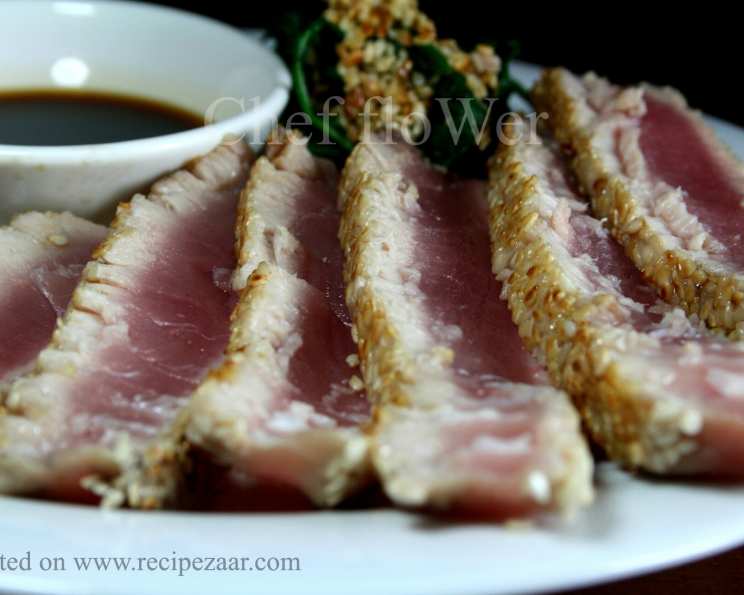
Sesame Crusted Tuna With Japanese Dipping Sauce
The clatter of the kitchen, the sizzle of sesame seeds toasting in the pan, the sweet and savory aroma of mirin and sake simmering – it all transports me back to a tiny izakaya I stumbled upon in Kyoto. The chef, a man of few words but masterful hands, placed a plate of seared tuna before me, the sesame crust shimmering like jewels. One bite, and I was hooked. It was a revelation: simple ingredients, expertly prepared, resulting in an explosion of flavor. I’ve been chasing that experience ever since, tweaking and perfecting my own version of this Japanese classic.
Recipe Overview
- Prep Time: 15 minutes
- Cook Time: 8 minutes
- Total Time: 23 minutes
- Servings: 4
- Dietary Type: Pescatarian
Ingredients
- Olive Oil
- 4 Tuna Steaks
- Sesame Seeds (enough to cover one side of tuna steaks)
- 18g Miso Paste
- 3 tablespoons Mirin
- 3 tablespoons Sake
- 2 tablespoons Sugar
- 2 tablespoons Rice Vinegar
- 2 teaspoons Japanese Soy Sauce
- 1/4 teaspoon Wasabi
Equipment Needed
- Frying Pan
- Saucepan
- Small Serving Bowls
Instructions
- Begin by preparing the Japanese dipping sauce. In a saucepan, combine the miso paste, mirin, sake, sugar, rice vinegar, Japanese soy sauce, and wasabi.
- Heat the mixture over low heat, stirring continuously, until the sugar has completely dissolved and the ingredients are well blended.
- Once blended, reduce the heat to the lowest setting to keep the dipping sauce warm while you prepare the tuna.
- Now, focus on the tuna steaks. Generously cover one side of each tuna steak completely with sesame seeds. Gently press the seeds into the tuna to ensure they adhere well.
- Place the sesame seed-crusted tuna steaks back in the refrigerator while you heat the pan. This helps the crust stay intact.
- Heat a generous amount of olive oil in a frying pan over medium-high heat. Make sure the pan is hot before adding the tuna.
- Carefully place the tuna steaks in the hot pan, sesame seed side down.
- Cook the tuna for approximately 4 minutes on the sesame seed side. This will create a beautiful, crispy crust.
- After 4 minutes, carefully flip the tuna steaks and cook on the other side for another 4 minutes.
- The ideal cooking time depends on the thickness of the tuna steaks and your preferred level of doneness. For a medium-rare center, 4 minutes per side is generally sufficient. If you prefer your tuna cooked more thoroughly, increase the cooking time accordingly. Keep in mind that overcooked tuna can become dry and tough.
- To check for doneness, gently press down on the center of the tuna steak with your finger. A medium-rare steak will feel slightly firm on the outside but still have some give in the center.
- Once the tuna steaks are cooked to your liking, remove them from the pan and place them on a plate.
- Serve the sesame-crusted tuna steaks immediately. Provide small serving bowls of the warm Japanese dipping sauce for each person.
Expert Tips & Tricks
- Toast the Sesame Seeds: For an even nuttier flavor, lightly toast the sesame seeds in a dry pan before coating the tuna. Watch them carefully, as they burn easily.
- Use High-Quality Tuna: The quality of the tuna makes a big difference. Look for sushi-grade tuna for the best flavor and texture.
- Don’t Overcrowd the Pan: Cook the tuna steaks in batches if necessary to avoid overcrowding the pan. Overcrowding lowers the pan temperature and prevents the tuna from searing properly.
- Adjust the Wasabi: The amount of wasabi in the dipping sauce can be adjusted to your preference. Start with a small amount and add more to taste.
- Dry the Tuna: Before applying the sesame seeds, pat the tuna steaks dry with paper towels. This helps the seeds adhere better.
- Mirin Substitutes: If you can’t find mirin, a dry sherry with a teaspoon of sugar added can work as a substitute. However, avoid imitation mirins which often contain added sweeteners. If using an imitation mirin, reduce the quantity of sugar in the recipe.
- Miso Paste Variations: There are many types of miso paste, ranging in color and flavor. White miso is milder and sweeter, while red miso is bolder and saltier. Feel free to experiment with different types to find your favorite.
Serving & Storage Suggestions
Serve the sesame-crusted tuna immediately while it’s still warm and the sesame crust is crispy. This dish pairs beautifully with a simple side salad of mixed greens and a light vinaigrette. It’s also delicious served over a bed of rice or alongside steamed vegetables like asparagus or broccoli. A sprinkle of toasted sesame seeds and a drizzle of the Japanese dipping sauce will add a final touch of elegance.
Leftovers can be stored in an airtight container in the refrigerator for up to 24 hours. However, the sesame crust will soften over time. It is best to consume it immediately to savor the crispiness. Reheating is not recommended as it can dry out the tuna. If you must reheat, do so gently in a low-temperature oven or a skillet, being careful not to overcook it. Tuna is best enjoyed fresh.
Nutritional Information
| Nutrient | Amount per Serving | % Daily Value |
|---|---|---|
| Calories | 350 kcal | 18% |
| Total Fat | 20g | 31% |
| Saturated Fat | 3g | 15% |
| Cholesterol | 80mg | 27% |
| Sodium | 500mg | 22% |
| Total Carbohydrate | 15g | 5% |
| Dietary Fiber | 2g | 7% |
| Sugars | 8g | |
| Protein | 30g | 60% |
Note: Nutritional information is an estimate and may vary based on specific ingredients and cooking methods.
Variations & Substitutions
- Gluten-Free: To make this recipe gluten-free, ensure that the Japanese soy sauce you use is tamari, a gluten-free alternative.
- Spicy Tuna: Add a pinch of red pepper flakes to the sesame seed mixture for a spicy kick.
- Citrus Infusion: Add a tablespoon of yuzu juice to the dipping sauce for a bright, citrusy flavor.
- Different Seeds: Experiment with different types of seeds, such as black sesame seeds, poppy seeds, or a mixture of seeds, for a unique flavor and texture.
- Ginger Infusion: Add a small piece of grated ginger to the dipping sauce while it simmers for a warm, aromatic flavor.
- Soy-Free: Coconut aminos can be used as a substitute for soy sauce in the dipping sauce.
FAQs (Frequently Asked Questions)
Q: Can I use frozen tuna steaks?
A: Yes, you can use frozen tuna steaks, but make sure to thaw them completely before cooking. Pat them dry with paper towels to remove any excess moisture.
Q: How do I know when the tuna is cooked to medium-rare?
A: A medium-rare tuna steak will be slightly firm on the outside but still have some give in the center when pressed gently with your finger. The internal temperature should be around 125-130°F (52-54°C).
Q: Can I make the dipping sauce ahead of time?
A: Yes, you can make the dipping sauce ahead of time and store it in the refrigerator for up to 3 days. Reheat gently before serving.
Q: Can I grill the tuna instead of pan-frying it?
A: Absolutely! Preheat your grill to medium-high heat and grill the tuna steaks for about 3-4 minutes per side, or until cooked to your desired level of doneness.
Q: What if I don’t have sake?
A: If you don’t have sake, you can substitute it with dry white wine or rice wine vinegar.
Final Thoughts
This Sesame Crusted Tuna with Japanese Dipping Sauce is a dish that’s both elegant and approachable, perfect for a weeknight dinner or a special occasion. Don’t be intimidated by the seemingly exotic ingredients – most of them are readily available at your local grocery store or Asian market. This recipe is a testament to the power of simple, high-quality ingredients and mindful preparation. I encourage you to give it a try, experiment with the variations, and make it your own. And please, share your creations and feedback – I’d love to hear about your culinary adventures! Pair this dish with a crisp, dry sake or a refreshing Sauvignon Blanc for a truly unforgettable meal.