
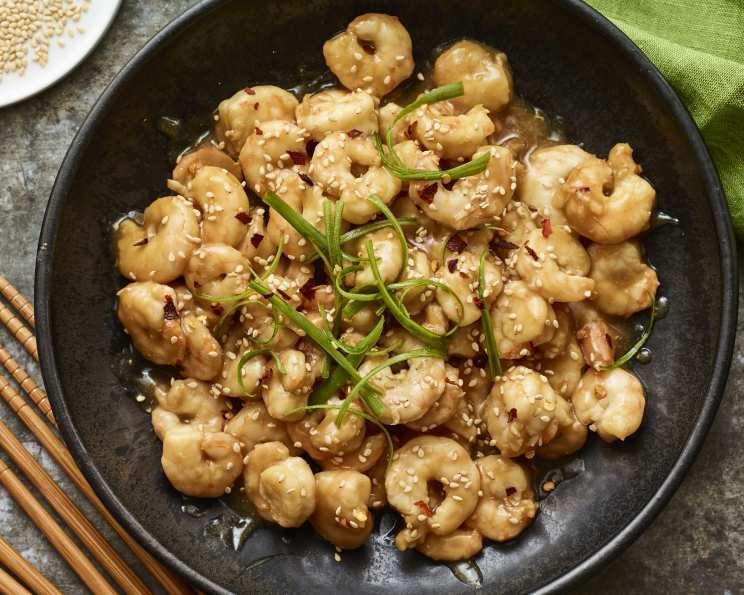
Sesame Shrimp: A Symphony of Sweet and Savory
The first time I tasted Sesame Shrimp, it was a rainy Tuesday night. I had just moved into my first apartment – a tiny, cramped space above a bustling dry cleaner. Overwhelmed and exhausted, I ordered takeout from the local Chinese restaurant. That first bite – the succulent shrimp, the tangy-sweet sauce, the satisfying crunch of sesame seeds – it was pure comfort. It transformed that drab evening into a mini-celebration, marking the start of a new chapter. Now, years later, I still make my own version of Sesame Shrimp, and every time I do, I’m transported back to that tiny apartment, filled with a sense of hope and possibility.
Recipe Overview
- Prep Time: 10 minutes
- Cook Time: 7-8 minutes
- Total Time: 17-18 minutes
- Servings: 4
- Dietary Type: Pescatarian
Ingredients
- ½ cup water
- ½ cup soy sauce
- ¼ cup rice vinegar
- 3 tablespoons light brown sugar
- 1 tablespoon cornstarch
- 1 teaspoon garlic powder
- 1 teaspoon sesame oil
- ¼ teaspoon red pepper flakes
- 1 lb medium shrimp, peeled, deveined and tails off
- 2 tablespoons unsalted butter
- Salt
- Pepper
Equipment Needed
- Large nonstick skillet
- Whisk
- Mixing bowl
Instructions
- Begin by preparing the sauce. In a mixing bowl, combine the water, soy sauce, rice vinegar, brown sugar, cornstarch, garlic powder, sesame oil, and red pepper flakes. Whisk thoroughly to ensure the cornstarch is fully dissolved, preventing lumps in your sauce. Set this mixture aside for later.
- Heat a large nonstick skillet over medium-high heat. The nonstick surface is crucial for preventing the shrimp from sticking and ensuring even cooking.
- Add the unsalted butter to the hot skillet and let it melt completely. The butter adds richness and flavor to the shrimp.
- Add the shrimp to the skillet. Season generously with salt and pepper. These simple seasonings enhance the natural sweetness of the shrimp.
- Cook the shrimp until they just turn pink, which should take approximately 3-4 minutes. Be careful not to overcook them, as they will become rubbery. The goal is to achieve a perfectly cooked, succulent texture. Once cooked, transfer the shrimp to a plate or bowl and set aside.
- Increase the heat to high. This allows the sauce to thicken quickly.
- Give the reserved sauce a good whisk once more to ensure the ingredients are well combined, as the cornstarch may have settled.
- Pour the sauce into the skillet. Let it simmer until thickened, which should take about 3 – 4 minutes. The sauce will transform from a thin liquid into a glossy, luscious glaze. Stir occasionally to prevent sticking and ensure even thickening.
- Turn the heat down to medium. This prevents the sauce from burning once the shrimp are added back in.
- Add the cooked shrimp to the skillet with the thickened sauce and toss gently to coat each piece evenly. The sauce should cling beautifully to the shrimp, creating a flavorful and visually appealing dish.
- Let the shrimp cook in the sauce for just 30 seconds, allowing the flavors to meld together.
- Garnish with sesame seeds. Serve immediately and enjoy!
Expert Tips & Tricks
- For a spicier kick, add a pinch more red pepper flakes or a dash of your favorite hot sauce to the sauce.
- If you don’t have rice vinegar, you can substitute it with apple cider vinegar or white wine vinegar, though the flavor profile will be slightly different.
- To prevent overcooking the shrimp, ensure your skillet is adequately heated before adding them. Overcrowding the pan can lower the temperature and lead to uneven cooking. Cook in batches if necessary.
- For an extra layer of flavor, try marinating the shrimp in a mixture of soy sauce, ginger, and garlic for about 30 minutes before cooking.
- If the sauce becomes too thick, add a tablespoon or two of water to thin it out. Conversely, if it’s too thin, whisk together a teaspoon of cornstarch with a tablespoon of cold water and add it to the sauce while it simmers.
- For the best flavor, use fresh, high-quality shrimp. Frozen shrimp can also be used, but make sure they are fully thawed and patted dry before cooking.
- Toasting the sesame seeds before garnishing brings out their nutty flavor. Simply toast them in a dry skillet over medium heat for a few minutes until golden brown and fragrant. Watch them closely, as they can burn quickly.
Serving & Storage Suggestions
Serve Sesame Shrimp hot, immediately after cooking. It pairs wonderfully with steamed rice, noodles, or stir-fried vegetables. For a complete meal, consider adding a side of broccoli or snap peas.
Leftover Sesame Shrimp can be stored in an airtight container in the refrigerator for up to 2 days. To reheat, gently warm it in a skillet over medium heat, stirring occasionally, until heated through. Avoid overcooking, as this can make the shrimp tough. You can also reheat it in the microwave, but the texture may be slightly different.
While it’s not recommended to freeze Sesame Shrimp, if you must, ensure it’s cooled completely before transferring it to a freezer-safe container. Thaw overnight in the refrigerator before reheating. Be aware that the sauce may separate slightly upon thawing, and the texture of the shrimp may be affected.
Nutritional Information
| Nutrient | Amount per Serving | % Daily Value |
|---|---|---|
| Calories | 213 kcal | – |
| Calories from Fat | 72 g | 34% |
| Total Fat | 8.1 g | 12% |
| Saturated Fat | 4 g | 19% |
| Cholesterol | 158.5 mg | 52% |
| Sodium | 2659.7 mg | 110% |
| Total Carbohydrate | 15.7 g | 5% |
| Dietary Fiber | 0.4 g | 1% |
| Sugars | 10.7 g | 42% |
| Protein | 19.5 g | 38% |
Note: Nutritional information is an estimate and may vary based on specific ingredients and portion sizes.
Variations & Substitutions
- Gluten-Free Sesame Shrimp: Substitute the soy sauce with tamari, a gluten-free alternative. Ensure all other ingredients are also gluten-free.
- Honey Sesame Shrimp: Replace the brown sugar with honey for a slightly different flavor profile. Start with 2 tablespoons of honey and adjust to taste.
- Vegetarian Sesame “Shrimp”: Use plant-based shrimp alternatives, such as tofu or mushrooms. Adjust cooking times accordingly.
- Sesame Garlic Shrimp: Add minced garlic to the skillet along with the butter for a more intense garlic flavor.
- Spicy Sesame Shrimp with Sriracha: Add a teaspoon or more of Sriracha to the sauce for an extra kick.
FAQs (Frequently Asked Questions)
Q: Can I use frozen shrimp for this recipe?
A: Yes, you can use frozen shrimp. Just make sure they are fully thawed and patted dry before cooking to ensure they cook evenly and the sauce adheres properly.
Q: How can I prevent the shrimp from becoming rubbery?
A: Avoid overcooking the shrimp. Cook them just until they turn pink, about 3-4 minutes. Removing them from the skillet as soon as they are cooked also helps.
Q: Can I make this recipe ahead of time?
A: While it’s best served fresh, you can prepare the sauce ahead of time and store it in the refrigerator for up to 2 days. Cook the shrimp just before serving to maintain its texture.
Q: What’s the best way to thicken the sauce?
A: Cornstarch is used to thicken the sauce. Ensure it’s fully dissolved in cold water before adding it to the skillet to prevent lumps.
Q: Can I add vegetables to this dish?
A: Absolutely! Broccoli, bell peppers, snap peas, or any other stir-fry vegetables would be a great addition. Add them to the skillet after cooking the shrimp and before adding the sauce.
Final Thoughts
Sesame Shrimp is more than just a recipe; it’s a flavor adventure waiting to happen. This recipe allows you to create a restaurant-quality dish in the comfort of your own kitchen, offering a healthy and delicious alternative to takeout. So, gather your ingredients, channel your inner chef, and prepare to be amazed. Don’t be afraid to experiment with variations and personalize it to your liking. Enjoy every bite, and remember that the best meals are made with love and shared with good company!