
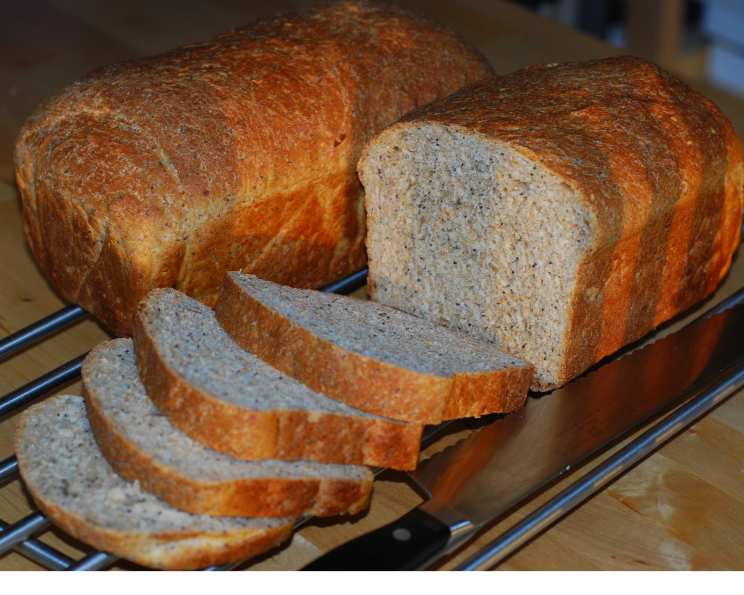
Sesame-Sunflower-Poppy-Flax Seed Buttermilk Bread: A Symphony of Seeds
The aroma of baking bread is a powerful time machine. For me, it always whisks me back to my grandmother’s kitchen, a place filled with warmth, love, and the ever-present scent of yeast and flour. While she was famous for her sourdough, I remember a specific loaf, studded with seeds, that she’d often bake for Sunday brunch. This Sesame-Sunflower-Poppy-Flax Seed Buttermilk Bread is my attempt to recapture that memory, a tribute to her artistry and the simple joy of homemade goodness. It’s more than just bread; it’s a taste of home.
Recipe Overview
- Prep Time: 30 minutes
- Cook Time: 30 minutes
- Total Time: 1 hour 40 minutes (plus rising time)
- Servings: Approximately 20 slices
- Yield: 2 9×5 inch loaves
- Dietary Type: Not Vegetarian (Contains Dairy)
Ingredients
- 1 (1/4 ounce) package active dry yeast
- 1 teaspoon white sugar
- 3/4 cup water (110 degrees F/45 degrees C)
- 1 1/2 cups buttermilk
- 2 tablespoons margarine, melted (or butter, if preferred)
- 3 tablespoons honey
- 2 teaspoons salt
- 2 tablespoons sesame seeds
- 2 tablespoons flax seeds
- 2 tablespoons poppy seeds
- 2 tablespoons toasted wheat germ
- 2 tablespoons sunflower seeds
- 2 cups whole wheat flour
- 4 cups bread flour
Equipment Needed
- Large mixing bowl
- Small mixing bowl
- Measuring cups and spoons
- Wooden spoon
- Lightly floured surface
- Clean, damp cloth
- Two 9×5 inch loaf pans
- Oven
Instructions
-
Begin by activating the yeast. In a small bowl, dissolve the active dry yeast and white sugar in the warm water. It is vital that the water is at the correct temperature (110 degrees F/45 degrees C); too hot, and you will kill the yeast; too cold, and it won’t activate properly. Let stand until creamy and frothy, about 10 minutes. This process proves the yeast is alive and ready to leaven the bread.
-
In a large bowl, combine the buttermilk, melted margarine (or butter), honey, and the yeast mixture. The buttermilk adds a subtle tanginess that beautifully complements the nutty flavor of the seeds.
-
Add the salt, sesame seeds, flax seeds, poppy seeds, toasted wheat germ, sunflower seeds, and whole wheat flour. Stir to combine all ingredients thoroughly.
-
Gradually add the bread flour, 1/2 cup at a time, mixing well with a wooden spoon after each addition. This incremental approach ensures the flour is evenly distributed and prevents lumps from forming. The amount of flour required may vary slightly depending on humidity and the specific flour used, so add only enough until the dough pulls together.
-
Once the dough has pulled together, turn it out onto a lightly floured surface. Knead the dough until it becomes smooth and elastic, approximately 6 minutes. Kneading develops the gluten, which is essential for creating a bread with good structure and chew.
-
Lightly oil a large mixing bowl. Place the dough in the bowl and turn to coat it with the oil. This prevents the dough from drying out as it rises.
-
Cover the bowl with a clean, damp cloth and place it in a warm place to rise. Let rise until doubled in volume, about 1 hour. The rising time may vary depending on the temperature of your environment; a warmer room will result in faster rising.
-
Preheat the oven to 375 degrees F (190 degrees C). While the oven is preheating, grease two 9×5 inch loaf pans thoroughly. This prevents the bread from sticking and ensures easy removal.
-
Once the dough has doubled, deflate it gently and turn it out onto a lightly floured surface. Divide the dough into two equal pieces.
-
Form each piece of dough into a loaf shape. You can either gently shape it into an oval or roll it into a rectangle and then roll it up tightly. Place the loaves into the prepared pans.
-
Cover the pans with a clean, damp cloth and let rise again until doubled in volume, about 40 minutes. This second rise contributes to the bread’s light and airy texture.
-
Bake in the preheated oven at 375 degrees F (190 degrees C) for about 30 minutes, or until the tops are golden brown and the bottom of a loaf sounds hollow when tapped. A good way to check for doneness is to insert a toothpick into the center of the loaf; if it comes out clean, the bread is ready.
-
Remove the loaves from the oven and let cool in the pans for a few minutes before transferring them to a wire rack to cool completely. This prevents the bread from becoming soggy.
Expert Tips & Tricks
- Toast the seeds: Toasting the sesame, sunflower, poppy, and flax seeds before adding them to the dough will enhance their nutty flavor and add a delightful depth to the bread. Simply spread the seeds on a baking sheet and toast in a 350°F (175°C) oven for 5-7 minutes, or until fragrant.
- Buttermilk substitute: If you don’t have buttermilk on hand, you can make a quick substitute by adding 1 1/2 tablespoons of white vinegar or lemon juice to a measuring cup and then filling it with milk to reach 1 1/2 cups. Let it stand for 5 minutes before using.
- Kneading technique: Proper kneading is crucial for developing the gluten in the dough. Use the heel of your hand to push the dough away from you, then fold it back over itself. Rotate the dough a quarter turn and repeat.
- Oven temperature: Ovens can vary, so it’s essential to monitor the bread closely during baking. If the tops are browning too quickly, tent them loosely with foil.
Serving & Storage Suggestions
This Sesame-Sunflower-Poppy-Flax Seed Buttermilk Bread is delicious served warm with a smear of butter or cream cheese. It also makes excellent toast or sandwiches. Store leftover bread in an airtight container at room temperature for up to 3 days, in the refrigerator for up to a week, or in the freezer for up to 2 months. To reheat, wrap the bread in foil and warm in a 350°F (175°C) oven for about 10-15 minutes, or until heated through. Freezing slices individually and then toasting them is a great way to enjoy this bread on demand.
Nutritional Information
(Estimates will vary based on specific ingredients used.)
| Nutrient | Amount per Serving (1 slice) | % Daily Value |
|---|---|---|
| Calories | 185 kcal | 9% |
| Total Fat | 6g | 8% |
| Saturated Fat | 1g | 5% |
| Cholesterol | 0mg | 0% |
| Sodium | 200mg | 9% |
| Total Carbohydrate | 28g | 10% |
| Dietary Fiber | 3g | 11% |
| Sugars | 3g | 6% |
| Protein | 5g | 10% |
Variations & Substitutions
- Gluten-free: For a gluten-free version, substitute the bread flour and whole wheat flour with a gluten-free all-purpose blend. You may need to adjust the amount of liquid slightly to achieve the right dough consistency.
- Vegan: Replace the buttermilk with a plant-based alternative like soy or almond milk, and use a vegan margarine. Make sure the honey substitute is also vegan (e.g., maple syrup or agave nectar).
- Spice it up: Add a pinch of red pepper flakes or a teaspoon of dried herbs like rosemary or thyme to the dough for an extra layer of flavor.
- Nutty addition: Incorporate chopped walnuts or pecans for added texture and flavor.
FAQs (Frequently Asked Questions):
Q: Can I use instant yeast instead of active dry yeast?
A: Yes, you can. If using instant yeast, you can skip the proofing step and add it directly to the dry ingredients.
Q: My dough isn’t rising. What could be the problem?
A: Several factors can prevent dough from rising, including using expired yeast, water that is too hot or too cold, or a room that is too cold. Make sure your yeast is fresh and the water is at the correct temperature, and place the dough in a warm spot to rise.
Q: Can I make this bread in a bread machine?
A: Yes, you can. Follow the manufacturer’s instructions for your bread machine, adding the ingredients in the order recommended.
Q: How do I prevent the seeds from burning during baking?
A: If you find that the seeds are browning too quickly, you can tent the loaves with foil during the last 10-15 minutes of baking.
Q: Can I freeze this bread after baking?
A: Absolutely. Wrap the cooled loaves tightly in plastic wrap and then in foil, or place them in a freezer-safe bag. Thaw overnight at room temperature before slicing and serving.
Final Thoughts
Baking this Sesame-Sunflower-Poppy-Flax Seed Buttermilk Bread is an act of love, a way to connect with simple pleasures and create something truly special. Don’t be intimidated by the number of steps; each one is straightforward, and the reward is a loaf of bread that is both delicious and deeply satisfying. I encourage you to try this recipe, experiment with different variations, and share your creations with friends and family. And if you do, please let me know how it turns out – I always love hearing your feedback! Perhaps a dollop of homemade apple butter alongside a warm slice? The possibilities are endless.