
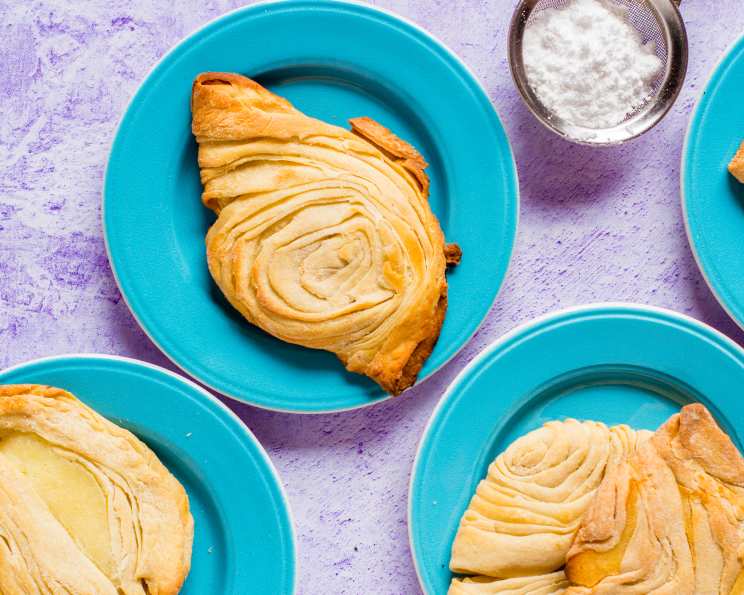
Sfogliatelle: The Seashell Pastry of Dreams
My grandmother, Nonna Elena, made the most incredible sfogliatelle. I remember standing on a stool in her sun-drenched kitchen, mesmerized as she transformed a simple dough into delicate, shell-shaped pastries. The scent of warm ricotta, candied citrus, and buttery pastry filled the air, promising a sweet escape. Each bite was a symphony of textures: a shattering crispness yielding to a soft, citrus-kissed filling. It was pure magic, a taste of Naples right in her Brooklyn kitchen.
Recipe Overview
- Prep Time: 1 hour
- Cook Time: 35-45 minutes
- Total Time: 1 hour 35 minutes
- Servings: 12
- Yield: 12 sfogliatelle
- Dietary Type: Not specified
Ingredients
For the Pastry:
- 3 cups all-purpose flour
- ½ teaspoon salt
- ¾ cup shortening
- ½ cup melted shortening
For the Filling:
- 1 ½ lbs ricotta cheese
- 8 tablespoons confectioners’ sugar
- 3 tablespoons minced candied orange and citron peel
- 2 eggs
- 1 tablespoon all-purpose flour
- ½ teaspoon vanilla
- 1 egg white
- Melted shortening, for brushing
- Confectioners’ sugar, for dusting
Equipment Needed
- Large bowl
- Rolling pin
- Pastry brush
- Wax paper
- Sharp knife
- Cheesecloth
- Baking sheet
- Cooling rack
Instructions
- Prepare the dough: Sift together the flour and salt into a large bowl.
- Incorporate the shortening: Cut in the shortening with your fingers or a pastry blender until the mixture resembles a mealy consistency.
- Add water: Gradually add enough water (approximately ½ cup) to the mixture until it comes together to form a dough. The dough should be similar in consistency to egg noodle dough – not too hard, and not too soft.
- Knead the dough: Knead the dough well for several minutes until it becomes smooth.
- Rest the dough: Form the dough into a ball, wrap it in plastic wrap, and refrigerate it for 30 minutes. This allows the gluten to relax, making it easier to roll out.
- Roll out the dough: On a lightly floured surface, roll the dough out very thinly into a rectangular piece measuring approximately 28 x 24 inches. The thinner the better!
- Shape the dough: Trim the edges evenly to create a neat rectangle. Then, cut the rectangle lengthwise into 4 strips, each measuring 28 x 6 inches.
- Layer with shortening: Using a pastry brush, generously and evenly spread melted shortening over the first strip. Top with the second strip and spread with more melted shortening. Repeat with the third and fourth strips, separating each strip with a layer of melted shortening. This creates the characteristic flaky layers.
- Cool the shortening: Let the shortening cool and set slightly. This helps to bind the layers together.
- Roll the dough: With great care, roll the four strips together tightly, as you would a jelly roll, starting from the shorter end.
- Chill the roll: Wrap the rolled dough in wax paper and refrigerate for about 15 minutes. This makes it easier to cut cleanly.
- Cut the roll: Remove the dough from the wax paper and trim the ends evenly using a short, sharp knife.
- Slice the roll: Cut the roll into 12 ½-inch pieces. For easier cutting, dip the knife in flour before each cut. The slices will resemble narrow rolls of ribbon.
- Shape the sfogliatelle: Place a slice on a lightly floured board and sprinkle lightly with flour. Gently place a rolling pin in the center of the slice and roll out from the center toward the left. Return the rolling pin to the center and roll out from the center toward the right. The slice, formerly round, will become a larger and thinner oval shape.
- Continue shaping: Gently roll again from the center toward the top with one stroke, and from the center toward the bottom with one stroke. The oval should measure about 7 ½ inches at its longest part.
- Prepare the ovals: Place the prepared oval on a lightly floured board, rolled side down. Repeat steps 14 and 15 with the remaining pieces, arranging the finished ovals side by side on the board.
- Preheat the oven: Preheat your oven to 400 degrees Fahrenheit (200 degrees Celsius).
- Prepare the ricotta filling: Drain the ricotta cheese through cheesecloth until it is quite dry. This prevents the filling from becoming watery during baking.
- Mix the filling ingredients: Place the drained ricotta in a bowl, and stir in the confectioners’ sugar, minced candied orange and citron peel, eggs, flour, and vanilla. Blend thoroughly until smooth.
- Fill the pastries: Place a tablespoon or two of the ricotta mixture on the lower half of each oval.
- Seal the pastries: Wet the edges of the dough with a little egg white and fold over the filling, bringing the narrow edges together to form a shell-like shape. Press the edges together tightly to seal in the filling.
- Brush with shortening: Brush each shell with melted shortening.
- Bake: Bake for about 15 minutes.
- Re-brush: Quickly brush more melted shortening over the shells, using light, gentle strokes.
- Continue baking: Close the oven door quickly, lower the heat to 350 degrees Fahrenheit (175 degrees Celsius), and bake for another 20 minutes.
- Final brush: Brush once more with melted shortening. The pastries will puff up and have a beautiful golden color, showing shell-like ribs or lines.
- Final bake (if needed): If necessary, lower the heat to 250 degrees Fahrenheit (120 degrees Celsius) and bake for another 5 to 10 minutes to ensure the pastry is cooked through and golden brown.
- Cool and dust: Cool the sfogliatelle on a rack. When cold, dust generously with confectioners’ sugar.
Expert Tips & Tricks
- The key to flaky layers is the thinness of the dough and the generous application of shortening. Don’t skimp on the shortening!
- Make sure the ricotta is well-drained. Excess moisture will make the filling soggy. You can drain it overnight in the refrigerator.
- Work quickly when shaping the sfogliatelle. The dough can dry out easily, making it difficult to seal.
- Don’t be afraid to experiment with the filling. You can add a pinch of cinnamon or lemon zest for extra flavor.
- The baking time may vary depending on your oven. Keep a close eye on the sfogliatelle and adjust the baking time as needed. The shells should be a deep golden brown.
- If the pastry starts to brown too quickly, loosely tent it with foil.
Serving & Storage Suggestions
Serve sfogliatelle fresh, ideally within a few hours of baking, for the best texture. The contrast between the crisp shell and the creamy filling is at its peak when freshly made. Store any leftovers in an airtight container at room temperature for up to 2 days. They can also be stored in the refrigerator for up to 4 days, but the crust will soften. To reheat, bake in a preheated oven at 300°F (150°C) for 5-10 minutes to crisp them up again. They are best served at room temperature. Freezing is not recommended as it significantly alters the pastry’s texture.
Nutritional Information
| Nutrient | Amount per Serving | % Daily Value |
|---|---|---|
| Calories | 438.4 kcal | N/A |
| Calories from Fat | 268 g | 61% |
| Total Fat | 29.9 g | 45% |
| Saturated Fat | 10.4 g | 51% |
| Cholesterol | 60 mg | 20% |
| Sodium | 161.8 mg | 6% |
| Total Carbohydrate | 31.5 g | 10% |
| Dietary Fiber | 0.9 g | 3% |
| Sugars | 5.5 g | N/A |
| Protein | 11 g | 22% |
Note: Nutritional information is an estimate and may vary based on specific ingredients and preparation methods.
Variations & Substitutions
- Lemon Sfogliatelle: Add the zest of one lemon to the ricotta filling for a bright, citrusy flavor.
- Chocolate Sfogliatelle: Add a tablespoon of cocoa powder to the flour for a chocolatey pastry. You can also add chocolate chips to the ricotta filling.
- Gluten-Free Sfogliatelle: While challenging, you can attempt a gluten-free version using a high-quality gluten-free flour blend specifically designed for pastry. Be mindful that the texture will differ from traditional sfogliatelle. You will likely need to experiment with the liquid ratio to achieve a workable dough.
- Orange Blossom Water: A teaspoon of orange blossom water can be added to the ricotta filling to enhance the citrus notes.
- Spice it Up: Add a pinch of cinnamon, nutmeg or even a tiny dash of cayenne pepper to the ricotta filling for a surprising warmth.
FAQs (Frequently Asked Questions)
Q: Why is it important to drain the ricotta cheese?
A: Draining the ricotta cheese removes excess moisture, which prevents the filling from becoming watery and ensures a better texture in the baked sfogliatelle.
Q: Can I make the dough ahead of time?
A: Yes, you can make the dough ahead of time and store it in the refrigerator for up to 24 hours. Just be sure to wrap it tightly in plastic wrap to prevent it from drying out.
Q: How do I prevent the sfogliatelle from burning?
A: Keep a close eye on the sfogliatelle while baking. If they start to brown too quickly, lower the oven temperature or loosely tent them with foil.
Q: What is the best way to roll out the dough thinly?
A: Using a well-floured surface and a good rolling pin is crucial. Roll from the center outwards, applying even pressure. If the dough is too elastic, let it rest for a few minutes to relax the gluten.
Q: Can I use pre-made puff pastry to make sfogliatelle?
A: While you could use puff pastry as a shortcut, the texture won’t be the same as traditional sfogliatelle. The many delicate layers created by the rolling and layering process are essential to the unique texture of the pastry.
Final Thoughts
Making sfogliatelle is a labor of love, but the reward is well worth the effort. These beautiful seashell pastries are a taste of Italy that you can create in your own kitchen. Don’t be intimidated by the process – take your time, follow the steps carefully, and most importantly, enjoy the journey. Share your sfogliatelle with friends and family, and savor the deliciousness of this classic Italian treat. Perhaps a cup of strong espresso or a glass of sweet Vin Santo would make the perfect accompaniment. Buon appetito!