
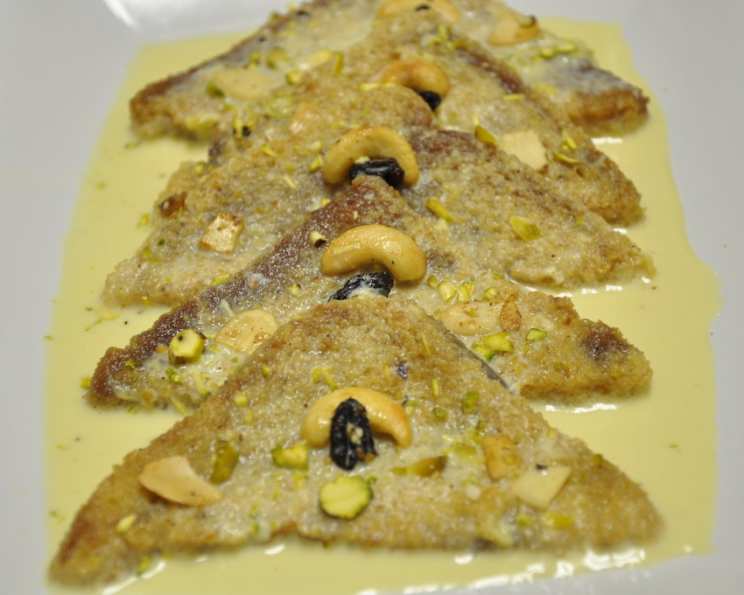
Shahi Tukra: A Royal Dessert Fit for Any Occasion
The first time I tasted Shahi Tukra, I was at a wedding in Delhi. The air was thick with the scent of spices and jasmine, and amidst the vibrant chaos of the celebration, a server placed a small, golden square in my hand. It was soft, dripping with sweetness, and infused with the heady aroma of cardamom and nuts. That single bite transported me. It wasn’t just a dessert; it was a taste of history, a reminder of the opulence and artistry of Mughlai cuisine. Now, years later, I recreate that experience in my own kitchen, eager to share the magic of Shahi Tukra with anyone willing to try it.
Recipe Overview
- Prep Time: 15 minutes
- Cook Time: 20 minutes
- Total Time: 35 minutes
- Servings: 20
- Dietary Type: Vegetarian
Ingredients
- 10 slices white bread
- 1 cup sugar
- 1 cup water
- 2 cups milk
- 3 tablespoons nuts (almonds, pistachios, cashews), chopped
- 1 tablespoon raisins
- 1/4 teaspoon cardamom powder
- 1/4 cup oil or ghee for frying
Equipment Needed
- Oven
- Baking sheet
- Heavy-bottomed pan
- Frying pan
- Slotted spoon
- Absorbent paper towels
- Serving bowl
Instructions
-
Begin by preparing the bread. Remove the crusts from the white bread slices. Then, cut each slice into triangles or squares, depending on your preference.
-
Next, toast the prepared bread slices in the oven at 200°F (93°C) until they are dry. This process, which should take about 15-20 minutes, helps to remove moisture from the bread, allowing it to absorb less oil or ghee during frying. Keep a close watch to prevent burning. Alternatively, you can simply allow the bread to dry naturally for a couple of days, using slightly stale bread.
-
While the bread is toasting, prepare the rabri (sweetened milk). In a heavy-bottomed pan, boil the milk over medium heat. Once boiling, reduce the heat to low and simmer, cooking the milk until it reduces to approximately three-quarters of its original quantity. This reduction process concentrates the milk’s flavor and creates a creamy texture. Be sure to stir the milk frequently to prevent it from sticking to the bottom of the pan and burning. Add half of the cardamom powder to the milk during the last 10 minutes of simmering. Once reduced, remove the pan from the heat and set the rabri aside.
-
Prepare the nuts. In a separate pan, toast the chopped nuts (almonds, pistachios, cashews) in a small amount of ghee until they are lightly golden and fragrant. This toasting process enhances their flavor and adds a delightful crunch to the final dish. Set the toasted nuts aside.
-
Now, it’s time to fry the bread slices. Heat the oil or ghee in a frying pan over medium heat. Working in batches, carefully deep-fry the dried bread slices until they are golden brown on all sides. Use a slotted spoon to remove the fried bread slices from the pan and place them on absorbent paper towels to drain excess oil.
-
Prepare the sugar syrup. In another pan, combine the sugar and water. Boil the mixture over medium heat, stirring until the sugar dissolves completely. Continue to cook the syrup until it thickens slightly. This may take around 5-7 minutes. Add the remaining cardamom powder to the syrup during the last minute of cooking.
-
Soften the fried bread slices. Working in batches, gently add a few fried bread slices to the hot sugar syrup, allowing them to soak briefly until they soften. Be careful not to oversoak them, as they can become too soggy.
-
Arrange the softened bread slices in a serving bowl. Repeat the process of soaking and arranging the remaining fried bread slices until all the bread is used. Discard any leftover syrup, or save it for use in other desserts or beverages.
-
Finally, pour the warm rabri (sweetened milk) evenly over the softened bread slices.
-
Garnish the Shahi Tukra with the toasted nuts and raisins.
-
Serve the Shahi Tukra warm or chilled, depending on your preference. I personally prefer it warm, as the flavors are more pronounced.
Expert Tips & Tricks
- For a richer flavor, use ghee (clarified butter) instead of oil for frying the bread.
- To prevent the bread from becoming too soggy, do not soak it in the sugar syrup for too long. A quick dip is all that’s needed.
- If the rabri becomes too thick, you can thin it out by adding a little more milk.
- You can add a few strands of saffron to the rabri for a more vibrant color and flavor. Soak the saffron in a tablespoon of warm milk for 15 minutes before adding it to the rabri.
- For extra richness, add a tablespoon of condensed milk to the rabri while simmering.
- You can use milk powder if you are short of time to prepare the rabri. Mix milk powder with warm milk and simmer until thickened.
Serving & Storage Suggestions
Shahi Tukra is best served warm or slightly chilled. Garnish with extra nuts and a sprinkle of cardamom powder for an elegant presentation. Leftovers can be stored in an airtight container in the refrigerator for up to 2-3 days. To reheat, gently warm it in the microwave or on the stovetop over low heat. Be careful not to overheat, as this can make the bread soggy. Shahi Tukra is not suitable for freezing.
Nutritional Information
| Nutrient | Amount per Serving | % Daily Value |
|---|---|---|
| Calories | 120.5 kcal | N/A |
| Calories from Fat | 42g | 35% |
| Total Fat | 4.7g | 7% |
| Saturated Fat | 1.1g | 5% |
| Cholesterol | 3.4mg | 1% |
| Sodium | 84.6mg | 3% |
| Total Carbohydrate | 18.2g | 6% |
| Dietary Fiber | 0.4g | 1% |
| Sugars | 10.9g | N/A |
| Protein | 2g | 3% |
Note: Nutritional information is an estimate and may vary based on specific ingredients and preparation methods.
Variations & Substitutions
- Gluten-Free: Use gluten-free bread slices for a gluten-free version.
- Dairy-Free: Substitute almond milk or coconut milk for the regular milk in the rabri. Use a dairy-free butter substitute for frying the bread.
- Spice Variations: Experiment with different spices, such as cinnamon or nutmeg, in addition to cardamom.
- Fruit Additions: Add chopped fruits like mangoes or berries as a garnish for a fresh twist.
- Regional Twist: In some regions, kewra essence is added to the sugar syrup for a floral note.
FAQs (Frequently Asked Questions)
Q: Can I make Shahi Tukra ahead of time?
A: Yes, you can prepare the rabri and sugar syrup in advance and store them in the refrigerator. However, it’s best to fry the bread and assemble the dish just before serving to prevent the bread from becoming too soggy.
Q: How can I prevent the bread from absorbing too much oil while frying?
A: Drying the bread in the oven before frying helps to reduce its moisture content, which in turn minimizes oil absorption. Also, ensure the oil is hot enough before adding the bread slices.
Q: Can I use brown bread instead of white bread?
A: While white bread is traditionally used for Shahi Tukra, you can experiment with brown bread for a healthier alternative. Keep in mind that the flavor and texture will be slightly different.
Q: What if my sugar syrup becomes too thick?
A: If the sugar syrup becomes too thick, add a little water and heat it gently until it reaches the desired consistency.
Q: How long does Shahi Tukra last in the refrigerator?
A: Shahi Tukra can be stored in an airtight container in the refrigerator for up to 2-3 days.
Final Thoughts
Shahi Tukra is more than just a dessert; it’s a culinary journey that transports you to a world of royal feasts and rich flavors. Don’t be intimidated by the seemingly long list of steps – each one is simple and contributes to the overall symphony of textures and tastes. I encourage you to try this recipe and experience the magic of Shahi Tukra for yourself. Share your creations and feedback, and perhaps pair it with a fragrant cup of Masala Chai for the perfect ending to a memorable meal.