
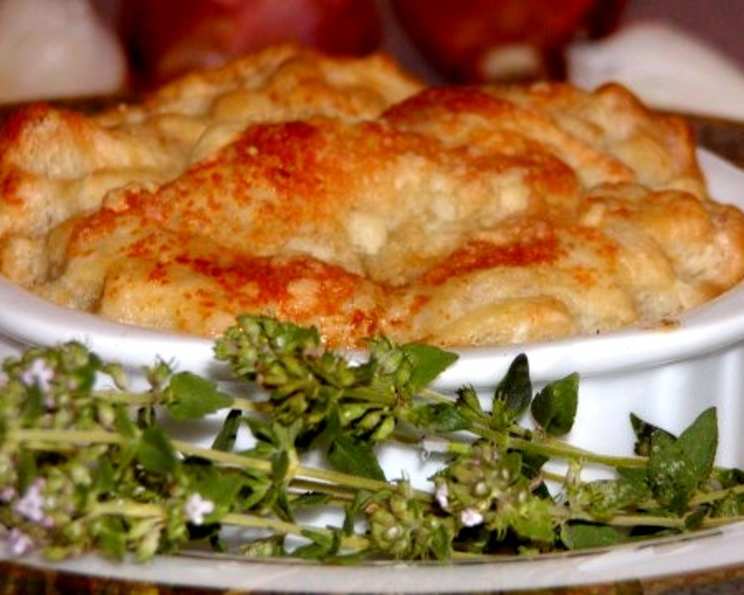
Shallot and Garlic Tarte Tatin With Parmesan Pastry
The aroma of caramelized shallots always transports me back to my tiny Parisian apartment, where I first experimented with savory tarte tatins. The scent would fill the entire building, drawing curious glances and friendly inquiries from my neighbors. I remember one particularly chilly autumn evening, sharing a warm slice of a similar tart with an elderly woman from the floor above. Her wrinkled face lit up with a childlike joy as she savored the sweet and savory combination. It was a simple moment, yet it solidified my love for this rustic, comforting dish and the joy it brings to those who share it.
Recipe Overview
- Prep Time: 40 minutes
- Cook Time: 35 minutes
- Total Time: 1 hour 15 minutes
- Servings: 4-6
- Yield: 1 tart
- Dietary Type: Vegetarian
Ingredients
For the Parmesan Pastry:
- 300 g puff pastry, thawed
- ¼ cup unsalted butter
- 75 g Parmesan cheese, freshly grated
For the Topping:
- 3 tablespoons unsalted butter
- 500 g shallots
- 12-16 garlic cloves, peeled and left whole
- 1 tablespoon caster sugar
- 1 tablespoon balsamic vinegar
- 3 tablespoons water
- 1 tablespoon fresh thyme, chopped, plus a few extra sprigs (optional)
- Salt & fresh ground pepper to taste
Equipment Needed
- Rolling pin
- 23-25 cm round heavy pan (with a lid) that is suitable for placing in the oven
- Sharp knife
- Serving platter
Instructions
-
Begin by preparing the Parmesan pastry. On a lightly floured surface, roll out the thawed puff pastry into a large rectangle.
-
Spread the ¼ cup of unsalted butter evenly over the pastry, leaving a 2.5 cm (1 inch) border all around. The butter should be softened but not melted for easier spreading.
-
Sprinkle the 75g of freshly grated Parmesan cheese generously over the buttered pastry. Ensure even distribution for maximum flavor.
-
Fold the bottom third of the pastry up to cover the middle section. Then, fold the top third down over the newly folded portion, creating a neat stack of three layers. This technique is known as a book fold.
-
Carefully seal the edges of the folded pastry with your fingertips or a rolling pin to prevent the layers from separating during baking.
-
Give the pastry a quarter turn. This helps to relax the gluten and ensure even rolling.
-
Roll out the pastry again into a large rectangle, maintaining a consistent thickness.
-
Repeat the folding process as before: fold the bottom third up, then the top third down, sealing the edges afterward. This second folding creates even more flaky layers.
-
Wrap the prepared pastry in plastic wrap and chill it in the refrigerator for 30 minutes. This chilling period is crucial for relaxing the gluten, preventing shrinkage during baking, and ensuring a light and flaky crust.
-
While the pastry is chilling, prepare the shallot and garlic topping. In the 23-25 cm round heavy pan (oven-safe), melt the 3 tablespoons of unsalted butter over medium heat.
-
Add the 500g of shallots and the 12-16 whole garlic cloves to the melted butter. Cook them over medium heat, stirring occasionally, until they are lightly browned all over. This step is important for developing the sweet and savory flavors of the shallots and garlic.
-
Scatter the 1 tablespoon of caster sugar evenly over the top of the shallots and garlic. Slightly increase the heat to medium-high, and cook until the sugar begins to caramelize, about 3-5 minutes. This caramelization process creates a rich, golden color and adds depth of flavor to the topping.
-
Once the sugar starts to caramelize, turn the shallots and garlic in the pan to coat them evenly with the caramelized sugar.
-
Add the 1 tablespoon of balsamic vinegar, 3 tablespoons of water, 1 tablespoon of chopped fresh thyme, and salt and pepper to taste. The balsamic vinegar adds a touch of acidity that balances the sweetness of the caramelized sugar.
-
Cover the pan partially with a lid and cook for 6-8 minutes, or until the garlic cloves are just tender. Be careful not to overcook the garlic, as it can become bitter.
-
Remove the pan from the heat and allow it and its contents to cool completely. This is important to prevent the pastry from melting when it is placed on top.
-
Preheat the oven to 190ºC (375ºF). Ensure the oven is fully preheated before baking the tart.
-
Take the chilled Parmesan pastry from the refrigerator and, on a lightly floured surface, roll it out to a circle slightly larger than the diameter of the pan.
-
Carefully lay the rolled-out pastry over the cooled shallots and garlic in the pan, tucking the edges down around the sides.
-
Prick the pastry all over with a sharp knife. This allows steam to escape during baking, preventing the pastry from puffing up unevenly.
-
Bake the tart in the preheated oven for 25-35 minutes, or until the pastry has risen and is golden brown. The baking time may vary depending on your oven, so keep an eye on the tart and adjust the time as needed.
-
Remove the pan from the oven and set it aside to cool for 5-10 minutes. This allows the caramelized sugar to slightly cool down, making it easier to invert the tart.
-
Carefully invert the tart onto a serving platter. Use oven mitts to protect your hands from the hot pan. Place the platter over the pan, then quickly but carefully flip them over together.
-
Scatter the tart with a few fresh thyme sprigs (optional) for garnish.
-
Serve warm or at room temperature.
Expert Tips & Tricks
- For an even more intense flavor, use aged balsamic vinegar.
- If the pastry starts to brown too quickly during baking, loosely cover it with foil.
- To prevent the pastry from sticking to the pan, make sure the bottom of the pan is evenly coated with the caramelized shallot mixture.
- If you don’t have a suitable oven-safe pan, you can cook the shallot mixture in a skillet and then transfer it to a pie dish before adding the pastry.
- For a richer flavor, add a splash of dry sherry or white wine to the shallot mixture while it’s cooking.
Serving & Storage Suggestions
This Shallot and Garlic Tarte Tatin is best served warm, allowing the flavors to fully meld together. A dollop of crème fraîche or a drizzle of balsamic glaze can elevate the presentation and add a touch of richness. Leftovers can be stored in the refrigerator for up to 3 days. To reheat, warm individual slices in a toaster oven or a conventional oven at a low temperature (around 150°C or 300°F) until heated through. You can also reheat the tart in a microwave, but the pastry may lose some of its crispness. Freezing is not recommended, as it can affect the texture of the pastry.
Nutritional Information
| Nutrient | Amount per Serving | % Daily Value |
|---|---|---|
| Calories | 650 kcal | 33% |
| Total Fat | 45g | 69% |
| Saturated Fat | 25g | 125% |
| Cholesterol | 75mg | 25% |
| Sodium | 600mg | 26% |
| Total Carbohydrate | 50g | 17% |
| Dietary Fiber | 2g | 7% |
| Sugars | 5g | N/A |
| Protein | 15g | 30% |
Nutritional information is an estimate and may vary based on specific ingredients and cooking methods.
Variations & Substitutions
- For a gluten-free version, use gluten-free puff pastry. Be sure to check the ingredients list to ensure that it does not contain wheat starch.
- Add other vegetables such as sliced bell peppers or zucchini to the topping for extra flavor and color.
- Substitute the Parmesan cheese with Pecorino Romano for a sharper, saltier flavor.
- For a dairy-free option, use a plant-based butter substitute for the pastry and topping. You can also omit the Parmesan cheese or substitute it with nutritional yeast for a cheesy flavor.
- Experiment with different herbs such as rosemary or oregano in place of thyme.
- Add a sprinkle of red pepper flakes to the shallot mixture for a touch of heat.
FAQs (Frequently Asked Questions)
Q: Can I make the pastry ahead of time?
A: Yes, the pastry can be made a day or two in advance and stored in the refrigerator, tightly wrapped in plastic wrap. You can also freeze it for longer storage; just thaw it in the refrigerator overnight before using.
Q: Can I use pre-cut shallots?
A: While pre-cut shallots are convenient, freshly sliced shallots will provide the best flavor and texture for the tarte tatin.
Q: How do I prevent the bottom of the tart from being soggy?
A: Pricking the pastry with a fork before baking helps to release steam and prevent the bottom from becoming soggy. Also, make sure the shallot mixture is not too wet before adding the pastry.
Q: What can I serve with this tarte tatin?
A: This tarte tatin pairs well with a simple green salad, roasted vegetables, or a creamy soup.
Q: Can I make this tart without balsamic vinegar?
A: While balsamic vinegar adds a unique flavor to the tart, you can substitute it with red wine vinegar or apple cider vinegar. You may need to adjust the amount of sugar to balance the acidity.
Final Thoughts
This Shallot and Garlic Tarte Tatin with Parmesan Pastry is more than just a recipe; it’s an invitation to slow down, savor the simple pleasures, and share a moment of joy with those you cherish. Don’t hesitate to experiment with your own variations, adding your personal touch to this classic dish. I encourage you to try this recipe and share your culinary creations with friends and family. And if you’re feeling adventurous, pair it with a crisp glass of white wine for a truly unforgettable experience. Bon appétit!