
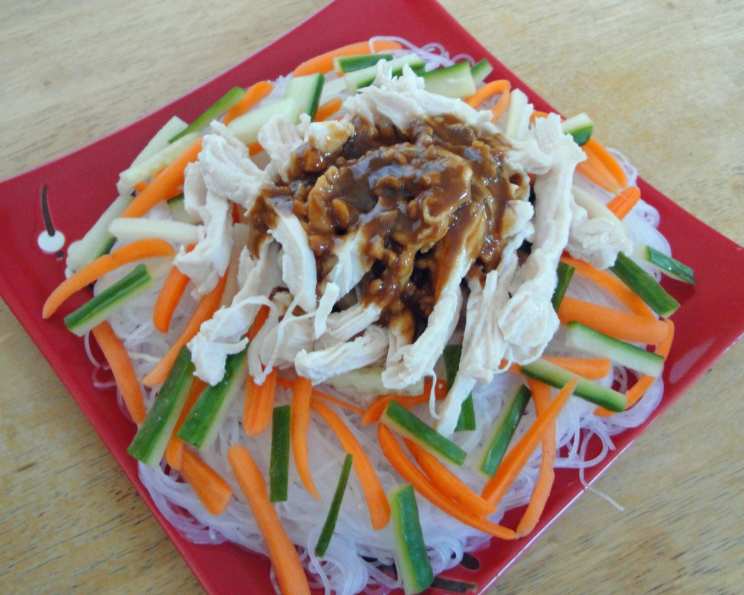
Shanghai Cold Noodles With Peanut Butter Sauce: A Culinary Love Letter to Summer
The memory is as clear as a summer sky: the bustling Shanghai street corner, the tiny, hole-in-the-wall shop with its hand-painted sign, and the intoxicating aroma of sesame and peanut. As a child visiting my grandmother, this humble eatery was my sanctuary. The star of the show? Liang Mian – cold noodles tossed in a luscious peanut butter sauce. It was the perfect antidote to the sweltering heat, a symphony of textures and flavors that danced on my tongue. This recipe is my attempt to capture that magic, to bring a taste of that cherished memory to your table.
Recipe Overview
- Prep Time: 15 minutes
- Cook Time: 10 minutes
- Total Time: 25 minutes
- Servings: 1
- Dietary Type: Adaptable (see variations)
Ingredients
- 1 bunch thin rice noodles or 2 ounces rice noodles
- 2 ounces chicken breasts
- 1/3 cup baby carrots, cut into strips
- 1/3 cup cucumber, cut into strips
- Sesame seeds, for garnish
- Sriracha sauce, optional
For the peanut butter sauce:
- 1 tablespoon peanut butter
- 2 tablespoons milk
- 2 teaspoons low sodium soy sauce
- 1/2 teaspoon balsamic vinegar
- 1 teaspoon brown sugar
- 2 teaspoons sesame oil
- 1/4 ounce fresh ginger, minced
Equipment Needed
- Small bowl
- Saucepan
- Colander
- Cutting board
- Knife
Instructions
- First, prepare the peanut butter sauce. In a small bowl, combine the peanut butter and milk. Using the back of a small spoon, press the peanut butter against the bowl to help it incorporate smoothly with the milk. Stir until you achieve a smooth consistency.
- Add the balsamic vinegar, low sodium soy sauce, brown sugar, sesame oil, and minced ginger to the peanut butter mixture. Stir all ingredients together thoroughly. Taste the sauce and add more soy sauce if desired, adjusting it to your preference for saltiness. Set the sauce aside.
- Next, cook the chicken breast. In a saucepan, bring approximately one quart of water to a rolling boil. Carefully add the chicken breast to the boiling water. Cook for about 5 minutes, or until the chicken is thoroughly cooked and no longer pink inside. A good way to check for doneness is to insert a meat thermometer; it should register 165°F (74°C).
- Remove the cooked chicken breast from the saucepan and set it aside to cool down. Pro tip: While the chicken is cooking, use your time efficiently to prepare the vegetables. This will streamline the process.
- Using the same saucepan (now infused with chicken broth flavor), follow the instructions on the noodle package to cook the rice noodles. Generally, this involves cooking the noodles in the boiling water for approximately 3-4 minutes, or until they are tender. Be careful not to overcook them, as they will become mushy.
- Once the noodles are cooked, remove them from the heat and immediately rinse them thoroughly with cold water to stop the cooking process. Then, drain the noodles well.
- Toss the drained noodles with 1 teaspoon of sesame oil to prevent them from sticking together and to add a subtle nutty flavor. Set the noodles aside.
- Once the chicken has cooled down enough to handle, gently tear it into strips, following the grain of the meat. This will give the chicken a more appealing texture.
- Finally, assemble the dish. Place the cooked noodles, strips of baby carrots, and strips of cucumber in a bowl or on a serving plate. Arrange them artfully.
- Pour the prepared peanut butter sauce generously over the noodles and vegetables.
- Sprinkle some sesame seeds on top as a garnish. If you like a spicy kick, add a squeeze of Sriracha sauce to taste.
- Your refreshing Shanghai Cold Noodles with Peanut Butter Sauce is now ready to enjoy!
Expert Tips & Tricks
- Peanut Butter Power: Use a good quality, creamy peanut butter for the best sauce consistency. If your peanut butter is too thick, add a little more milk, one teaspoon at a time, until you reach the desired consistency.
- Ginger Zing: Freshly minced ginger is essential for the authentic flavor of the sauce. Don’t substitute with ground ginger; it won’t have the same punch.
- Noodle Know-How: Be careful not to overcook the noodles! They should be al dente – slightly firm to the bite. Overcooked noodles will become sticky and unappetizing.
- Chicken Shortcut: If you’re short on time, you can use pre-cooked rotisserie chicken instead of cooking the chicken breast yourself.
- Flavor Boost: For a more complex flavor, try adding a tiny pinch of Chinese five-spice powder to the peanut butter sauce.
Serving & Storage Suggestions
Serve these Shanghai Cold Noodles immediately after preparation for the best flavor and texture. The noodles tend to absorb the sauce over time, so they’re best enjoyed fresh.
If you have leftovers, store them in an airtight container in the refrigerator. They will keep for up to 2 days. However, the noodles may become a bit softer.
Reheating is not recommended, as the dish is designed to be served cold. If you prefer, you can add a little extra peanut butter sauce before serving the leftovers to freshen up the flavor.
Nutritional Information
| Nutrient | Amount per Serving | % Daily Value |
|---|---|---|
| Calories | 342 kcal | N/A |
| Total Fat | 23.6g | 36% |
| Saturated Fat | 5.2g | 26% |
| Cholesterol | 40.6mg | 13% |
| Sodium | 514.2mg | 21% |
| Total Carbohydrate | 16.4g | 5% |
| Dietary Fiber | 2.6g | 10% |
| Sugars | 9.2g | N/A |
| Protein | 18g | 36% |
Note: Nutritional information is an estimate and may vary based on specific ingredients used.
Variations & Substitutions
- Vegetarian/Vegan: Replace the chicken with strips of firm tofu, steamed edamame, or simply add more vegetables like shredded cabbage or bean sprouts. Use maple syrup or agave nectar instead of brown sugar, and ensure your peanut butter is vegan-friendly (some contain honey).
- Gluten-Free: Ensure that the soy sauce you use is gluten-free. Tamari is a good substitute.
- Spicy Boost: Add a pinch of red pepper flakes or a dash of chili oil to the peanut butter sauce for an extra kick.
- Nut-Free: Substitute the peanut butter with sunflower seed butter (sunbutter) for a nut-free alternative.
- Seasonal Vegetables: Adapt the vegetables to the season. Use shredded carrots and zucchini in the summer, or roasted sweet potatoes and Brussels sprouts in the fall.
FAQs (Frequently Asked Questions)
Q: Can I make the peanut butter sauce ahead of time?
A: Yes, the peanut butter sauce can be made up to 2 days in advance and stored in an airtight container in the refrigerator. You may need to add a little water to thin it out before serving.
Q: Can I use different types of noodles?
A: While thin rice noodles are traditional, you can experiment with other types of noodles, such as udon or soba noodles. The cooking time may vary depending on the type of noodle you choose.
Q: How can I make this dish more kid-friendly?
A: Reduce the amount of soy sauce and Sriracha sauce (or omit it entirely) to make the dish more palatable for children. You can also cut the noodles into shorter lengths for easier eating.
Q: Can I add protein other than chicken or tofu?
A: Absolutely! Shrimp, sliced pork, or even a hard-boiled egg would be delicious additions.
Q: What if I don’t have balsamic vinegar?
A: You can substitute balsamic vinegar with rice vinegar or even a squeeze of lemon juice.
Final Thoughts
This Shanghai Cold Noodles with Peanut Butter Sauce is more than just a recipe; it’s a journey back to my childhood, a taste of summer in every bite. I encourage you to try this recipe and make it your own. Experiment with different variations and substitutions, and don’t be afraid to adjust the flavors to your liking. Whether you’re enjoying it as a quick lunch, a light dinner, or a refreshing side dish, I hope it brings you as much joy as it brings me. Share your creations and feedback – I’d love to hear how it turned out! And why not pair it with a chilled glass of jasmine tea for the ultimate Shanghai experience?