
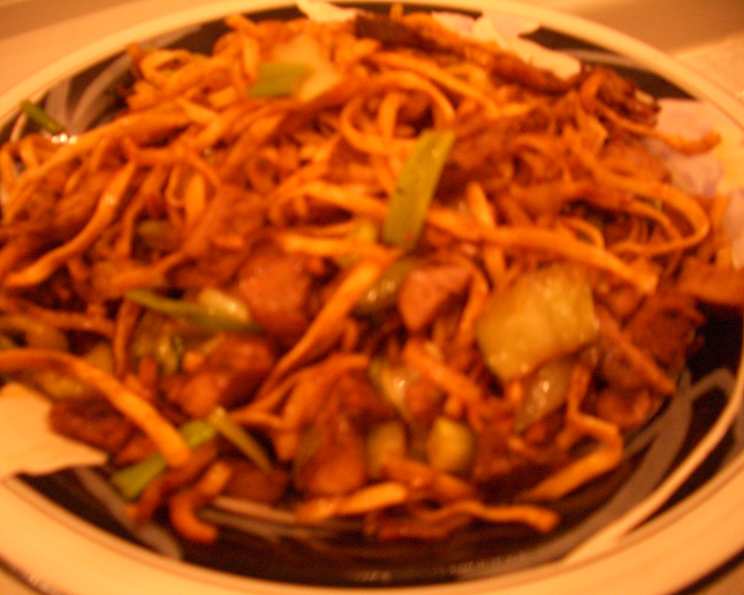
Shanghai Fried Noodles With Pork or Chicken: A Culinary Journey
The scent of caramelized soy sauce and ginger always transports me back to my grandmother’s tiny Shanghai kitchen. I can still picture her, a whirlwind of motion, expertly tossing noodles in her well-seasoned wok, the flames licking the sides as she created this very dish. The sizzle of the pork, the vibrant green of the spinach, and the slightly chewy noodles – it was a symphony of flavors and textures that I’ve been chasing ever since. This recipe is my attempt to capture that magic, a taste of my heritage, and a dish I’m thrilled to share with you.
Recipe Overview
- Prep Time: 20 minutes
- Cook Time: 20 minutes
- Total Time: 40 minutes
- Servings: 4-6
- Yield: 1 large platter
- Dietary Type: Varies based on protein choice (can be adapted to be dairy-free)
Ingredients
- ½ lb fresh Chinese noodles (medium)
- ½ cup cold water
- 1 tablespoon sesame oil
- ½ lb pork tenderloin or ½ lb chicken breast
- 2 tablespoons light soy sauce
- 1 teaspoon rice wine or 1 teaspoon dry sherry
- 1 tablespoon cornstarch
- 1 scallion, cut into 1 inch pieces
- 1 garlic clove, sliced
- ½ tablespoon ginger, minced
- 9 tablespoons peanut oil
- 1 teaspoon sugar
- 1 head Chinese cabbage, shredded
- 1 tablespoon dark soy sauce
- 1 ½ teaspoons cornstarch, dissolved in 1 tablespoon water
- 1 bunch spinach leaves, washed
- ½ teaspoon white pepper
- ½ teaspoon salt
Equipment Needed
- Wok (or large skillet)
- Large pot
- Colander
- Cutting board
- Knife
Instructions
- Bring a large pot of water to a rolling boil. Drop the noodles into the boiling water and cook for about 4 minutes.
- Add ½ cup of cold water to the pot and bring to a boil again for 1 minute. This step helps to prevent the noodles from becoming too mushy.
- Rinse the cooked noodles with cold running water in a colander to stop the cooking process. Thoroughly drain the noodles.
- In a bowl, mix the drained noodles with 1 tablespoon of sesame oil. This will prevent the noodles from sticking together. Set aside.
- If using pork tenderloin or chicken breast, cut the meat crosswise into thin slices, then julienne into thin strips.
- In a medium bowl, marinate the meat with 1 tablespoon of light soy sauce, the 1 teaspoon of rice wine (or dry sherry), and 1 tablespoon of cornstarch. Mix well and set aside for at least 10 minutes. This allows the flavors to meld and the cornstarch to tenderize the meat.
- Prepare the aromatics: Cut the scallion into 1-inch pieces, slice the garlic, and mince the ginger.
- Heat 2 tablespoons of peanut oil in a wok (or large skillet) over high heat (approximately 400°F or until it starts to lightly smoke).
- Stir-fry the scallion, garlic, and ginger in the hot oil for about 30 seconds until fragrant.
- Add the marinated meat to the wok and stir-fry until the meat changes color and is mostly cooked through, about 2 minutes. Ensure even cooking by moving the meat continuously.
- Add the remaining 1 tablespoon of light soy sauce and 1 teaspoon of sugar to the meat mixture. Stir-fry for another minute to combine. Remove the meat mixture from the wok and set aside to keep warm.
- In the same wok, add 2 tablespoons of peanut oil and heat over high heat.
- Add the shredded Chinese cabbage to the wok and stir-fry for about 2 minutes, until it begins to wilt slightly.
- Remove the cabbage from the wok and set aside. Wipe out the wok with a paper towel to remove any residue.
- Heat 3 tablespoons of peanut oil in the wok over medium-high heat.
- Add the cooked noodles to the wok. Do NOT stir immediately.
- Allow the noodles to brown on the bottom, undisturbed, for about 5 minutes. This is crucial for achieving that characteristic slightly crispy texture.
- Using a spatula, carefully turn the noodle cake over and brown the other side in the same manner for another 5 minutes.
- Remove the browned noodle cake from the wok and transfer it to a warm platter. Keep warm.
- Heat 1 tablespoon of peanut oil in the wok over high heat.
- Add the cooked pork (or chicken), cabbage, and dark soy sauce to the wok.
- Stir-fry until everything is thoroughly heated through and the cabbage is tender-crisp, about 2-3 minutes.
- Thicken the sauce by adding the cornstarch slurry (1 ½ teaspoons cornstarch dissolved in 1 tablespoon water) to the wok. Stir-fry until the sauce thickens slightly, about 30 seconds.
- Pour the meat and cabbage mixture over the browned noodles on the platter.
- Wipe out the wok once more.
- Heat the remaining 1 tablespoon of peanut oil in the wok over high heat until smoking hot (approximately 400°F).
- Add the washed spinach leaves to the wok.
- Wilt the spinach quickly by stir-frying for about 10 seconds. Add salt and white pepper to taste during the last few seconds of cooking. The spinach should still be bright green and slightly crisp.
- Arrange the wilted spinach around the mound of noodles on the platter.
- Serve immediately.
Expert Tips & Tricks
- Noodle Choice is Key: Use fresh Chinese noodles specifically labeled for stir-frying. These have the best texture and hold up well to high heat. If you can’t find fresh, use dried noodles but be careful not to overcook them.
- Wok Hei (Breath of the Wok): This refers to the slightly smoky flavor imparted by cooking over high heat in a wok. Make sure your wok is screaming hot before adding ingredients to achieve this effect.
- Meat Tenderizing: Marinating the meat not only adds flavor but also tenderizes it. Don’t skip this step!
- Preventing Sticky Noodles: Tossing the cooked noodles with sesame oil is crucial to prevent them from clumping together.
- Don’t Overcrowd the Wok: Cook in batches if necessary to avoid lowering the temperature of the wok, which can result in soggy ingredients.
- Vegetable Prep: Have all your vegetables prepped and ready to go before you start cooking, as the stir-frying process moves quickly.
Serving & Storage Suggestions
Shanghai Fried Noodles are best served immediately while the noodles are crispy and the vegetables are vibrant. Garnish with a sprinkle of sesame seeds or extra scallions for an extra touch.
Leftovers can be stored in an airtight container in the refrigerator for up to 2 days. Reheat in a wok or skillet over medium heat, adding a splash of water or broth to prevent the noodles from drying out. While the noodles will lose some of their crispness, the flavors will still be delicious. Freezing is not recommended as the noodles can become mushy upon thawing.
Nutritional Information
| Nutrient | Amount per Serving | % Daily Value |
|---|---|---|
| Calories | 680 kcal | 34% |
| Total Fat | 45g | 69% |
| Saturated Fat | 8g | 40% |
| Cholesterol | 40mg | 13% |
| Sodium | 1200mg | 50% |
| Total Carbohydrate | 45g | 15% |
| Dietary Fiber | 5g | 20% |
| Sugars | 3g | 6% |
| Protein | 25g | 50% |
Note: Nutritional information is an estimate and may vary based on specific ingredients and cooking methods.
Variations & Substitutions
- Vegetarian: Substitute the pork or chicken with firm tofu, seitan, or a mix of mushrooms.
- Gluten-Free: Use gluten-free noodles and tamari instead of soy sauce.
- Seafood: Substitute the pork or chicken with shrimp or scallops.
- Spicy: Add a pinch of red pepper flakes or a drizzle of chili oil for extra heat.
- Vegetable Medley: Feel free to add other vegetables like bell peppers, snow peas, or broccoli to the stir-fry.
- Sauce Enhancement: A touch of oyster sauce (if not vegetarian) can add depth to the flavor.
- Peanut Allergy: Substitute peanut oil with canola or vegetable oil.
FAQs (Frequently Asked Questions)
Q: Can I use dried noodles instead of fresh?
A: Yes, but be sure to cook the dried noodles according to package directions, taking care not to overcook them. They may not have the same chewy texture as fresh noodles.
Q: Can I prepare the noodles ahead of time?
A: You can cook and rinse the noodles ahead of time, but it’s best to stir-fry them closer to serving time for optimal texture.
Q: How do I prevent the noodles from sticking to the wok?
A: Make sure the wok is hot enough and toss the cooked noodles with sesame oil before adding them to the wok.
Q: What if I don’t have Chinese cabbage?
A: Napa cabbage is the best substitute. You can also use regular green cabbage in a pinch.
Q: How do I get that slightly crispy texture on the noodles?
A: Don’t stir the noodles immediately after adding them to the wok. Allow them to brown undisturbed for a few minutes on each side.
Final Thoughts
I sincerely hope this recipe inspires you to create your own delicious version of Shanghai Fried Noodles. Don’t be intimidated by the number of steps; each one is crucial for achieving that perfect balance of flavors and textures. Feel free to adapt the recipe to your liking and dietary preferences. And most importantly, have fun in the kitchen! Share your creations with friends and family, and let me know what you think. This dish is a celebration of flavor and a nod to my heritage, and I’m honored to share it with you. Consider pairing it with a refreshing glass of green tea or a crisp Chinese beer for the full experience!