
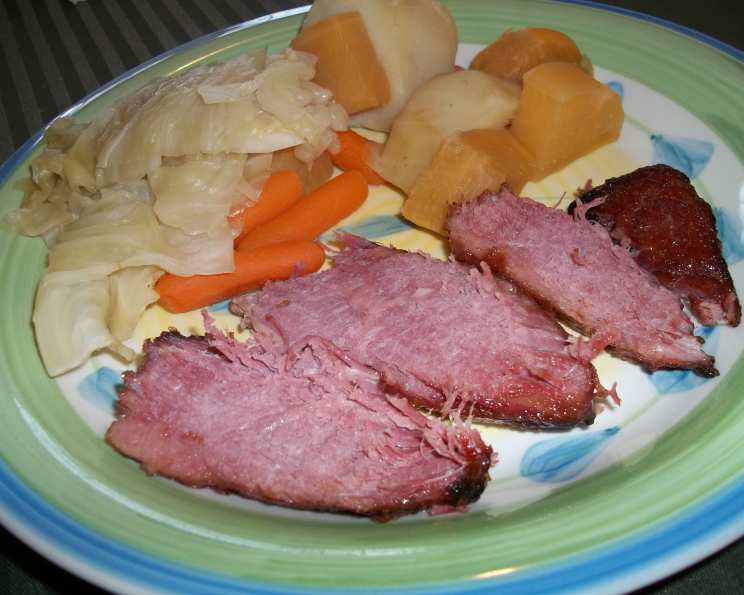
Sheila’s Famous Mustard-Glazed Corned Beef and Cabbage
The aroma still takes me back. I can almost see my grandmother Sheila in her apron, humming a tune as she tended to the enormous stockpot on her ancient gas stove. The scent of simmering corned beef mingled with the earthy fragrance of cabbage, creating a comforting, homey atmosphere that was pure Sheila. It was more than just a meal; it was a tradition, a taste of family, and a warm hug on a plate, even though she’d usually swat my hand away if I tried to sneak a taste before it was ready.
Recipe Overview
- Prep Time: 3 Days
- Cook Time: 5 Hours
- Total Time: 72 Hours
- Servings: 8-10
- Yield: One Large Pot
- Dietary Type: Not specified in source
Ingredients
- 2 (12 ounce) bottles porter or stout beer
- Water
- 8 lbs flat-cut corned beef brisket (do not get point cut)
- 2 onions, quartered
- 2 bay leaves
- 1 teaspoon salt
- 10 whole black peppercorns
- 4 garlic cloves
- 10 whole cloves
- 1 head cabbage, cored and cut into about 6 wedges
- 12 small red new potatoes
- 1 lb baby carrots (or 1/2 lb baby carrots and 4 parsnips, peeled and cut into 1-inch pieces)
- 1 medium rutabaga or 1 medium yellow turnip, peeled and cut into 2-inch chunks
- 1⁄2 cup dark corn syrup
- 1 tablespoon Dijon mustard
Equipment Needed
- Large kettle or stockpot
- Aluminum foil
- Strainers
- Small saucepan
- Wooden spoon
- Broiler pan
Instructions
This recipe requires a little patience, but the result is a truly exceptional corned beef and cabbage, tender, flavorful, and never dry. The three-day process allows the flavors to meld and the corned beef to achieve optimum tenderness.
Day 1: The Brining Begins
- Place the corned beef brisket in a large kettle or stockpot. Make sure it’s big enough to completely submerge the meat. A tight fit is okay; just ensure it’s covered.
- Pour in both bottles of porter or stout. The beer adds a depth of flavor that you won’t get with just water. If you don’t have beer on hand, or simply don’t care for it, you can substitute beef broth for half the liquid.
- Add enough water to completely cover the corned beef. The beef needs to be fully submerged to ensure even cooking and flavor infusion.
- Add the quartered onions, bay leaves, salt, peppercorns, garlic, and cloves to the pot. These aromatics will infuse the beef with a delicious, complex flavor.
- Over high heat, bring the mixture to a boil, then reduce the heat to a simmer.
- Cover the pot and simmer for about 4 hours, or until the corned beef is fork-tender. This is crucial for achieving that melt-in-your-mouth texture. Check for doneness by inserting a fork into the thickest part of the brisket; it should slide in easily.
- Remove the pot from the stove and allow the corned beef to cool in the liquid. This helps retain moisture.
- Once cooled, transfer the pot to the refrigerator and let it chill overnight.
Day 2: Resting and Refining
- Remove the corned beef from the liquid.
- Wrap the corned beef tightly in aluminum foil to prevent it from drying out.
- Return the wrapped corned beef to the refrigerator and chill overnight.
- Strain the liquid from the kettle to remove all the solids (onions, bay leaves, peppercorns, garlic, and cloves). Discard the solids.
- Heat the strained liquid in the kettle over medium-high heat until it comes to a boil.
- Add the cabbage wedges, potatoes, carrots (and/or parsnips, if using), and rutabaga (or yellow turnip, if using) to the boiling liquid.
- When the liquid returns to a simmer, cover the pot and simmer for about 30 minutes, or until the vegetables are just crisp-tender. You want them to be cooked through but still retain some bite.
- Remove the pot from the stove and allow the vegetables to cool in the liquid.
- Transfer the pot to the refrigerator and let it chill overnight.
Day 3: Glazing and Gloriousness
- Remove the corned beef from the refrigerator, unwrap it, and carefully trim off any excess fat. Leaving a thin layer of fat is fine and will contribute to flavor, but remove any large, thick chunks.
- Allow the corned beef to sit out at room temperature while you finish the vegetables and prepare the glaze. This will help it cook more evenly in the broiler.
- Reheat the vegetables in their cooking liquid over low heat, taking care not to overcook them. They should be heated through but still retain their shape and texture.
- In a small saucepan, combine the dark corn syrup and Dijon mustard.
- Bring the mixture to a boil over medium heat, stirring constantly with a wooden spoon to prevent burning.
- Reduce the heat to low and simmer uncovered for about 10 minutes, stirring occasionally, until the glaze thickens slightly.
- Remove the saucepan from the heat and let the glaze cool slightly.
- Preheat your broiler and position the rack so that the top of the pan will be about 5-6 inches from the heat source. This distance is important to avoid burning the glaze.
- Place the corned beef on a broiler pan rack.
- Brush the corned beef with some of the mustard glaze.
- Broil the corned beef for 8-10 minutes, brushing the top and sides frequently with the remaining glaze. Watch it carefully to prevent burning. The glaze should become beautifully caramelized and slightly sticky.
- Remove the corned beef from the broiler and let it cool for about 5 minutes.
- Slice the corned beef against the grain (at a diagonal) to maximize tenderness.
- Using a slotted spoon, remove the vegetables from the kettle and arrange them on a serving platter.
- Place the sliced corned beef on the platter alongside the vegetables. You can spoon some of the vegetable cooking liquid over the beef and vegetables if desired.
Expert Tips & Tricks
- Don’t skip the overnight brining and resting steps! They are crucial for tender, flavorful corned beef.
- For extra flavor, add a splash of apple cider vinegar to the vegetable cooking liquid.
- If you’re short on time, you can skip the overnight refrigeration of the cooked corned beef and vegetables, but the flavor will be even better if you allow them to rest.
- When slicing the corned beef, make sure to slice against the grain. This will make it more tender and easier to chew.
Serving & Storage Suggestions
Serve Sheila’s Famous Mustard-Glazed Corned Beef and Cabbage hot, right from the broiler. Arrange the sliced corned beef and vegetables artfully on a platter, and consider adding a dollop of horseradish sauce or a sprinkle of fresh parsley for garnish.
Leftovers can be stored in an airtight container in the refrigerator for up to 3-4 days. Reheat gently in a saucepan or microwave. The corned beef can also be frozen for up to 2-3 months. Thaw overnight in the refrigerator before reheating.
Nutritional Information
| Nutrient | Amount per Serving | % Daily Value |
|---|---|---|
| Calories | 1481.5 kcal | N/A |
| Calories from Fat | 784 g | 53% |
| Total Fat | 87.2 g | 134% |
| Saturated Fat | 29 g | 145% |
| Cholesterol | 444.3 mg | 148% |
| Sodium | 5581.9 mg | 232% |
| Total Carbohydrate | 82.5 g | 27% |
| Dietary Fiber | 12.8 g | 51% |
| Sugars | 17.8 g | 71% |
| Protein | 90.5 g | 181% |
Note: Nutritional information is an estimate and may vary based on specific ingredients and preparation methods.
Variations & Substitutions
- Vegetarian Option: Substitute the corned beef with smoked tempeh or large portobello mushrooms marinated in a similar spice blend.
- Gluten-Free: Ensure your Dijon mustard and corn syrup are gluten-free.
- Spicier Glaze: Add a pinch of cayenne pepper or a dash of hot sauce to the mustard glaze for a little kick.
- Different Vegetables: Feel free to add other root vegetables, such as turnips, parsnips, or sweet potatoes.
FAQs (Frequently Asked Questions)
Q: Can I use a point-cut corned beef instead of a flat-cut?
A: While you can, a flat-cut brisket is recommended for its more even thickness and leaner profile. Point-cut brisket tends to be fattier and can be more difficult to slice neatly.
Q: Can I use a different type of beer?
A: Yes, you can experiment with different beers. A dark lager or even a brown ale would work well. Just avoid anything too hoppy, as it might overpower the other flavors.
Q: How do I know when the corned beef is cooked through?
A: The corned beef is done when it is fork-tender, meaning a fork inserted into the thickest part of the brisket slides in easily without resistance.
Q: Can I make this in a slow cooker?
A: Yes, you can adapt this recipe for a slow cooker. Reduce the cooking time significantly. The corned beef will likely only need 6-8 hours on low.
Q: What do I do if my glaze is too thick?
A: If the glaze becomes too thick, simply add a tablespoon or two of water and stir until it reaches the desired consistency.
Final Thoughts
Sheila’s Mustard-Glazed Corned Beef and Cabbage is more than just a recipe; it’s a culinary journey, a testament to the power of simple ingredients and patient preparation. While it requires a bit of planning, the end result is well worth the effort – a tender, flavorful corned beef with perfectly cooked vegetables and a sweet-tangy glaze that will have everyone asking for seconds. I encourage you to try this recipe and share the deliciousness with your loved ones. Don’t be afraid to put your own spin on it – after all, the best recipes are those that are shared and adapted. And most importantly, enjoy!