
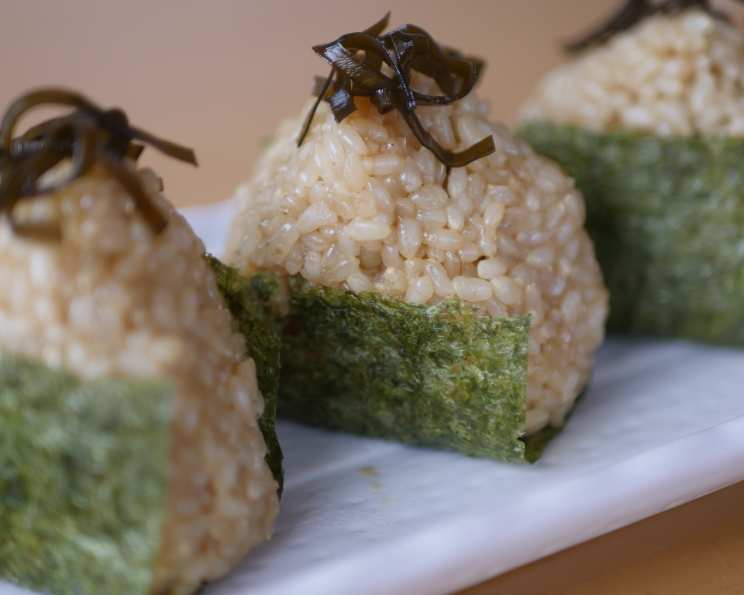
Shio Kombu Onigiri: A Taste of Home
My earliest memories of my grandmother’s kitchen are filled with the comforting aroma of simmering dashi and the rhythmic thwack of her rice paddle against the wooden hangiri. But nothing quite evokes that feeling of home like her onigiri. These weren’t just any rice balls; they were filled with shio kombu, that salty, umami-rich kelp that clung to the perfectly cooked rice. Each bite was a warm hug, a reminder of family, and a taste of pure, unadulterated love. Now, I’m sharing my version of her recipe.
Recipe Overview
- Prep Time: 4 hours 20 minutes (includes rice soaking)
- Cook Time: 30 minutes
- Total Time: 4 hours 50 minutes
- Servings: 2
- Yield: 2 Onigiri
- Dietary Type: Vegetarian (easily made Vegan by ensuring your soy sauce is vegan-friendly)
Ingredients
- 1 cup brown rice (or Japanese white rice)
- 1 tablespoon soy sauce
- 1 tablespoon mirin
- 1 tablespoon awamori (or sake)
- 1 cup water
- 20 g dried edible kelp (shredded)
- 3 tablespoons soy sauce
- 3 tablespoons mirin
- 1 tablespoon sake
- 2 tablespoons sugar
- 1 piece nori
Equipment Needed
- Heavy-bottomed pot with a lid
- Pan
- Strainer
- Mixing bowls
- Cutting board
- Knife
Instructions
-
Before starting, prepare the rice. If using brown rice, wash it 1-2 times and then soak in water for 3 hours. I’ve used brown rice in this recipe, but Japanese white rice is also excellent. If using white rice, you only need to soak it in water for 30 minutes.
-
Next, prepare the dried kelp or kombu by soaking it in water for 15-20 minutes before using. This helps to rehydrate the kombu and make it more pliable.
-
Prepare the rice seasonings by combining 1 tablespoon each of awamori, mirin, and soy sauce, plus 1 cup of water. If you can’t find awamori, which is an Okinawan rice wine, you can use sake as a substitute.
-
Use a strainer to drain the rice for about 5 minutes. Put it in a heavy-bottomed pot and pour the liquid mixture over it.
-
Turn on the heat to medium and put the pot with its lid on top.
-
Bring the liquid to a boil. Once it boils, reduce the heat to low and simmer until most of the water evaporates. This will take approximately 15-20 minutes.
-
Turn off the heat and keep the pot covered for another 10 minutes. Never open the pot while cooking the rice. Keeping it covered, especially after turning off the heat, is crucial. Frequently opening the pot will prolong the cooking process, and the rice may not cook completely.
-
Remove the lid and mix the rice gently. Let it cool until you can hold the rice at the palm of your hands without burning yourself. While waiting for the rice to cool, you can cook the shio kombu filling.
-
Start by preparing the kombu seasoning by mixing 3 tablespoons of soy sauce, 3 tablespoons of mirin, 1 tablespoon of sake, and 2 tablespoons of sugar. Mix the ingredients well until the sugar is dissolved completely.
-
Heat a pan using medium heat. Use a strainer to drain the soaked kombu and put it in the pan. Add the seasoning mixture and bring the liquid to a boil, stirring occasionally to prevent sticking.
-
Once it boils, reduce the heat to low and cook until the liquid evaporates. The kombu should be glistening and slightly sticky.
-
Once most of the liquid is gone, add 1 tablespoon each of soy sauce, mirin, and sugar. Stir well and cook until the liquid is reduced to half. This final reduction intensifies the flavor. Remove from the heat source and let it cool completely before you start to make the rice ball.
-
Now it’s time to assemble the onigiri! Start by wetting your hands with water. It’s helpful to prepare a bowl of water and a clean towel nearby when making onigiri. The water will prevent the rice from sticking to your hands, while the towel can be used to wipe your hands.
-
Spoon out about a handful of seasoned rice and put it at the top of the palm of your hands.
-
Put about a teaspoon of the shio kombu in the middle of the rice. Press the rice gently so the filling is covered with rice in the middle. You can form a ball-like shape for the onigiri with the shio kombu filling in the center.
-
Use one palm of your hand to support the base of the onigiri. The other hand will help shape the onigiri into a somewhat triangular shape. Press firmly, but not too much. Just enough so that the onigiri will hold its shape and will not break. Do not press too firmly, as the rice might become hard when the rice ball cools down completely.
-
Cut out a rectangle from the nori sheet, making it big enough to reach the middle part of each side of the rice ball holding the base. Press the nori sheet onto the rice ball and wait for it to stick to the rice. Then, you can serve.
Expert Tips & Tricks
- Rice Consistency is Key: The texture of the rice is crucial. If the rice is too wet, the onigiri will be mushy and won’t hold their shape. If it’s too dry, they’ll fall apart. Practice makes perfect!
- Flavor Infusion: For even more flavor, try adding a pinch of toasted sesame seeds to the rice while it’s still warm.
- Shio Kombu Variations: Feel free to experiment with different types of kombu. Some are thicker and chewier, while others are more delicate.
- Don’t Overcook the Kombu: Be careful not to overcook the shio kombu, as it can become tough. You want it to be tender and flavorful, not hard and brittle.
- Use Plastic Wrap: If you’re struggling to shape the onigiri by hand, try using plastic wrap. Place the rice and filling in the plastic wrap, gather the edges, and twist to form the shape.
Serving & Storage Suggestions
Serve these shio kombu onigiri immediately for the best taste and texture. They are perfect as a snack, a light meal, or as part of a bento box.
To store leftovers, wrap the onigiri individually in plastic wrap and refrigerate them for up to 2 days. Reheat them in the microwave for a short burst (about 20-30 seconds) or let them come to room temperature before eating. Be aware that the rice may become slightly drier after refrigeration. You can also freeze the onigiri for longer storage (up to 1 month). Thaw them in the refrigerator overnight before reheating.
Nutritional Information
| Nutrient | Amount per Serving | % Daily Value |
|---|---|---|
| Calories | 441 kcal | N/A |
| Calories from Fat | 25 g | 6% |
| Total Fat | 2.8 g | 4% |
| Saturated Fat | 0.6 g | 2% |
| Cholesterol | 0 mg | 0% |
| Sodium | 2228.6 mg | 92% |
| Total Carbohydrate | 89.2 g | 29% |
| Dietary Fiber | 3.7 g | 14% |
| Sugars | 14.5 g | 57% |
| Protein | 11.5 g | 22% |
Variations & Substitutions
- Vegetarian/Vegan: While the recipe is naturally vegetarian, ensure the soy sauce you’re using is vegan-friendly, as some brands contain fish-derived ingredients.
- Spice it Up: Add a pinch of chili flakes to the shio kombu filling for a touch of heat.
- Add Protein: Incorporate cooked and shredded chicken or salmon into the filling for a more substantial meal.
- Sesame Oil: A drizzle of sesame oil over the rice adds a nutty aroma and enhances the flavor.
- Different Seaweed: Instead of nori, try using wakame or kombu seaweed to wrap the onigiri.
FAQs (Frequently Asked Questions)
Q: Can I use pre-cooked rice for this recipe?
A: While it’s best to use freshly cooked rice, you can use pre-cooked rice in a pinch. Make sure to rehydrate it slightly by adding a tablespoon or two of water before mixing it with the seasonings.
Q: How do I prevent the rice from sticking to my hands?
A: Keep your hands consistently wet with water. Prepare a bowl of water nearby and re-wet your hands as needed.
Q: Can I make these ahead of time?
A: Yes, you can make the onigiri ahead of time. Wrap them individually in plastic wrap and store them in the refrigerator for up to 2 days.
Q: What other fillings can I use for onigiri?
A: The possibilities are endless! Some popular fillings include tuna mayonnaise, pickled plums (umeboshi), and seasoned vegetables.
Q: How do I reheat frozen onigiri?
A: Thaw the onigiri in the refrigerator overnight. Then, microwave it for 20-30 seconds, or until heated through. You can also let it come to room temperature before eating.
Final Thoughts
These Shio Kombu Onigiri are more than just a simple snack; they are a taste of tradition, a burst of umami, and a testament to the beauty of simple ingredients. I encourage you to try this recipe and experience the warmth and comfort of this classic Japanese dish. Experiment with different fillings, share them with loved ones, and create your own memories around these delightful rice balls. Don’t hesitate to leave a comment below to share your experience or ask any questions. Itadakimasu!