
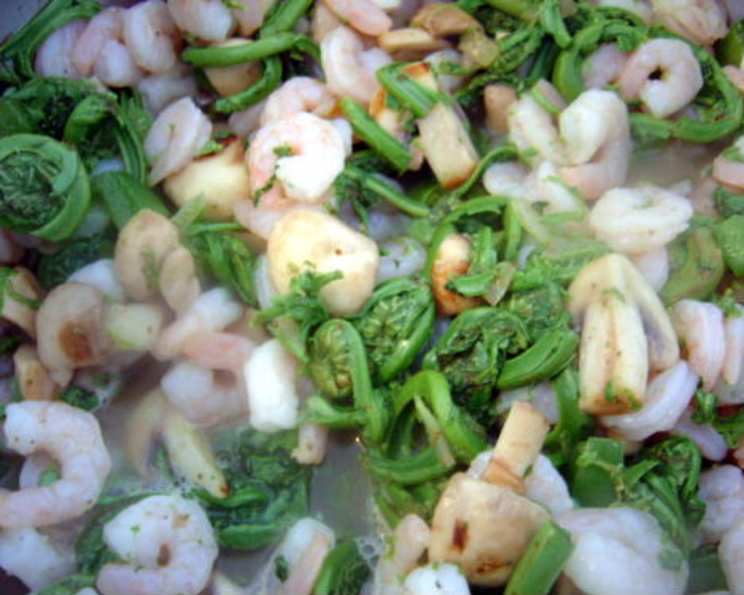
Shrimp and Fiddlehead: A Springtime Delight
The first time I tasted fiddleheads was at a small farmers market nestled in the foothills of the Adirondacks. I’d been drawn in by the vibrant colors of early spring produce, and there they were – coiled like emerald question marks, begging to be discovered. That day, a kind woman showed me how to prepare them, and I was immediately smitten. Their unique, slightly grassy flavor combined with the sweet, briny taste of shrimp became an instant favorite, a dish that sings of springtime renewal on a plate.
Recipe Overview
- Prep Time: 20 minutes
- Cook Time: 25 minutes
- Total Time: 45 minutes
- Servings: 6
- Dietary Type: Pescatarian
Ingredients
- 1 lb fiddleheads
- 6 ounces linguine, uncooked
- 6 cups water
- 1 3/4 lbs shrimp, fresh or frozen
- 1 teaspoon margarine
- 2/3 cup onion, chopped
- 1/2 cup green pepper, diced
- 1/2 lb fresh mushrooms, sliced
- 1 teaspoon thyme
- 1/4 teaspoon pepper
- 1/8 teaspoon salt
- 1/8 teaspoon celery seed
- 2 tablespoons lemon juice
Equipment Needed
- Large saucepan
- Large nonstick skillet
- Colander
- Large platter
Instructions
-
Begin by preparing the fiddleheads. Carefully cut off the ends. Remove any brown scales and wash them thoroughly under cold running water. This step is crucial to remove any grit or lingering debris.
-
In a large saucepan, bring 6 cups of water to a rolling boil. Add the shrimp and cook for 3 to 5 minutes, or until they turn pink and opaque, indicating they are done. Don’t overcook the shrimp, or they will become rubbery. Drain the shrimp well and set aside.
-
In the same saucepan, add fresh water if needed, and bring it back to a boil. Cook the fiddleheads in the boiling water for 10 minutes. This step is essential to ensure the fiddleheads are properly cooked and safe to eat. Properly cooking fiddleheads eliminates any potential toxins. Drain them well.
-
Coat a large, nonstick skillet with cooking spray. Add 1 teaspoon of margarine. Heat the skillet over medium heat until the margarine melts.
-
Add the 2/3 cup of chopped onion and 1/2 cup of diced green pepper to the skillet. Sauté until they are crisp-tender. This will typically take about 5-7 minutes.
-
Stir in the cooked fiddleheads into the skillet with the onions and green peppers. Mix well to combine.
-
Meanwhile, cook the 6 ounces of linguine according to package directions, without adding salt or oil to the cooking water. Adding salt or oil can alter the pasta’s texture and prevent the sauce from adhering properly. Drain the pasta well, set aside, and keep warm.
-
Add the 1/2 lb of sliced mushrooms, 1 teaspoon of thyme, 1/4 teaspoon of pepper, 1/8 teaspoon of salt, and 1/8 teaspoon of celery seeds to the vegetable mixture in the skillet. Stir well to combine all the ingredients.
-
Cook, uncovered, over medium heat for 3 to 4 minutes, or until the mushrooms are tender, stirring often to prevent sticking.
-
Stir in the cooked shrimp and 2 tablespoons of lemon juice. Cook until the shrimp is heated through, stirring often. This should only take a minute or two.
-
Place the cooked linguine on a large platter.
-
Spoon the shrimp and fiddlehead mixture generously over the pasta.
-
Serve immediately and enjoy!
Expert Tips & Tricks
- To intensify the flavor, consider adding a splash of dry white wine to the vegetable mixture as it cooks. The alcohol will evaporate, leaving behind a rich, aromatic base.
- If you can’t find fresh fiddleheads, frozen can be used as a substitute. Be sure to thaw them completely and drain them well before adding them to the skillet.
- To prevent the shrimp from becoming overcooked, you can cook them separately and add them to the skillet at the very end, just before serving.
- A pinch of red pepper flakes can add a pleasant touch of heat to the dish.
- If you want to make this dish ahead of time, you can prepare the shrimp and fiddlehead mixture and store it in the refrigerator for up to 24 hours. Reheat it gently before serving over the freshly cooked pasta.
Serving & Storage Suggestions
Serve this Shrimp and Fiddlehead dish immediately after preparation for the best flavor and texture. Garnish with a sprinkle of fresh parsley or a lemon wedge for an added touch of visual appeal.
Leftovers can be stored in an airtight container in the refrigerator for up to 2 days. To reheat, gently warm the mixture in a skillet over medium heat, adding a splash of water or broth if needed to prevent it from drying out. The pasta may become slightly softer upon reheating. Freezing is not recommended as it can alter the texture of the shrimp and pasta.
Nutritional Information
| Nutrient | Amount per Serving | % Daily Value |
|---|---|---|
| Calories | 288 kcal | N/A |
| Calories from Fat | 26 g | N/A |
| Total Fat | 3 g | 4% |
| Saturated Fat | 0.6 g | 3% |
| Cholesterol | 257.7 mg | 85% |
| Sodium | 361.7 mg | 15% |
| Total Carbohydrate | 29.6 g | 9% |
| Dietary Fiber | 1.8 g | 7% |
| Sugars | 2.3 g | N/A |
| Protein | 36.3 g | 72% |
Variations & Substitutions
- Gluten-Free: Substitute the linguine with gluten-free pasta. There are many excellent gluten-free pasta options available today, made from rice, corn, or quinoa.
- Spice it Up: Add a pinch of red pepper flakes to the vegetable mixture for a touch of heat.
- Creamy Version: For a richer dish, stir in a dollop of crème fraîche or heavy cream at the end.
- Vegetarian: Omit the shrimp and add more mushrooms or other vegetables such as asparagus or snap peas.
- Regional Twist: In place of thyme, consider using herbs common to your region or cultural preferences. For example, a Mediterranean version could include oregano and basil.
FAQs (Frequently Asked Questions)
Q: What are fiddleheads, and where can I find them?
A: Fiddleheads are the curled, young shoots of the ostrich fern. They are a seasonal delicacy available in the spring and can be found at farmers’ markets, specialty grocery stores, or foraged in the wild (with proper identification).
Q: Is it safe to eat fiddleheads?
A: Yes, but only if they are properly cooked. Always clean them thoroughly and boil them for at least 10 minutes to destroy any potential toxins.
Q: Can I use frozen shrimp instead of fresh?
A: Absolutely. Just make sure to thaw them completely before cooking. Pat them dry to remove excess moisture before adding them to the skillet.
Q: Can I substitute the margarine with butter or olive oil?
A: Yes, you can. Butter will add a richer flavor, while olive oil is a healthier option.
Q: How do I know when the shrimp is cooked properly?
A: Shrimp is cooked when it turns pink and opaque throughout. Avoid overcooking it, as it can become rubbery.
Final Thoughts
This Shrimp and Fiddlehead pasta is more than just a recipe; it’s a celebration of spring and a reminder of the simple pleasures of fresh, seasonal ingredients. I encourage you to try it and experience the unique flavors for yourself. Don’t be afraid to experiment with variations and make it your own. And if you do, please share your creations and feedback – I’d love to hear how it turns out! Consider pairing this dish with a crisp, dry white wine like Sauvignon Blanc or Pinot Grigio to complete the experience.